
29 November 2026 | Sahyadri Tiger Reserve, Maharashtra
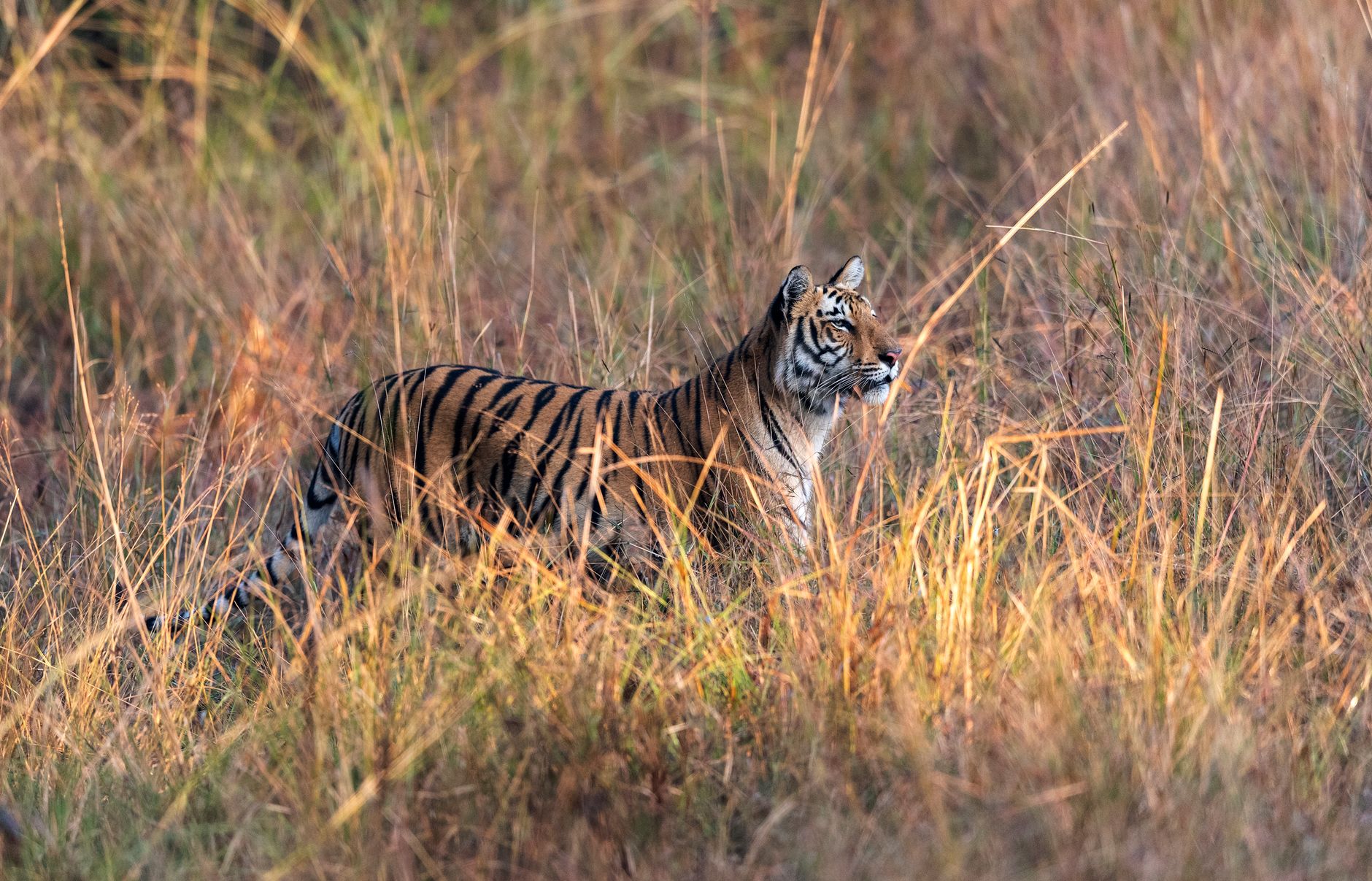
Maharashtra’s Sahyadri Tiger Reserve has recorded an encouraging milestone in its efforts to restore a breeding population of tigers. All three tigresses translocated from Tadoba-Andhari and Pench tiger reserves have successfully endured their first monsoon in the Western Ghats landscape and established territories, according to the Wildlife Institute of India (WII).
The first tigress, identified as STR-T4, has also completed one year in Sahyadri, marking an important step in the reserve’s ongoing tiger recovery programme.
All Three Tigresses Establish Territories
STR-T4, the first tigress brought from Tadoba-Andhari Tiger Reserve, was released in Sahyadri on 20 November 2025. She has established her territory in the Chandoli division.
The second tigress, STR-T5, also from Tadoba, was released on 18 December 2025. The third, STR-T6, was brought from Pench Tiger Reserve and released on 7 February 2026.
Post-monsoon camera-trap records have confirmed the presence and established territories of all three animals, indicating that they have adapted to the new landscape.
Tiger Count Rises to Seven
With the three relocated tigresses and resident male tigers, the tiger count in Sahyadri Tiger Reserve has increased to seven.
The development offers hope for restoring a breeding population in the northern Western Ghats, where tiger numbers had declined historically because of habitat degradation, fragmentation and human pressures.
Scientific Foundation for Tiger Recovery
The Tiger Recovery Programme was initiated in 2017 to establish a viable and self-sustaining tiger population in Sahyadri.
Between 2017 and 2022, extensive scientific assessments examined habitat suitability, prey availability, ecological connectivity and the potential for tiger recovery.
The studies identified approximately 451 sq km of suitable tiger habitat, with an estimated ecological carrying capacity of around 27 tigers under optimal management conditions. Prey density was estimated at 23.25–29.55 animals per sq km.
The programme is being implemented by Sahyadri Tiger Reserve in collaboration with the Wildlife Institute of India and the National Tiger Conservation Authority.
Conservation Beyond Translocation
The recovery initiative also involves habitat improvement, prey management, stronger protection, community participation and measures to reduce human-wildlife conflict.
Village Eco-Development Committees, conservation awareness programmes, digital compensation for conflict-related losses and capacity-building for frontline forest staff have been among the interventions undertaken.
Sahyadri Tiger Reserve received a “Very Good” rating in the Management Effectiveness Evaluation of 2022.
The Next Challenge: Establishing a Breeding Population
The survival and territorial establishment of all three tigresses represent a promising beginning. However, the long-term success of the programme will depend on successful breeding, adequate prey availability, habitat connectivity and sustained protection.
The latest development raises hopes that Sahyadri could once again support a viable tiger population in the Western Ghats.
Source: The Hawk / IANS; Wildlife Institute of India, 29 November 2026
Last Updated: 30 November 2026
Leave a Reply