
8 November 2026 | Ichavadi, Basavapura, Shivamogga, Karnataka
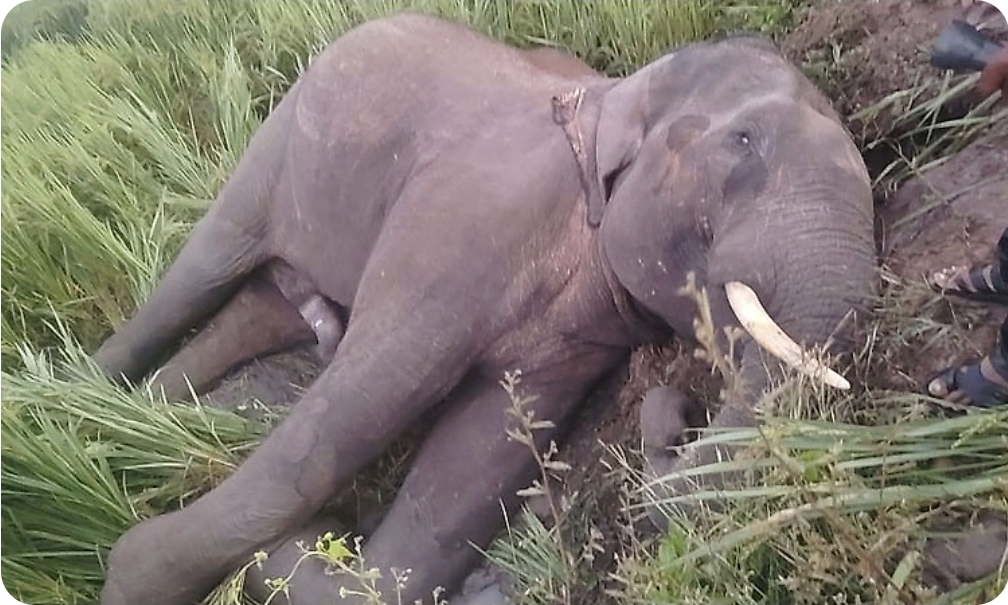
A wild male elephant, estimated to be between 10 and 12 years old, was electrocuted after coming into contact with an illegally electrified fence surrounding a paddy field near Basavapura village in Shivamogga taluk, Karnataka.
The incident occurred at around 3 am on November 7 in Ichavadi village, under the Shankara Forest Range. Forest officials have arrested a farmer in connection with the death and registered a case under the Wildlife (Protection) Act, 1972.
The incident has once again highlighted the deadly consequences of illegal electric fencing used to protect agricultural crops from wild animals.
Elephant Dies in Paddy Field
According to forest officials, the elephant entered a paddy field at Ichavadi during the early hours of Saturday and came into contact with an electric wire illegally laid along the field boundary.
The wire had reportedly been connected directly to an electricity supply, resulting in the elephant receiving a fatal electric shock.
Forest personnel who inspected the site found the elephant’s carcass near the electrically charged fencing. Officials also examined the surrounding area as part of the investigation.
Farmer Arrested
The Forest Department arrested Alimiya bin Peer Samiyar in connection with the incident.
According to Chief Conservator of Forests K.T. Hanumanthappa, the accused reportedly admitted during questioning that he had installed the electric wire along the field bund on Friday and connected it to the power supply.
He allegedly took this step to prevent wild boars from damaging his paddy crop, which had reached the grain-forming stage.
A case has been registered against him under the Wildlife (Protection) Act, 1972.
The Forest Department has also lodged a complaint with the electricity department, MESCOM, seeking action under the Electricity Act for the unauthorised use of electricity.
Post-Mortem Examination Ordered
Deputy Conservator of Forests Ajjayya said that the elephant’s post-mortem examination would be conducted following the prescribed procedures.
The examination is expected to establish the precise medical findings associated with the animal’s death.
Forest officials have also inspected the location and initiated the necessary legal procedures.
Illegal Electric Fencing: A Persistent Wildlife Threat
Electrocution remains one of the serious preventable threats to elephants and other wildlife in India.
Farmers often resort to electric fencing to protect crops from wild boars, elephants and other animals. However, when live wires are connected directly to power sources without proper safety mechanisms, they become lethal traps.
Elephants, which regularly move between forests, agricultural fields and water sources, are particularly vulnerable. Their large bodies can come into contact with exposed wires, leaving little chance of survival.
Illegal electric fencing can also kill smaller mammals, reptiles and other animals that move through agricultural landscapes.
Crop Protection Must Not Come at the Cost of Wildlife
The incident underscores the need for stronger coordination between forest authorities, electricity distribution agencies and farming communities.
Practical measures should include:
- Regular inspections of agricultural fields bordering forests.
- Strict action against unauthorised electric connections and live-wire fencing.
- Promotion of legally approved, wildlife-safe crop-protection methods.
- Community awareness programmes explaining the dangers of illegal electrification.
- Rapid reporting and removal of dangerous electrical installations.
Farmers facing recurring crop damage need access to effective and affordable alternatives rather than resorting to hazardous electrical traps.
Another Preventable Loss for Elephant Conservation
Shivamogga’s forests form part of Karnataka’s important elephant landscape, where wildlife frequently moves through forest fringes and agricultural areas.
The death of this young adult elephant is a reminder that protecting elephants requires attention not only to forest habitats but also to the safety of the surrounding agricultural landscape.
The arrest in this case is an important step towards accountability. Sustained enforcement and preventive action, however, will be essential to ensure that other elephants do not meet the same fate.
Source: Udayavani (7 November 2026); Public TV English (7 November 2026); Vartha Bharati (7 November 2026); Shivamogga Live (7 November 2026).
Last Updated: 8 November 2026
Leave a Reply