8 November 2026 | Katarniaghat, Bahraich, Uttar Pradesh
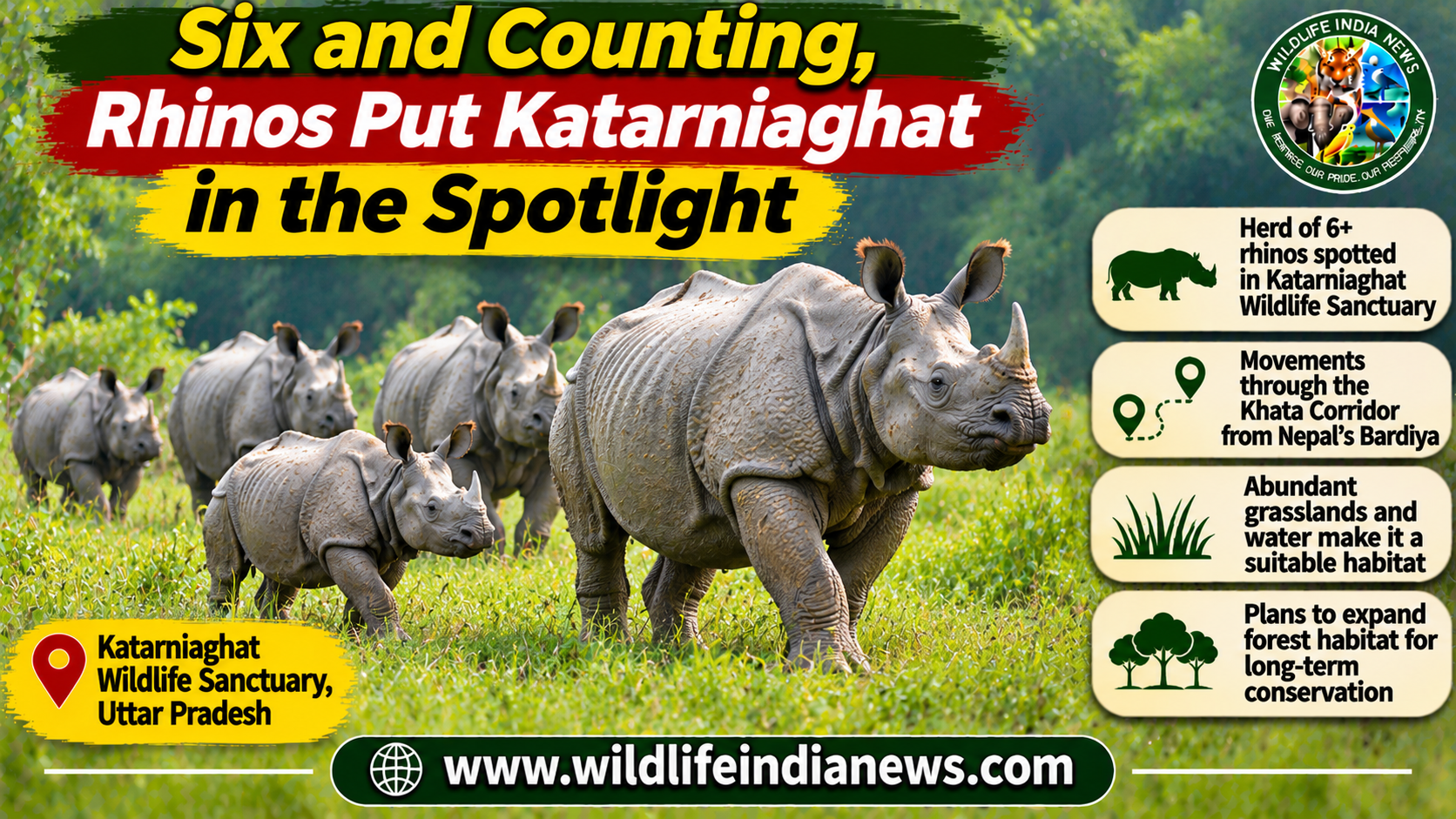
Katarniaghat Wildlife Sanctuary in Uttar Pradesh is attracting renewed attention following the sighting of a herd of more than six greater one-horned rhinoceroses near Bharthapur village in Bahraich district.
The animals were spotted moving through the floodplains and grasslands along the Kaudiyala River, bringing excitement among local residents and wildlife enthusiasts. Their presence is particularly significant because Katarniaghat forms part of an important transboundary wildlife landscape connecting India and Nepal.
Forest officials have increased patrolling in the area and appealed to villagers to maintain a safe distance from the animals.
Rhinos Spotted in Riverine Grasslands
According to local reports, villagers spotted the rhino herd in the grasslands and floodplains near Bharthapur on Friday evening.
Katarniaghat Forest Range Officer Ashish Gaur confirmed that a herd of rhinoceroses inhabits the forests across the Gerua River.
The growing presence of these large herbivores is encouraging from a conservation perspective, as the sanctuary offers suitable grasslands, wetlands and water sources required by the species.
The movement of the animals also provides opportunities for wildlife tourism, potentially making rhinos another major attraction of the Katarniaghat landscape.
Khata Corridor Connects Katarniaghat with Nepal
Katarniaghat’s rhino population is closely linked to the wider Terai Arc landscape, particularly Nepal’s Bardiya National Park.
The Khata Corridor provides an important passage between the two countries, allowing rhinoceroses and other wildlife to move across the international boundary.
A report published in August 2026 by The Kathmandu Post noted that around 20 rhinos were believed to have crossed into India’s Katarniaghat Wildlife Sanctuary through this corridor over the preceding two years.
Water shortages and declining grassland resources in parts of Bardiya were identified as possible reasons for the movement of rhinos towards India.
Katarniaghat’s availability of water, grasslands and wallowing sites makes it an attractive habitat for these animals.
The movement demonstrates that conservation of wide-ranging species requires cooperation between neighbouring countries and protection of wildlife corridors beyond individual protected areas.
Rhino Movement and Changing Elephant Activity
An interesting observation reported by local residents is that the increasing presence of rhinoceroses has coincided with a decline in elephant movement in the area.
Farmers who previously faced crop damage from elephant herds have reportedly experienced some relief.
However, this reported change does not establish that the arrival of rhinos has directly caused elephants to move elsewhere. Both species respond to several factors, including food availability, water, seasonal conditions and habitat changes.
The development nevertheless highlights how changing wildlife movement patterns can affect communities living alongside protected forests.
Plans to Expand Natural Forest Habitat
The Forest Department is considering developing natural forest cover on land that is expected to become available following the relocation of Bharthapur village.
The proposed initiative could expand habitat for rhinoceroses, tigers, elephants and other wildlife.
If implemented with appropriate ecological planning, the restoration of this land could improve habitat connectivity and provide additional feeding and shelter opportunities for wildlife.
The initiative would also need to consider the requirements of local communities and ensure that restoration is based on suitable native vegetation and natural wetland processes.
Uttar Pradesh’s Long-Term Rhino Conservation Plans
Katarniaghat has long been considered a promising location for expanding the distribution of the greater one-horned rhinoceros in Uttar Pradesh.
In September 2022, the state announced plans to develop a third rhino rehabilitation area in Katarniaghat, following the existing rhino enclosures in Dudhwa Tiger Reserve.
The proposed rehabilitation area was planned across approximately 55 sq km, covering parts of the trans-Gerua landscape. The plan included a security assessment, habitat management and the possible release of radio-collared rhinos.
The sanctuary’s grasslands, wetlands and river systems make it ecologically suitable for the species.
The latest sightings underline the importance of continuing habitat improvement and monitoring, particularly as rhinos move naturally across the India–Nepal border.
A Conservation Opportunity That Needs Careful Management
The growing presence of rhinos in Katarniaghat is encouraging, but it also calls for careful management.
Forest authorities need to monitor the herd’s movements, protect grasslands and water sources, prevent poaching and reduce the risk of encounters with people.
Villagers should avoid approaching the animals, attempting to photograph them at close range or obstructing their movement. Any sighting near settlements should be reported to forest personnel.
The long-term success of rhino conservation in Katarniaghat will depend on maintaining the ecological connections between Indian and Nepalese forests.
The sighting of more than six rhinos near Bharthapur is therefore more than a local wildlife event. It is a reminder that the Terai landscape remains an important refuge for one of Asia’s most remarkable large mammals.
Source: The Times of India (8 November 2026); Zaobao India (8 November 2026); The Kathmandu Post (10 August 2026); Government of Uttar Pradesh, Bahraich district; The Times of India (16 September 2022).
Last Updated: 8 November 2026
Leave a Reply