2 November 2026 | Karauli, Rajasthan
For decades, Ranthambore has been the centrepiece of tiger conservation in Rajasthan. Its forests have supported a remarkable recovery of the state’s tiger population, but growing numbers have also created a new challenge: where will the next generation of tigers find space to live, breed and establish territories?
A recent study by WWF-India and the Rajasthan Forest Department has brought an important part of the answer into focus. Kailadevi Wildlife Sanctuary, located in Karauli district and forming the northern extension of the Ranthambore landscape, is showing encouraging signs of becoming more than a passage for dispersing tigers.
Eight tiger cubs and three adult tigers have reportedly been recorded in the sanctuary over a five-year period. After nearly three decades without documented evidence of successful tiger breeding, these records offer fresh hope for the establishment of another breeding area beyond Ranthambore.
But the significance of Kailadevi goes far beyond the number of cubs. It raises a larger question for Indian conservation: can a connected landscape, supported by healthy prey populations and local communities, provide the space needed for a growing tiger population?
A sanctuary with a larger conservation role

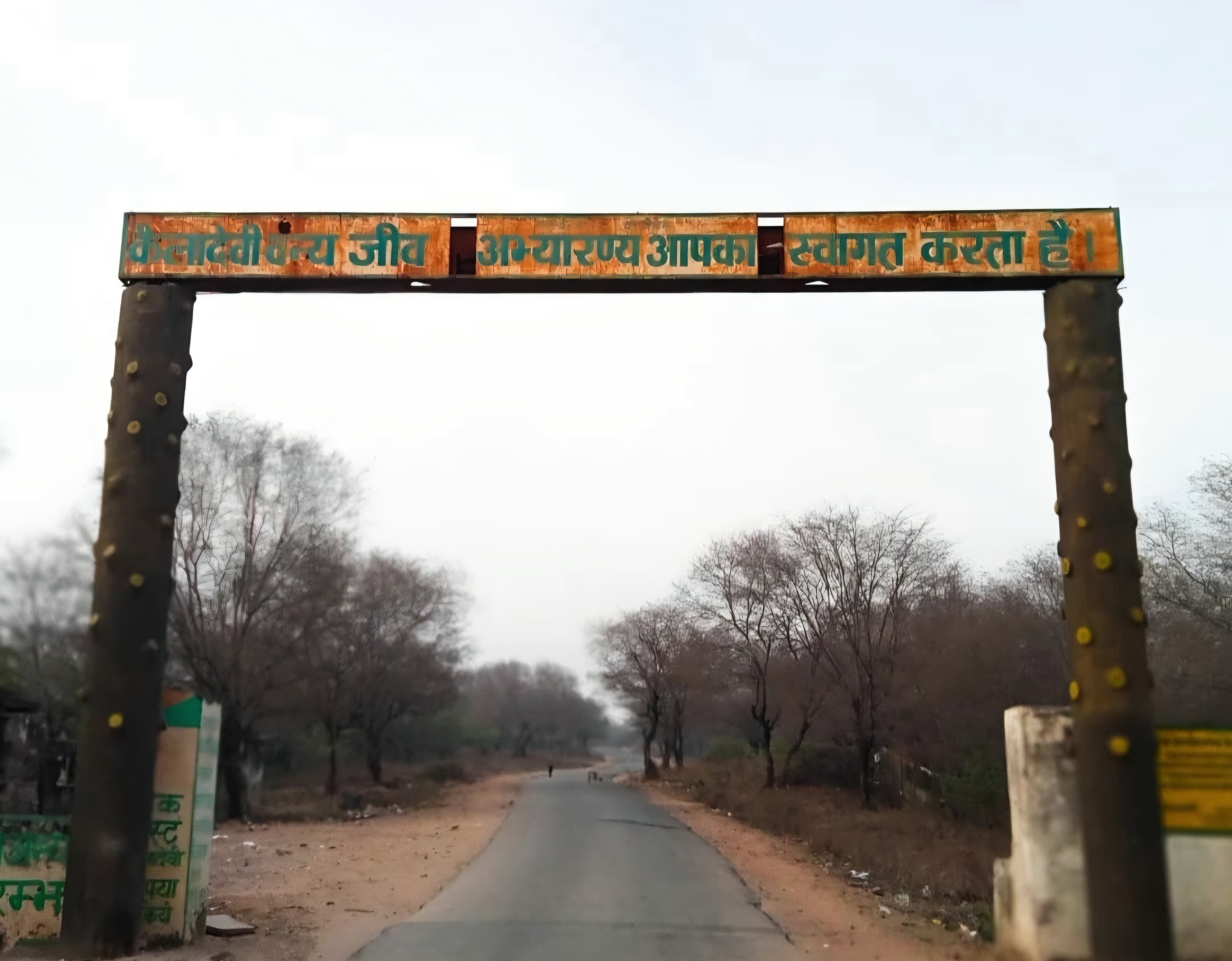
Established in 1983, Kailadevi Wildlife Sanctuary covers approximately 675 square kilometres of dry forests, scrubland, rocky hills and deep ravines in eastern Rajasthan.
It forms part of the wider Ranthambore tiger landscape and provides a route for tigers dispersing towards other habitats, including Dholpur-Karauli and forests extending into Madhya Pradesh.
The sanctuary is also important from a protected-area management perspective. It is a distinct wildlife sanctuary within the larger Ranthambore conservation landscape; parts of it are included in the tiger reserve’s critical tiger habitat. The entire sanctuary should not, however, be confused with the area designated as critical tiger habitat.
Its rugged terrain, ravines and relatively secluded forest patches can offer shelter to wildlife. These features are particularly important for female tigers raising cubs, which need secure areas away from excessive disturbance.
The recent breeding records suggest that at least some parts of Kailadevi are capable of supporting tigers through more than temporary visits.
What the camera traps revealed
The WWF-India and Rajasthan Forest Department assessment examined the sanctuary’s carnivores, prey species and pressures arising from human use.
The camera-trap survey was conducted between November 2023 and February 2024. Researchers initially installed cameras at 221 locations, of which 186 provided usable records after equipment damage and theft affected some stations.
The survey recorded 27 mammal species, revealing a diverse wildlife community.
Among the findings:
- 29 individual leopards were identified from their distinctive coat patterns.
- Leopard density was estimated at approximately 3.65 individuals per 100 square kilometres, with a statistical uncertainty range.
- Striped hyenas were recorded frequently, along with wolves and leopards.
- Other carnivores included jackals, Indian foxes, jungle cats and caracals.
These findings show that Kailadevi supports a varied carnivore community rather than serving merely as a transit route for tigers.
It is important to understand that camera-trap photographs are not a straightforward animal census. The same individual may appear repeatedly, while other animals may never pass in front of a camera. Researchers therefore use statistical methods to estimate populations and density.
The survey provides a valuable baseline against which future changes in wildlife populations can be measured.
Eight cubs: Why the records matter

The most encouraging finding is the evidence of tiger breeding.
The Better India report, based on the new conservation findings, refers to eight cubs and three adult tigers recorded over five years. A more detailed account of the study also refers to three adults, two subadults and five cubs in its 2024–25 records.
These figures refer to different reporting periods and categories and should not be combined into a single current population estimate.
Nevertheless, the broader message is significant: Kailadevi has demonstrated the potential to support breeding, not just the movement of individual tigers.
There is a fundamental difference between a forest that a tiger crosses and one in which a tigress can safely raise her young.
Breeding requires suitable denning and shelter areas, adequate prey, access to water and sufficiently low levels of disturbance. Cubs must survive their vulnerable early years and eventually find territories of their own.
The records are therefore an encouraging sign of habitat suitability, but they do not yet establish a large, self-sustaining tiger population.
That distinction matters. Conservation success should ultimately be measured by the survival and recruitment of animals over several generations, not simply by the appearance of cubs in camera traps.
Ranthambore’s success is creating a new challenge
Rajasthan’s tiger recovery is one of the important conservation developments in the state.
According to figures released by the Rajasthan Forest Department in July 2026, the state’s tiger population across five tiger reserves had increased from 135 in 2025 to 149 in 2026.
Ranthambore remained the largest stronghold, with 72 tigers, tigresses and cubs. The reserve’s abundant prey base, particularly sambar and chital, and its extensive grasslands have supported successful breeding.
However, this growth has also placed pressure on available habitat.
Wildlife experts have estimated Ranthambore’s carrying capacity at around 40–50 tigers, while the reserve’s reported population has risen well beyond that figure. Carrying capacity is not a fixed number, but the gap highlights the need to manage habitat and population growth together.
As young tigers mature, some disperse in search of territories. If suitable habitat is unavailable, they may move through agricultural land, villages and other human-dominated areas, increasing the possibility of conflict.
Kailadevi, therefore, offers an important opportunity: it could help absorb some of the pressure on Ranthambore by providing additional habitat in which tigers can establish territories and breed.
But that opportunity will be lost if the sanctuary is treated merely as spare space for excess tigers rather than as an ecosystem requiring its own conservation investment.
Corridors are as important as protected areas
Tigers do not recognise the boundaries drawn on government maps. Their movements depend on the availability of prey, water, shelter and safe routes between habitats.
Kailadevi’s position makes it important for connectivity between Ranthambore and neighbouring wildlife areas, including the Dholpur-Karauli landscape and habitats towards Madhya Pradesh’s Kuno region.
Such connectivity allows young tigers to disperse, reduces isolation between populations and creates opportunities for genetic exchange.
However, a corridor is not simply a strip of forest on a map. It must remain ecologically functional.
Roads, settlements, agricultural expansion, mining and other forms of disturbance can break up suitable habitat. Even where forest cover remains, heavy human activity or insufficient prey can make an area difficult for tigers to use.
The conservation priority must therefore be to identify the routes actually used by tigers, protect the remaining habitat patches and prevent development from severing important connections.
Kailadevi’s value lies not only in the animals living inside the sanctuary, but also in the wider landscape it helps connect.
The prey question: A concern that cannot be ignored
A tiger’s survival depends on a healthy population of wild herbivores.
The Kailadevi assessment examined prey species and livestock through field surveys. Its findings indicate that livestock density is substantially higher than estimates for individual wild herbivore species. Sambar and chital were not encountered along the particular survey lines used for the prey assessment.
This does not establish that these species are completely absent from the sanctuary. It does, however, point to a concern that requires attention: the availability of wild prey may constrain the growth of a resident tiger population.
Livestock grazing can also increase competition for vegetation and water, while bringing people and domestic animals into areas used by predators.
A landscape cannot support a healthy tiger population indefinitely if its food supply depends heavily on domestic animals.
Conservation authorities will need to strengthen grassland management, protect natural vegetation, restore degraded patches and monitor wild herbivore populations. Prey recovery must be treated as a central part of tiger conservation, rather than a secondary activity.
Local communities must be partners in conservation
Kailadevi is not an uninhabited wilderness. People living in and around the sanctuary depend on the landscape for cultivation, grazing, fodder and fuelwood.
This makes conservation more complex. Measures that restrict access to forest resources without providing practical alternatives can create resentment and undermine long-term protection.
The Better India report notes that WWF-India and the Rajasthan Forest Department have undertaken initiatives benefiting nearly 8,000 residents across 46 forest-fringe villages around Ranthambore and Kailadevi.
These initiatives include livelihood support, cleaner energy options and programmes intended to involve communities in protecting the surrounding forests.
Such interventions are important because they address some of the everyday pressures on wildlife habitats. Cleaner cooking energy can reduce dependence on fuelwood, while fodder support and livelihood opportunities can help reduce pressure on forest resources.
But community participation must go beyond short-term assistance. People living alongside tigers need timely compensation for livestock losses, effective response to conflict, reliable communication with forest officials and a meaningful role in decisions affecting their lives.
The success of Kailadevi as a tiger habitat will depend as much on the relationship between people and the forest as on the presence of wildlife.
What needs to happen next?
The new findings provide a strong reason to strengthen conservation in Kailadevi. They should also serve as a starting point for a more comprehensive, long-term strategy.
Some priorities stand out:
1. Regular monitoring of tiger populations: Camera-trap surveys and individual identification should establish how many tigers use the sanctuary, how frequently they breed and whether cubs survive to adulthood.
2. Restore the prey base: Wild herbivore populations need systematic monitoring, supported by grassland restoration, water management and protection of natural vegetation.
3. Secure wildlife corridors: Movement routes between Kailadevi, Ranthambore and adjoining habitats must be mapped and protected against fragmentation.
4. Reduce human disturbance: Grazing pressure, resource extraction and infrastructure development need careful management in sensitive wildlife areas.
5. Strengthen community participation: Livelihood support, conflict mitigation, compensation and local involvement should remain integral to conservation planning.
6. Coordinate across state and landscape boundaries: Tigers moving towards Madhya Pradesh and neighbouring Rajasthan habitats require coordinated monitoring and protection rather than isolated management by individual reserves.
A second breeding landscape, not an overnight success
The eight cubs recorded in Kailadevi represent a hopeful development, but they should not be mistaken for proof that a secure second tiger population has already been established.
The real test will come over the coming years. Can the sanctuary support repeated breeding? Will enough cubs survive to adulthood? Will dispersing tigers find safe routes and suitable territories? Can wild prey populations recover while local communities continue to meet their livelihood needs?
These are the questions that will determine whether Kailadevi becomes a lasting stronghold for Rajasthan’s tigers.
Ranthambore demonstrated what sustained protection and effective management can achieve. Kailadevi now offers an opportunity to extend that success across a larger landscape.
The future of Rajasthan’s tigers may depend not on how many animals one reserve can hold, but on how successfully the forests beyond its boundaries are protected.
Sources: The Better India (2 November 2026); WWF-India and Rajasthan Forest Department study on Kailadevi Wildlife Sanctuary; Clarity UPSC’s detailed account of the study; The Tribune (28 July 2026).
Last Updated: 2 November 2026
Leave a Reply