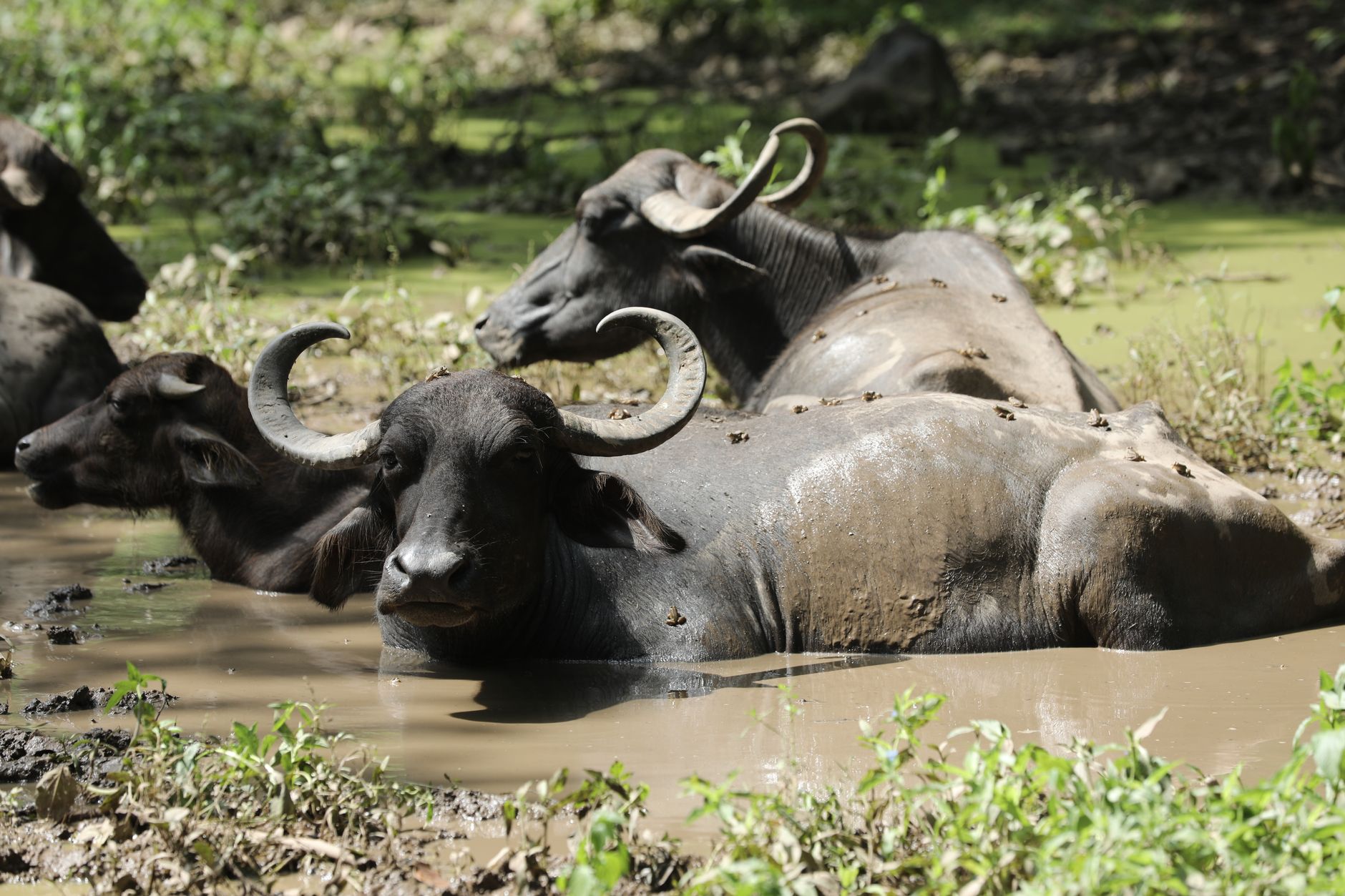
Bhopal, Madhya Pradesh: Eight wild buffaloes brought from Assam’s Kaziranga National Park have been moved into a 17-hectare enclosure at Kanha Tiger Reserve, marking another stage in efforts to restore the species to its historical habitat.
Chief Minister Mohan Yadav oversaw the transfer on October 11. The six females and two males had completed quarantine in a smaller enclosure in the Supkhar range.
Animals Arrived From Kaziranga in Two Batches
The buffaloes reached Kanha on April 28 and May 9. Initially housed in a one-hectare enclosure, they were given time to adjust to the local climate and surroundings.
The latest move provides more space during the next stage of acclimatisation. It is an enclosure transfer, rather than a release into the unrestricted forest.
Target of 50 Buffaloes Over Three Years
The state government aims to reintroduce 50 wild buffaloes over the next three years. Officials selected Supkhar on the basis of evidence that the species formerly occurred there.
Further steps towards establishing the animals in their natural habitat are planned after the monsoon.
Scientific Study Supports Kanha’s Suitability
A 2024 study published in Restoration Ecology assessed Kanha as a potential reintroduction site for the endangered wild water buffalo, Bubalus arnee.
Researchers identified low-lying grasslands with limited human disturbance as suitable habitat. Moist grasslands were particularly favourable because of productive vegetation and perennial water sources.
The study proposed a strategy that could support approximately 200 buffaloes in suitable habitat. This is a potential carrying-capacity assessment, not the project’s current population or an assured outcome.
Restoring a Lost Grassland Herbivore
Wild water buffaloes are large native herbivores whose grazing and habitat use can help shape grassland and swamp ecosystems. Establishing another viable population could contribute to both habitat restoration and the species’ conservation.
The programme’s long-term success will depend on the animals surviving, breeding and adapting beyond the initial enclosure stage.
Sources: Millennium Post; PTI/ThePrint; Akashvani News; and the 2024 Restoration Ecology study on wild buffalo reintroduction in Kanha.
Leave a Reply