
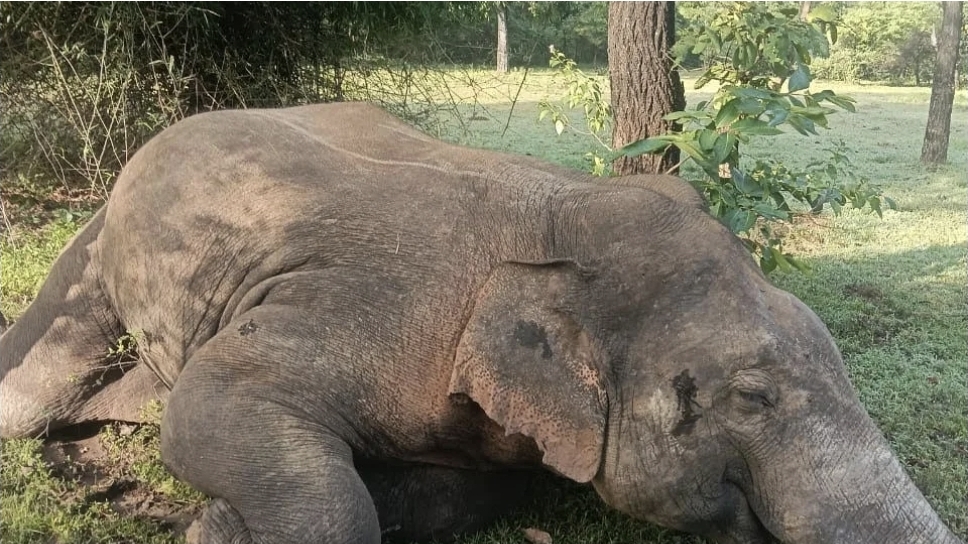
Garhwa, October 6: The electrocution of an adult male elephant inside a protected forest in Jharkhand’s Garhwa district has raised concern over the safety of wildlife within its natural habitat.
The elephant, estimated to be between 22 and 25 years old, was found electrocuted on October 5 in Bishrampur protected forest, under the Ranka East forest range. According to The Jharkhand Story, paddy fields surround the location, which lies far from human habitation. The incident has brought renewed attention to the threat posed by illegal electric fencing.
“Where Will Elephants Live?”
Palamu Regional Chief Conservator of Forests S. R. Natesha expressed serious concern over the death and warned that those responsible would face legal action. His question—“where will elephants live?”—highlights the disturbing circumstances of an elephant dying inside a protected forest.
The location gives the tragedy a wider significance. Conservation depends on forests providing animals with space to move, feed and survive. When lethal hazards occur within these landscapes, legal protection alone cannot guarantee their safety.
When Crop Protection Becomes a Deadly Barrier
Farmers living near elephant habitats can suffer substantial losses when animals enter agricultural fields. Protecting crops is therefore an essential part of managing human–elephant conflict. However, an electric fence connected directly to a power distribution line can turn a crop barrier into a fatal trap.
A government-hosted report on human–elephant conflict in Jharkhand identifies such illegal connections as a cause of electrocution incidents. It warns that these arrangements endanger both wildlife and people and calls for monitoring and enforcement against unsafe fencing.
The concern over illegal fencing in the Garhwa case should be distinguished from a confirmed account of the precise electrical connection responsible. Establishing how the elephant encountered the current is essential to identifying responsibility and preventing another death.
A Wider Conservation Concern
The Jharkhand conflict report identifies electrocution as a major cause of elephant mortality across several parts of the state. Its recommendations include inspecting electrical infrastructure and local fencing connections, educating communities about unsafe practices, and improving cooperation between forest officials and electricity distribution agencies.
These measures need to reach the places where forests and farmland meet. Identifying a dangerous connection before an elephant encounters it can make the difference between prevention and another investigation after a death.
Keeping Forests Safe for Elephants
The Garhwa tragedy underscores the need to address crop losses and wildlife safety together. Farmers need practical support to protect their livelihoods, while elephants need routes through their habitat that remain free of lethal electrical barriers.
A protected forest must offer more than protection on paper. Its value ultimately depends on whether the animals living within it can move and survive safely.
Source: The Jharkhand Story, October 6, 2026. Additional background: Jharkhand human–elephant conflict report hosted by the Ministry of Environment, Forest and Climate Change.
Leave a Reply