Jaisalmer, Rajasthan | October 4, 2026
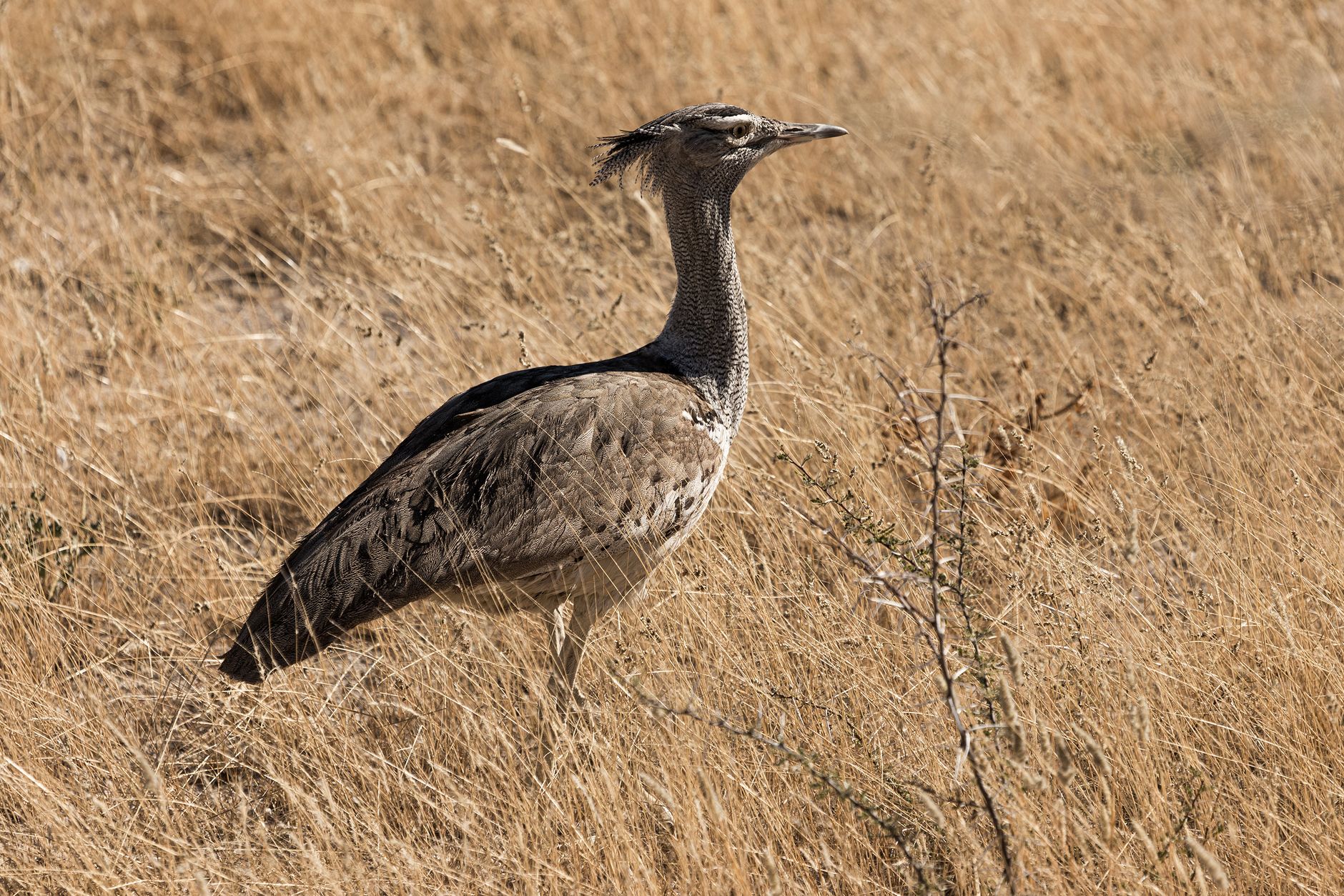
India’s long-running effort to save the Great Indian Bustard (GIB) has crossed a crucial new threshold. Union Environment Minister Bhupender Yadav on Sunday released two captive-bred male Great Indian Bustards into the wild at Sam in Rajasthan’s Desert National Park, marking the first experimental rewilding of birds produced under India’s conservation-breeding programme.
The release is particularly significant because conservationists are now attempting something more difficult than simply increasing the number of bustards in captivity: determining whether birds born and raised under managed conditions can successfully adapt to life in their natural Thar Desert habitat.
From Captive Breeding to Rewilding
The two birds are products of a conservation effort developed over almost a decade by the Wildlife Institute of India (WII), Rajasthan Forest Department and Union Environment Ministry.
On October 3, authorities initiated the carefully controlled release process, deliberately restricting human presence around the birds to minimise disturbance. The actual release into the wild followed on October 4.
The two young males were fitted with tracking devices before release so scientists can closely follow their movements, habitat selection, feeding behaviour and survival. The results will help determine how and when more captive-bred birds can be released.
“This was no small undertaking,” Yadav said while describing the years of scientific work behind the programme. He said the immediate priority would now be observing how the two birds behave, feed and adjust to the ecosystem.
97 Bustards Now at Conservation Facilities
The scale of India’s captive-breeding programme has grown considerably.
According to the Environment Ministry, the Great Indian Bustard facilities at Sam and Ramdevra currently hold 97 birds. Of these:
- 40 originated from eggs collected from the wild
- 57 were bred in captivity
- 86 are being retained for captive reproduction
- 11 have been earmarked for release
- 2 of those 11 were released on October 4
The breeding programme produced 24 live chicks in 2025 and another 29 in 2026.
These numbers are particularly important because the remaining wild breeding population of the Great Indian Bustard is concentrated largely in the Jaisalmer landscape.
An Innovative Experiment Is Also Producing Chicks
Scientists are not relying solely on conventional captive breeding.
The recovery programme has developed an innovative technique described as a “jumpstart” approach. Captive-laid eggs are placed in the nests of wild bustards, where they are accepted and incubated by wild females.
The Environment Ministry says the technique has already resulted in the hatching of six chicks in Rajasthan and two in Gujarat.
If successful on a larger scale, such methods could help reinforce wild populations while retaining some of the behavioural advantages of chicks raised naturally.
Birds Prepared for Life Beyond Captivity
Preparing a captive-bred bustard for release involves more than opening the door of an enclosure.
A large rewilding aviary at Ramdevra, measuring about 160 metres by 64 metres and 14 metres high, has been built to prepare birds for eventual release.
The pillar-free structure provides enough room for bustards to strengthen their flight muscles and become accustomed to conditions closer to those they will experience outside captivity. Human contact is deliberately restricted so that the birds do not become overly habituated to people.
Before the October release, candidate birds underwent extensive rewilding preparation.
Why This Release Matters
The Great Indian Bustard, or Godawan, was once found across extensive parts of India’s grasslands and semi-arid landscapes.
Its decline has made it one of India’s most threatened birds.
The October 4 release therefore represents an important shift in conservation strategy.
Until now, one of the programme’s primary objectives was to create a secure captive population that could act as insurance against extinction. Having achieved substantial breeding success, conservationists are beginning the far more challenging task of augmenting the population in the wild.
WII Director Gobind Sagar Bhardwaj described captive breeding as essential insurance alongside conservation of the remaining wild population.
The success or failure of the two newly released males will provide critical information for the next phase.
200 Sq Km of Grassland Being Protected
Releasing birds alone cannot restore the species if suitable habitat disappears.
The Rajasthan Forest Department has therefore established approximately 200 sq km of fenced grassland enclosures inside Desert National Park. Long-term WII telemetry studies have identified these areas as important breeding habitat for the species.
The wider Bustard Recovery Programme combines captive breeding, habitat restoration, threat mitigation, scientific management and community participation.
It is being implemented by the Union Environment Ministry, Rajasthan Forest Department and WII, with technical collaboration from the International Fund for Houbara Conservation and funding support from National CAMPA.
Eleven Birds Could Eventually Return to the Wild
The two males released on Sunday are therefore best understood as the beginning of an experiment rather than the end of the recovery programme.
Of the 97 birds currently held at the conservation facilities, 11 have been selected for eventual release. Scientists will use information gathered from the first two males to refine procedures before proceeding with additional birds.
Their tracking data will show whether captive-bred bustards can locate suitable feeding areas, respond appropriately to threats and adjust to an environment where they must survive without daily human management.
A New Chapter for the Godawan
The Great Indian Bustard recovery programme has already demonstrated that the species can be successfully bred in captivity.
Now comes the harder test: can those birds be returned successfully to the desert?
The two males walking out into Desert National Park on October 4 carry more than satellite transmitters. They carry the hopes of a conservation programme that has spent almost a decade trying to prevent one of India’s most distinctive grassland birds from disappearing.
If they adapt successfully, the release could become the blueprint for returning more captive-bred bustards to Rajasthan’s grasslands—and eventually rebuilding a self-sustaining wild population.
For the Great Indian Bustard, October 4, 2026 may therefore be remembered as the day India’s conservation programme moved from saving the species in captivity to attempting to give it back to the wild.
Source: ANI; Ministry of Environment, Forest and Climate Change/Press Information Bureau, October 4, 2026.
Leave a Reply