Srinagar, Jammu & Kashmir | October 3, 2026
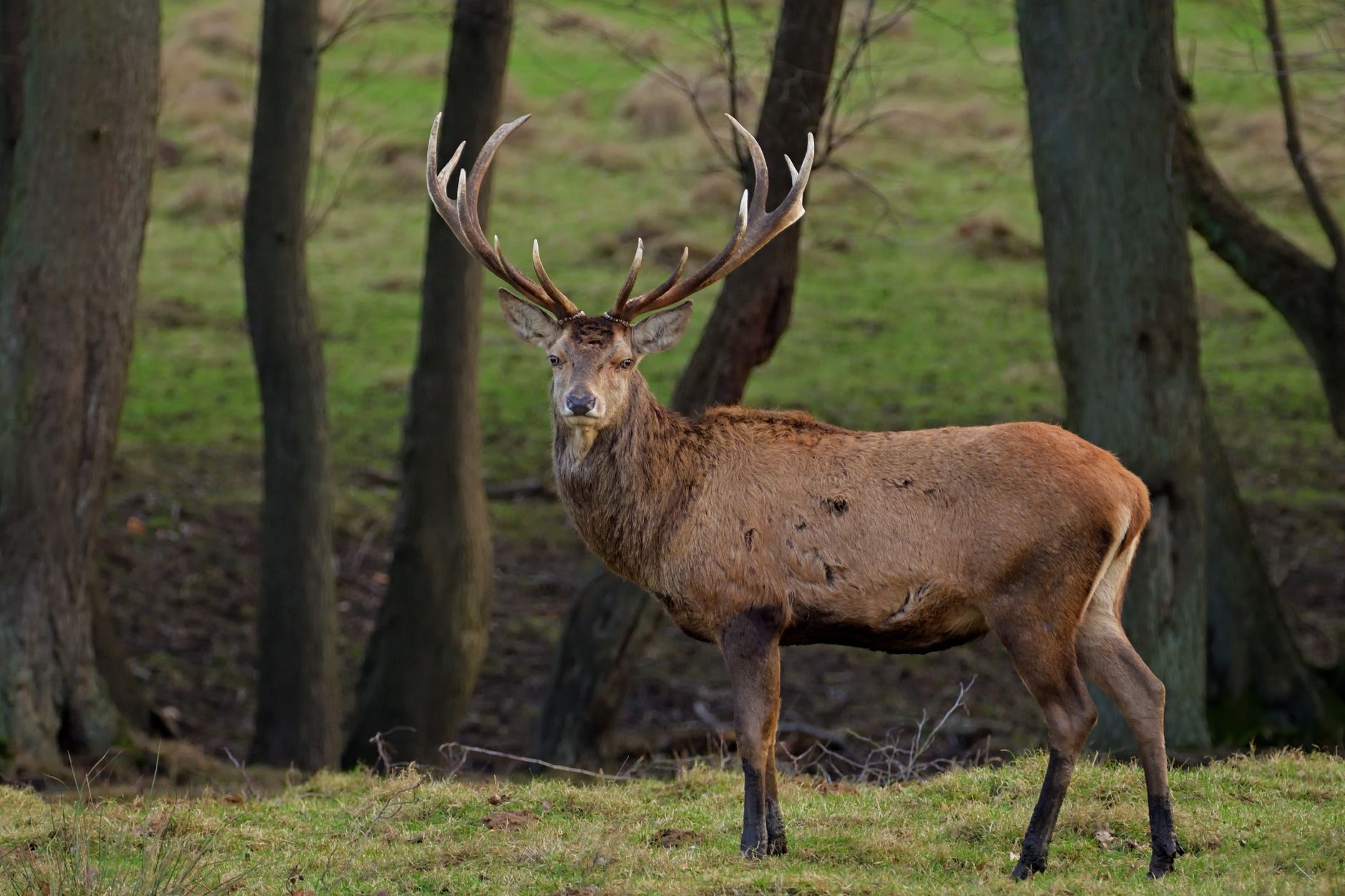
The Hangul, or Kashmir stag, has staged an encouraging recovery from the brink, with its population increasing from just 127 animals in 2008 to 323 in the 2025 census. The latest figure also represents an increase from 289 recorded in 2023.
The improvement is a significant conservation achievement for an animal whose surviving population is now largely concentrated in Dachigam National Park and adjoining landscapes. But wildlife experts caution that the Hangul’s future cannot be measured by population figures alone.
The next challenge is ensuring that the deer have enough connected habitat to move, disperse and breed.
From 127 to 323: A Slow but Encouraging Recovery
The Hangul population reached a particularly worrying low of 127 in 2008. Subsequent monitoring recorded 175 in 2009, 218 in 2011, 214 in 2017, 237 in 2019 and 261 in 2021 before numbers rose to 289 in 2023 and 323 in 2025.
The latest population figure was presented to the Jammu & Kashmir Wildlife Board, alongside updates on efforts to operationalise the Hangul Breeding Centre at Tral.
Years of habitat protection, anti-poaching measures and monitoring in the Dachigam landscape appear to have helped the species recover.
Yet 323 animals still represent an extremely small population.
Hangul Cannot Survive in Dachigam Alone
Perhaps the most important lesson emerging from recent conservation work is that the Hangul must be viewed as a landscape species rather than simply a Dachigam species.
The Wildlife Trust of India’s Hangul Recovery Project has identified potential Hangul presence in areas of Kupwara, Bandipora, Ganderbal, Pulwama and Anantnag. It has also worked to identify movement corridors connecting Dachigam with other parts of the animal’s range.
Some of these corridors have become fragmented.
Hangul also venture outside protected areas, particularly during seasonal movements, bringing them into landscapes shared with people and involving different landowners and administrative authorities.
Protecting the animal therefore increasingly means protecting the routes between its habitats, not merely the habitats themselves.
Why Corridors Matter
Wildlife corridors allow animals from otherwise separated populations to move between suitable habitats.
For the Hangul, maintaining such connectivity could be particularly important because a small, isolated population faces risks associated with limited genetic diversity and inbreeding.
Researchers have consequently recommended giving legal protection to movement corridors identified through telemetry studies, arguing that connectivity is essential for maintaining gene flow.
Without those links, an apparently growing population could still become increasingly isolated within shrinking pockets of habitat.
Habitat Pressures Have Not Disappeared
The Hangul’s recovery is occurring despite continuing pressure on its habitat.
Previous assessments have identified livestock grazing, grass cutting, fuelwood collection, human movement, habitat fragmentation and poaching among the pressures that have historically affected Hangul habitat.
Scientists have also recently provided another reason to reduce disturbance during sensitive periods.
Research into Hangul reproductive physiology found a sharp increase in physiological stress in both males and females during May. Researchers noted that this coincides with the movement of migratory livestock herders, livestock and guard dogs towards the animals’ summer habitat, although the study did not establish that human disturbance caused the stress increase.
Together, the findings reinforce a broader message: protecting Hangul requires attention not only to numbers, but also to where the animals move and when they are most vulnerable.
Communities Will Be Crucial
Some Hangul movement routes pass through landscapes outside formally protected areas. That makes conservation impossible through forest protection alone.
The current recovery programme consequently includes community-based monitoring and wildlife watchers, alongside cooperation between conservation organisations, government agencies and communities living within the wider Hangul landscape.
Securing corridors may ultimately require coordination among forest authorities, local residents and multiple landholders so that critical passages remain usable by wildlife.
323 Is a Milestone — Not the Finish Line
The rise from 127 Hangul in 2008 to 323 in 2025 is unquestionably encouraging.
It demonstrates that a species reduced to a precariously small population can respond to sustained conservation.
But the same numbers also put the achievement into perspective.
There are still only a few hundred Hangul left.
The challenge now is to convert a numerical recovery into a secure, connected and genetically viable population capable of occupying more of its former landscape.
Dachigam may remain the Hangul’s great stronghold. But if Kashmir’s iconic stag is to have a secure future, conservation efforts will increasingly have to extend beyond the boundaries of the national park.
Saving the Hangul now means saving the paths that connect its remaining wild spaces.
Source: The Right News, October 3, 2026.
Leave a Reply