
Maharashtra | October 2, 2026
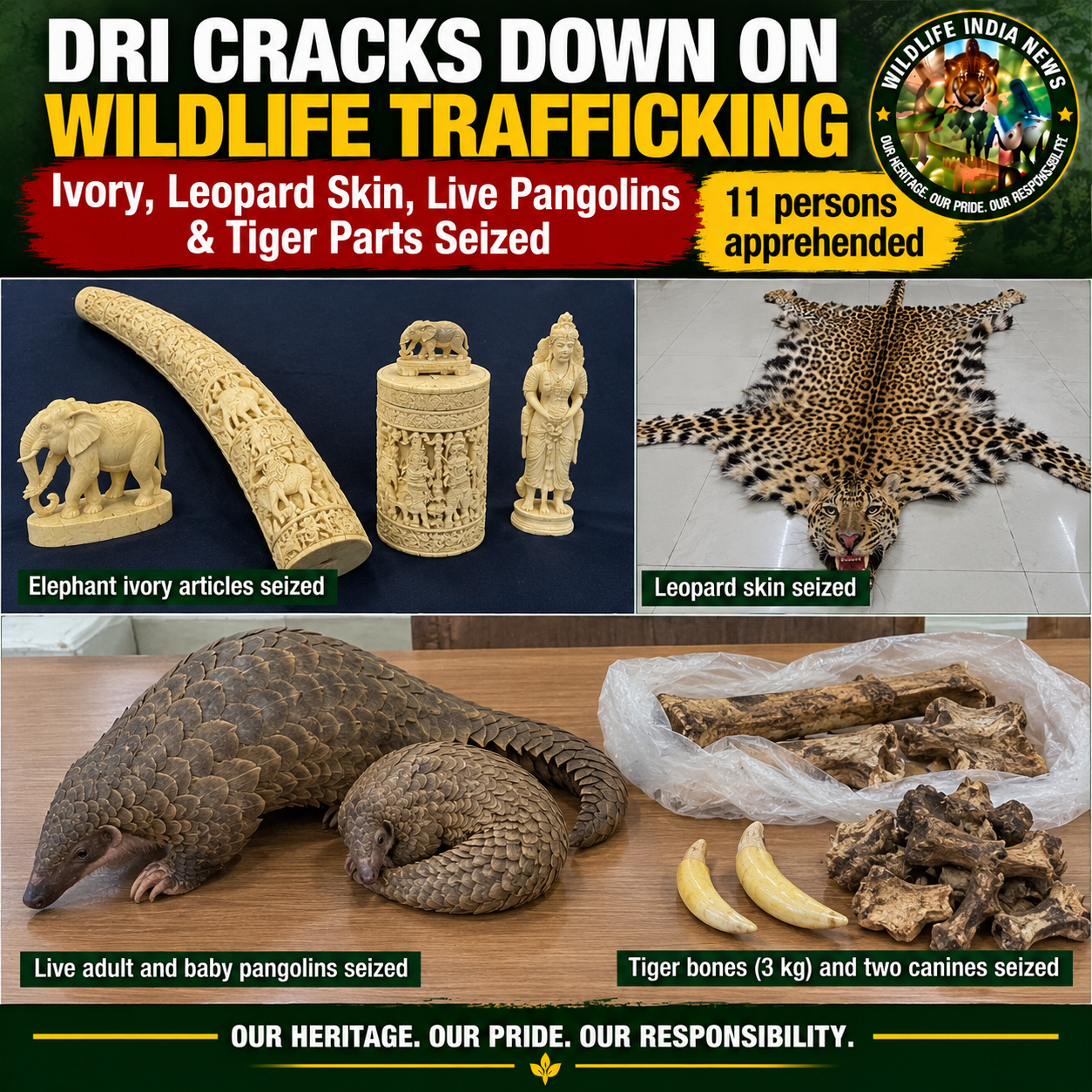
In a major crackdown on illegal wildlife trafficking, the Directorate of Revenue Intelligence (DRI) has seized elephant ivory, a leopard skin, two live pangolins and tiger body parts during three separate intelligence-led operations in Maharashtra.
According to an official release issued by the Ministry of Finance through the Press Information Bureau, 11 people were apprehended during the operations. The seizures included four elephant-ivory articles, one leopard skin, an adult and a baby pangolin, 3 kg of tiger bones and two tiger canine teeth.
Four Ivory Articles Seized

Acting on specific intelligence concerning an attempt to illegally sell elephant ivory, DRI officers conducted a decoy operation.
The operation resulted in the recovery of four elephant-ivory articles, including intricately carved pieces, and the apprehension of three people allegedly involved in the transaction.
The seized items and the detained individuals were subsequently handed over to the jurisdictional Forest Range Officer for further investigation and action. Trade and dealing in elephant ivory and articles made from it are prohibited under Section 49B of the Wild Life (Protection) Act, 1972, subject to the law’s provisions.
Leopard Skin Recovered in Gondia

A second operation was conducted on September 29 near Purada village in Maharashtra’s Gondia district.
Following surveillance, DRI officers intercepted two people suspected of attempting to sell the skin of a leopard that had allegedly been killed.
Officers recovered one leopard skin. The two suspects and the seized skin were handed over to the Forest Range Officer of Deoria Range, Gondia, for further action.
The leopard (Panthera pardus) is protected under Schedule I of the Wild Life (Protection) Act, 1972.
Live Mother and Baby Pangolin Rescued

The third and perhaps most significant operation took place during September 26–27 in the Allapalli forest area of Maharashtra.
DRI officers joined forces with the Forest Department, Wildlife Crime Control Bureau (WCCB), Mumbai, and the USTR Anti-Poaching Unit to intercept six people suspected of involvement in illegal wildlife trade.
The team recovered one live adult pangolin and one live baby pangolin.
Pangolins are protected under Schedule I of India’s wildlife law and are also listed in Appendix I of CITES, which prohibits their international commercial trade.
Tiger Bones and Canines Among Seizures
The same operation produced another disturbing discovery.
Authorities recovered 3 kg of tiger bones and two tiger canine teeth. Follow-up searches also produced evidence that investigators say was connected with the alleged poaching, possession, transportation and intended sale of tiger body parts.
The tiger is also a Schedule I protected species under the Wild Life (Protection) Act.
The live pangolins, tiger bones and canines were seized along with two motorcycles allegedly used by the suspects and handed over for further action by the Forest Department.
Three Operations, 11 People Apprehended
Taken together, the operations resulted in:
- 4 elephant-ivory articles
- 1 leopard skin
- 2 live pangolins — an adult and a baby
- 3 kg of tiger bones
- 2 tiger canine teeth
- 2 motorcycles
- 11 people apprehended
The cases illustrate the range of wildlife products moving through illicit trafficking networks—from ivory and big-cat derivatives to live animals.
The DRI said the operations demonstrate its continuing effort to disrupt wildlife trafficking at the stages of illegal possession, transportation and attempted sale, working alongside specialised wildlife enforcement agencies.
A Wider Wildlife Crime Concern
The simultaneous recovery of material originating from elephants, leopards, tigers and pangolins is particularly significant because all four are species facing serious conservation pressures.
Pangolins are heavily targeted internationally for their scales and meat, while tiger parts and ivory have long been associated with organised wildlife trafficking.
The Maharashtra operations also demonstrate why cooperation between revenue intelligence officers, forest officials, the WCCB and anti-poaching units is increasingly important. Wildlife trafficking frequently extends beyond the boundaries of individual forests, districts and even countries.
In this case, intelligence-led enforcement intervened at several stages of the suspected trade—from possession of live animals and wildlife derivatives to alleged attempts to find buyers.
The rescue of the adult and baby pangolin alive is an especially important outcome. But the leopard skin, tiger bones, tiger teeth and ivory tell a darker story: for those seizures, the animals from which they came had already been lost.
Source: Ministry of Finance, Government of India / Press Information Bureau, October 2, 2026.
Leave a Reply