One of India’s greatest bird sanctuaries needs about 550 million cubic feet of water every year to sustain its wetlands. But growing competition for water from Panchana Dam is once again exposing the vulnerability of Keoladeo National Park.
Bharatpur, Rajasthan | September 30, 2026
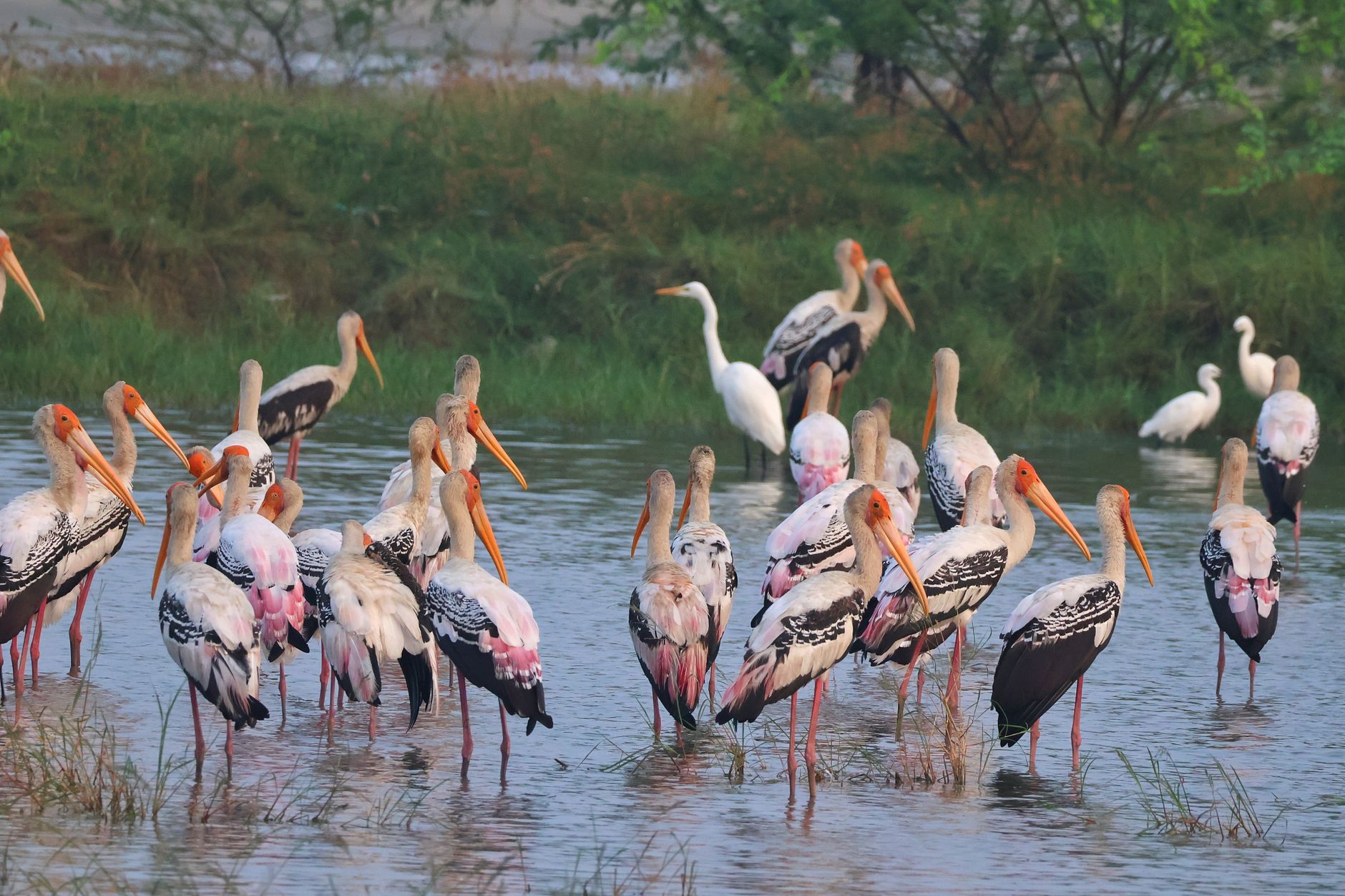
For generations, Keoladeo National Park has been one of India’s most celebrated bird habitats—a mosaic of shallow wetlands, grasslands and woodland that attracts enormous numbers of resident and migratory birds.
But Keoladeo has an unusual vulnerability: its famous wetlands cannot survive without a carefully managed supply of water from outside the park.
That lifeline is again under pressure.
A recent report from Bharatpur highlights intensifying competition for water from Panchana Dam, which supplies water towards Keoladeo but is also vital to farmers. The dispute has renewed concerns about the long-term future of the UNESCO World Heritage Site.
Keoladeo Needs 550 Million Cubic Feet of Water
Keoladeo covers just 28.73 sq km, but maintaining its wetland ecology requires approximately 550 million cubic feet (mcft) of water annually, according to park officials and UNESCO assessments.
The park has limited natural catchment of its own.
A significant part of its water traditionally reaches it through Ajan Dam, fed by the Gambhir River system and influenced by releases from Panchana Dam in Karauli district.
Another source—the Chambal—provides about 62 mcft, roughly one-tenth of the park’s annual requirement.
That leaves Keoladeo heavily dependent on how water elsewhere in Rajasthan is stored, allocated and released.

Farmers Need the Same Water
This is where conservation collides with livelihoods.
Farmers also depend on Panchana’s water for agriculture. During the 2026 monsoon, residents from 39 villages around the dam reportedly opposed releases, arguing that communities whose land had been acquired for the project should have priority over its water.
Farmers in the command area, meanwhile, demanded water for irrigation.
The dispute eventually reached the Rajasthan High Court, which directed that water be released from the dam.
The conflict illustrates why Keoladeo’s water crisis cannot be viewed simply as a wildlife-management problem. The same scarce resource supports wetlands, agriculture and rural communities.
Panchana Changed Keoladeo’s Water Equation
Keoladeo’s water problems are not new.
Government records show that construction and expansion of Panchana Dam on the Gambhir River in 2003–04 substantially increased the amount of upstream water that could be stored and regulated.
This reduced downstream flows and made Keoladeo increasingly dependent on decisions over water releases.
Former Bombay Natural History Society director and renowned ornithologist Asad Rahmani, who has known Keoladeo for around five decades, told the recent investigation that managing the park’s water has become increasingly difficult and that its biodiversity has undergone considerable degradation.
Too Little Water Changes the Entire Ecosystem
For Keoladeo, water shortage means much more than shrinking ponds.
Water levels determine the growth of aquatic vegetation, availability of fish and other prey, nesting conditions and suitability of feeding grounds for waterbirds.
When wetlands remain insufficiently flooded, invasive vilayati babul (Prosopis juliflora) can spread more readily. Park officials say prolonged submergence suppresses germination of the invasive tree, whereas falling water levels allow it to establish itself.
Native kadamba trees and fish diversity have also declined.
An earlier survey recorded 57 fish species in Keoladeo; officials cited in the recent report say that figure has fallen to 35.
A Sanctuary for 375 Bird Species

The stakes are enormous.
Park officials have recorded 375 bird species, including around 200 migratory species, 100 local migrants and 75 resident species.
Keoladeo also supports turtles, butterflies, snakes, frogs and 27 mammal species.
Resident waterbirds begin gathering during July and August, while winter migrants generally start arriving around October and November.
Six of the park’s 15 management blocks are wetlands, making the timing and quantity of water releases particularly important.
An Alternative Water Source Brings Another Risk
When adequate water does not arrive through the Panchana-Ajan system, authorities can draw water from the Govardhan Drain near the Haryana-Uttar Pradesh border.
But that solution brings its own concern.
The drain passes through intensive agricultural areas. Park officials fear its water could carry pesticides and other pollutants into Keoladeo’s sensitive wetland ecosystem.
Simply supplying 550 mcft is therefore not enough—the quality and timing of that water also matter.
Good Monsoons Brought Temporary Relief
There has been some encouraging news.
Good monsoons in 2024 and 2025 improved water availability and benefited the park’s biodiversity. UNESCO confirmed that Keoladeo received the minimum 550 mcft considered necessary for its ecological functioning in 2024.
But UNESCO has repeatedly warned that the underlying problem remains unresolved because Keoladeo needs a reliable long-term water supply, rather than depending on favourable rainfall or emergency arrangements from year to year.
The uncertainty surrounding the 2026 monsoon and the renewed Panchana dispute demonstrate why that concern persists.
The Wetland Helps People Too
Saving Keoladeo is not only about birds.
People living around the park say its wetlands help maintain the local groundwater table, benefiting surrounding agriculture.
The Indian Institute of Science, Bengaluru, is now studying the park’s relationship with surrounding communities, including its contribution to livelihoods, groundwater recharge, the local economy and environmental and climate benefits.
The economic connection is substantial as well.
Forest Department figures cited in the investigation indicate around 250 people receive direct employment associated with the park and roughly 2,500 benefit indirectly. Keoladeo also underpins an important tourism economy in Bharatpur.
Keoladeo’s Future Ultimately Depends on Water
Keoladeo’s transformation from a former royal duck-hunting reserve into a Ramsar wetland and UNESCO World Heritage Site is one of India’s best-known conservation stories.
But its future rests on something deceptively simple:
water—in sufficient quantity, of suitable quality, arriving at the right time.
The park’s wetlands cannot indefinitely compete for water through emergency interventions whenever rainfall fails or disputes erupt upstream.
A lasting solution will have to balance the legitimate needs of farmers with the ecological water requirement of a wetland of international importance.
Without that security, one of India’s richest bird habitats will remain dependent on the outcome of every monsoon—and every dispute over the water flowing towards Bharatpur.
Source Credit: NewsGram/101Reporters, “Keoladeo’s Water Lifeline is Running into Trouble,” September 27, 2026. Additional background cross-checked with UNESCO World Heritage Centre and Government of India records.
Leave a Reply