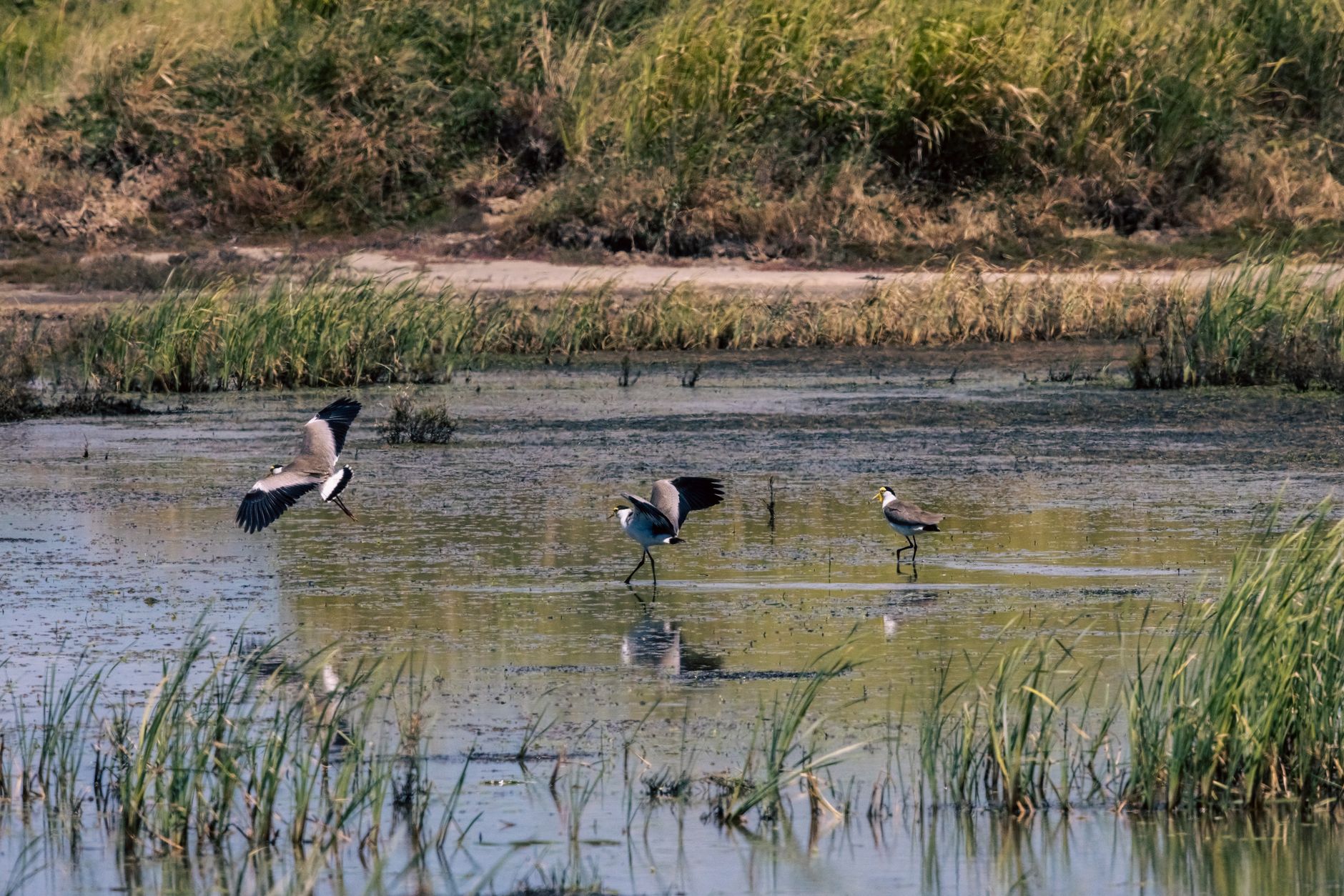
Bronze-winged jacanas, fulvous whistling ducks and pied mynas are breeding in unprecedented numbers at Chennai’s Pallikaranai Marsh, signalling a striking change in the wetland’s bird community.
Chennai, Tamil Nadu | September 27, 2026
Chennai’s Pallikaranai Marsh is witnessing an extraordinary breeding season, with several bird species that were once uncommon or absent from the wetland now appearing in record numbers.
Bronze-winged jacanas have been counted in their hundreds, while the population of fulvous whistling ducks has crossed 1,100 birds. Pied mynas are also successfully breeding at the marsh, with more than 20 hatchlings recorded this month.
The development is particularly noteworthy because these birds, while native to India, have not historically been characteristic breeding species of Pallikaranai. They are more commonly associated with other parts of the country.
Jacanas Make a Remarkable Comeback
The story of the bronze-winged jacana is perhaps the most dramatic.
The species had reportedly disappeared from Pallikaranai for decades before returning in small numbers in 2014. Since then, its presence has increased substantially.
Birders recorded 201 jacanas in August 2026 and 185 in September — the highest numbers documented at the marsh since the species returned.
Jacanas are particularly adapted to wetlands with abundant floating vegetation. Their extraordinarily long toes allow them to distribute their weight across floating leaves, giving rise to their familiar description as birds that appear to “walk on water.”
Fulvous Whistling Ducks Cross 1,100
Even more striking is the rise of the fulvous whistling duck.
A record 1,155 birds were counted at Pallikaranai in September, compared with only 68 during the same month last year.
That represents an increase of more than sixteen times within a year.
Like jacanas, fulvous whistling ducks favour wetlands containing floating and emergent vegetation, making the changing habitat at Pallikaranai particularly suitable for them.
Pied Mynas Are Raising Young
The pied myna, another species not traditionally associated in large numbers with the marsh, is also establishing itself.
Birdwatchers counted around 40 pied mynas during September, including at least 23 hatchlings.
The presence of young birds is particularly significant. Birds may visit a wetland temporarily for feeding or resting, but successful breeding indicates that the habitat is providing the resources needed for nesting and raising chicks.
Why Are These Birds Thriving?
Several factors may be behind the breeding surge.
K V R K Thirunaranan, founder of The Nature Trust, told The Times of India that the presence of floating vegetation appears to have created favourable habitat for jacanas and whistling ducks.
Organic material entering the marsh can support worms and other invertebrates that become food for birds. Cattle moving through parts of the wetland may also disturb insects and other small prey, making them accessible to pied mynas. Forest officials additionally suggested that changes in water levels caused by drainage may have contributed to the conditions.
The explanation, however, carries an important caveat: sewage and organic pollution should not automatically be interpreted as beneficial simply because some bird species exploit the resulting food resources. Excessive pollution can fundamentally damage wetland ecology.
Pallikaranai’s Bird List Is Growing Too
The breeding boom comes alongside another significant ornithological development at Pallikaranai.
Earlier this week, a pair of Terek sandpipers was recorded at the marsh for the first time, taking its documented bird tally to 205 species. The migratory shorebird breeds thousands of kilometres away across northern Eurasia before travelling south for winter.
Together, the new sighting and expanding breeding populations demonstrate the remarkable capacity of an urban wetland to support bird diversity.
One of Chennai’s Last Natural Wetlands
Pallikaranai is particularly important because it is one of the last remaining natural wetlands within the Chennai metropolitan landscape.
The wetland drains a roughly 250 sq km catchment in south Chennai, receiving water from numerous surrounding wetlands before eventually connecting towards the Bay of Bengal. Its mixture of freshwater and brackish conditions, shallow water, mudflats and aquatic vegetation produces a diverse range of habitats.
A 1,247.54-hectare portion of Pallikaranai Marsh Reserve Forest was designated a Ramsar Site in 2022, recognising its international wetland importance.
Success Comes With a Warning
Record bird numbers are encouraging, but Pallikaranai remains under considerable environmental pressure.
The Tamil Nadu State Wetland Authority identifies threats including urban development, roads and transport infrastructure, water alteration, invasive species, sewage, industrial effluent, solid waste, disturbance and climate-related changes.
That makes this year’s breeding success particularly significant.
Twelve guards currently monitor the marsh around the clock, according to Chennai District Forest Officer V A Saravanan, with surveillance aimed partly at preventing poaching and maintaining safer conditions for birds.
An Urban Wetland Reinventing Itself
Pallikaranai’s changing bird population illustrates how wetlands can evolve as water levels, vegetation, food availability and surrounding landscapes change.
The spectacular rise from 68 to 1,155 fulvous whistling ducks in just a year, the return of jacanas after decades of absence and the successful breeding of pied mynas are encouraging signs that parts of the marsh continue to provide productive habitat.
But increasing numbers of a few adaptable species should not be mistaken for proof that the entire ecosystem is healthy.
Long-term monitoring will be crucial to determine whether these populations persist — and whether Pallikaranai can retain the ecological diversity that has made this remarkable wetland a refuge for wildlife in the middle of one of India’s largest cities.
Source credit: , published September 27, 2026. Additional ecological information from the .
Leave a Reply