Wildlife India News | September 20, 2026
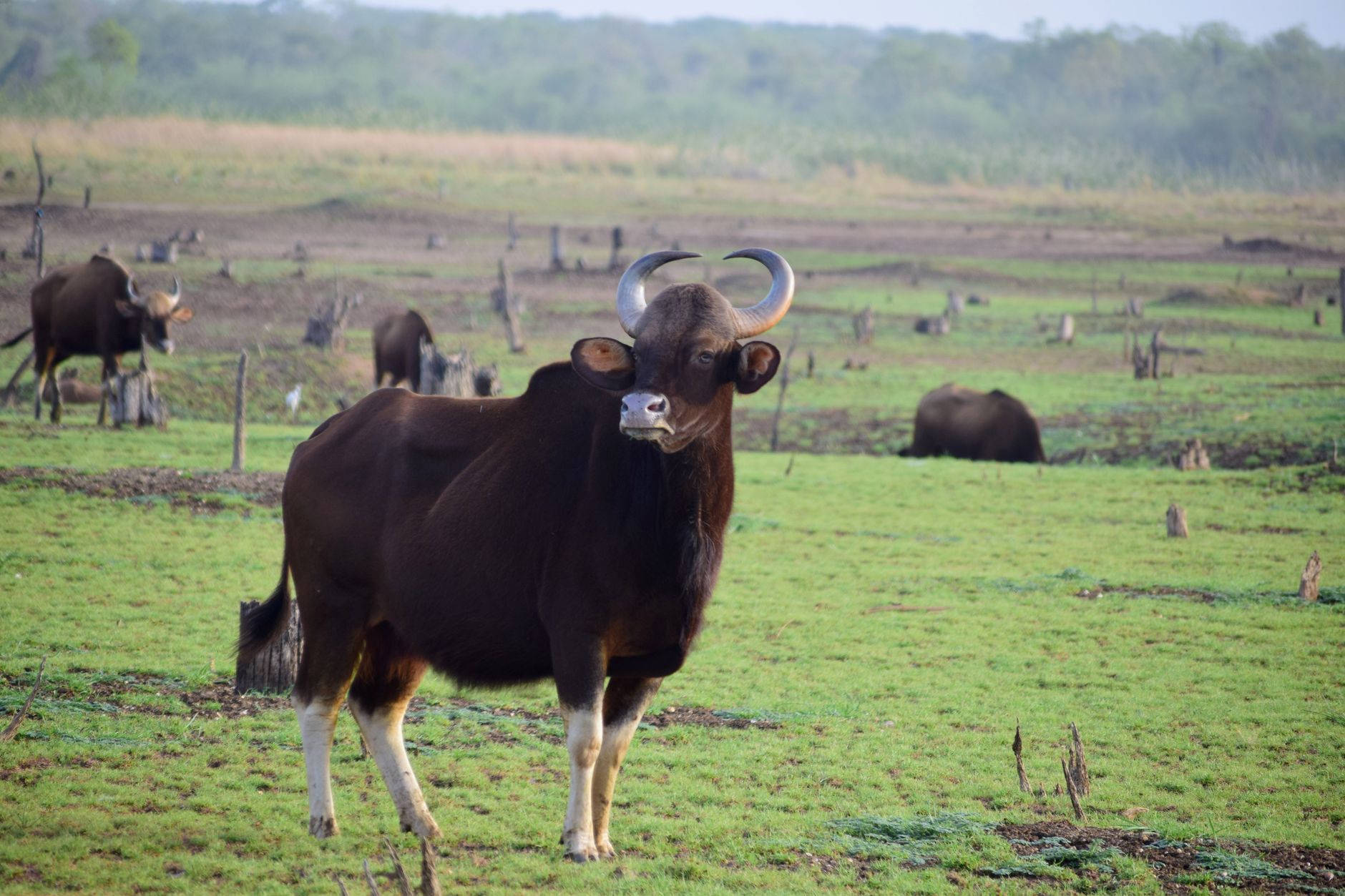
Bihar’s Valmiki Tiger Reserve (VTR) has recorded a remarkable recovery in its gaur population, with the number of these massive wild bovines increasing from approximately 50 to more than 250 over the past two decades.
The recovery is being attributed to improved habitat conditions, better availability of food and water, and sustained protection against poaching. It also highlights the growing ecological importance of Bihar’s only tiger reserve.
Wildlife recovery
Gaur population in VTR
Earlier studies, 2003–2011
~50
Current reported population
250+
The figures indicate a substantial increase, although the earlier estimate covers a range of survey years rather than a single census.
From isolated pockets to adjoining forest blocks
Earlier, gaur were largely restricted to the Sonha-Pachnad valley in the Triveni forest block and the Kapan-Achhoh area of Raghia.
Today, their presence has expanded into adjoining forest blocks.
The valleys of Triveni and Raghia remain important habitats, while perennial water sources in the northern hills provide favourable conditions for the animals.
Forest officials and conservationists consider improved habitat quality, water availability and protection important contributors to this expansion.
An important part of the Indo-Nepal wildlife landscape
Valmiki Tiger Reserve forms part of the approximately 3,550-square-kilometre Chitwan–Parsa–Valmiki landscape, connecting forests in Bihar with Nepal’s Chitwan and Parsa national parks.
Wildlife Trust of India director Samir Kumar Sinha explained that gaur previously moved occasionally from Chitwan towards Valmiki. Over time, however, a permanent population has become established within the Indian reserve.
Historical surveys recorded 296 gaur in Chitwan in 2007 and 37 in a surveyed portion of Parsa in 2008. These figures illustrate the species’ presence across the wider transboundary landscape, rather than representing current population estimates.
The connected forests are important not only for gaur but also for tigers, leopards, elephants and other wildlife moving across the international boundary.
Healthy grasslands and forests support the recovery
Gaur depend on a mixture of grasses, leaves and other vegetation.
Valmiki’s habitats contain sal forests, bamboo and several native tree species, alongside grasses that provide essential fodder.
The availability of suitable feeding grounds and dependable water sources has helped create favourable conditions for the growing population.
Gaur also have an important ecological role as large herbivores and as potential prey for tigers. Records of tiger predation on gaur were documented in VTR in 2003 and 2011.
New challenges accompany the population increase
Despite the encouraging recovery, conservation experts warn that the species’ future cannot be taken for granted.
Non-native teak plantations and invasive vegetation, including Mikania, can reduce the availability of natural fodder.
Livestock grazing may create competition for food and water. Contact with domestic cattle also presents a potential disease-transmission risk, although no gaur deaths in VTR have been attributed to livestock-borne diseases.
Experts recommend controlling invasive plants, restoring native fodder species, protecting water sources and regulating grazing and other human activities in sensitive habitats.
Regular monitoring of population numbers, breeding, seasonal movements and feeding behaviour will also be necessary.
A conservation achievement beyond tigers
Valmiki’s recovery is often discussed in terms of its tiger population, which increased from 10 in 2006 to 54 in the 2022 estimation.
The gaur’s resurgence offers another indication of the importance of sustained habitat protection in the reserve.
However, maintaining this recovery will require continued attention to the quality of forests and grasslands, rather than focusing on animal numbers alone.
The increase from roughly 50 to more than 250 gaur represents an encouraging chapter in Valmiki’s conservation story. Protecting their habitat and maintaining connections with Nepal’s adjoining forests will be essential to sustaining that progress.
Source credit: The Times of India, September 20, 2026. Additional background: Wildlife Trust of India and the National Tiger Conservation Authority.
Original report
Gaur population in VTR rises nearly fivefold in two decades
Leave a Reply