Srinagar | September 7, 2026
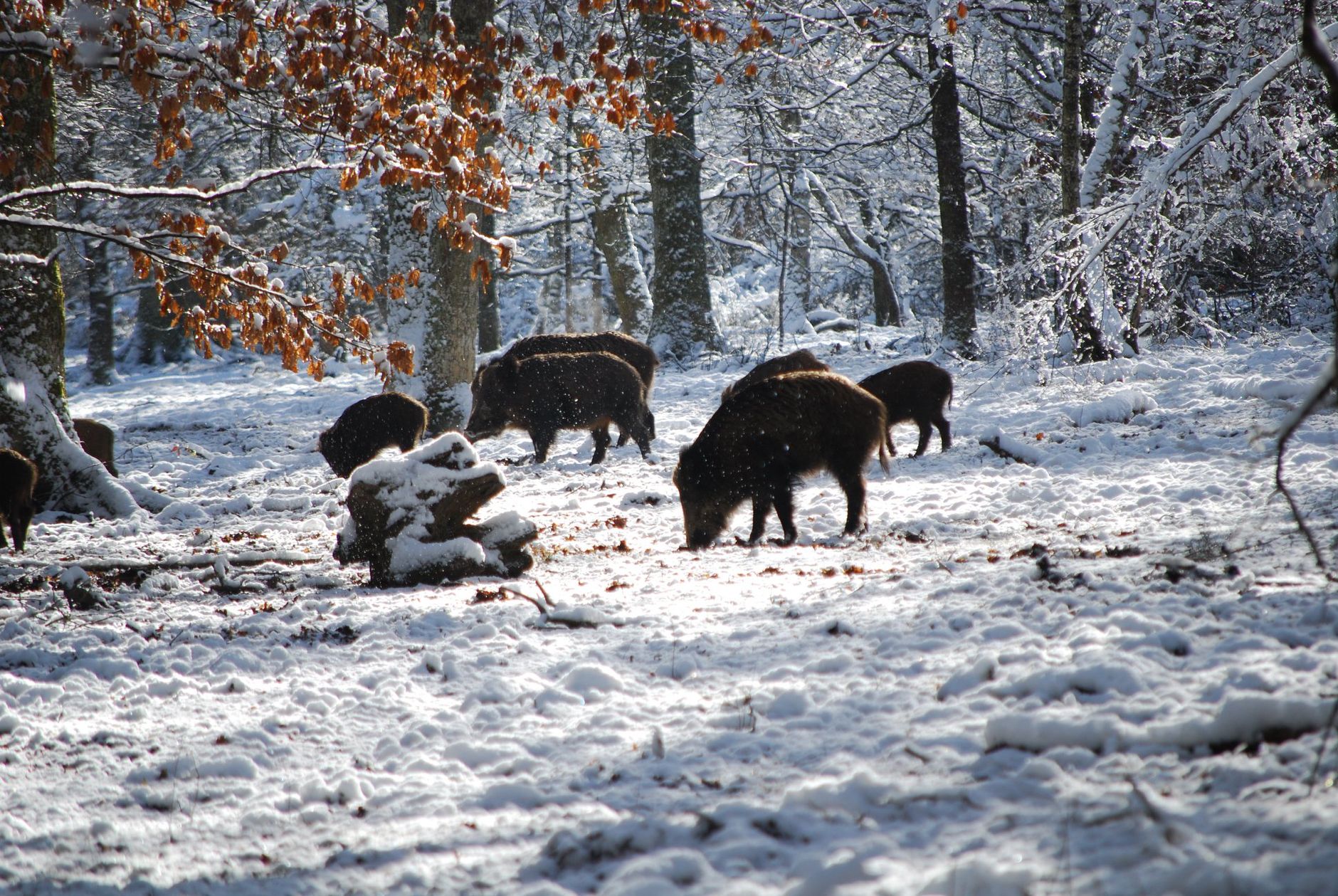
Scientists in Kashmir have launched a genetic investigation into an intriguing wildlife mystery: where are the wild boars now spreading across the Kashmir Valley coming from?
Researchers at the Sher-e-Kashmir University of Agricultural Sciences and Technology of Kashmir (SKUAST-K) will use DNA analysis to determine whether the animals are genetically connected to wild boar populations in Jammu and mainland India, or whether they have links with populations beyond the Line of Control.
The investigation assumes added importance because wild boars, once considered locally extinct in Kashmir, have reappeared and are increasingly being reported from different parts of the Valley, where farmers have complained of substantial damage to agricultural and vegetable crops.
A species that disappeared—and returned
According to Professor Khursheed Ahmed, Head of the Division of Wildlife Sciences at SKUAST-K, wild boars are not regarded as native to Kashmir. They were reportedly introduced during the reign of Maharaja Gulab Singh, particularly around the forests of Dachigam and adjoining areas, for hunting.
The species subsequently disappeared from Kashmir and was considered locally extinct during the 1980s. The last sighting from that period was reported in 1984.
Then came a surprise.
In 2013, three wild boars were reported from Dachigam, marking their reappearance almost three decades later. Since then, sightings and reports of wild pigs have emerged from several parts of the Valley.
The question scientists now want to answer is whether these animals represent descendants or expansion of populations elsewhere—or have a different geographic origin.
DNA could reveal where they came from
A biological sample has already been collected for the genetic investigation.
Researchers will initially compare the DNA with wild boar populations in Jammu and other parts of mainland India. They also want to investigate whether the Kashmir animals show genetic connections with populations on the other side of the Line of Control.
The work will then move beyond simply establishing their origin.
Scientists plan to study the population genetics of wild boars across Kashmir, comparing animals from northern, southern and intervening parts of the Valley.
This could establish whether Kashmir’s wild boars form one interconnected population in which animals are moving and breeding across the landscape, or whether several relatively isolated populations have developed.
The results could also reveal patterns of gene flow and provide clues about how rapidly the species has expanded its range.
Study expected to take up to six months
The genetic investigation has only recently begun and is expected to take approximately five to six months, according to Prof Ahmed.
Importantly, scientists are also planning a population census.
At present, there is no reliable estimate of how many wild boars are living across Kashmir. Establishing their numbers will therefore be critical to understanding whether the apparent increase in encounters represents genuine population growth, geographical expansion, or both.
Farmers face crop damage
The animal’s resurgence is no longer simply an ecological curiosity.
Farmers in several areas have reported wild boars entering agricultural and vegetable fields and causing extensive crop damage.
One area experiencing repeated intrusions is Ajas in Bandipora district. The reports prompted the district administration to consult wildlife experts at SKUAST-K.
The possibility of declaring the animals “vermin” under wildlife law was also discussed as a potential means of allowing population-control measures. However, Prof Ahmed stressed that scientists first need to understand the population properly before such intervention is considered.
Why are wild boars expanding across Kashmir?
This may ultimately become one of the most interesting questions arising from the research.
If the genetic evidence confirms that wild boars have undergone substantial range expansion, researchers will need to determine how and why that expansion occurred.
Changes in habitat, land use, food availability, connectivity between landscapes and movement from neighbouring populations are among the kinds of ecological questions that population and distribution studies can help scientists investigate. The current report, however, does not yet establish which factors are responsible.
That distinction is important: the genetic investigation has been launched precisely because the origin and population history of Kashmir’s resurging wild boars remain uncertain.
A wildlife mystery waiting for an answer
The return of an animal that had apparently vanished from Kashmir for nearly three decades presents scientists with an unusual opportunity.
DNA may now allow researchers to reconstruct part of that missing history.
If Kashmir’s wild boars are closely related to Jammu populations, it could point toward expansion from the south. A different genetic relationship could suggest another route. Population genetics could then show whether the animals spreading through different parts of the Valley are interbreeding.
Combined with the proposed census, the study should provide authorities with a much stronger scientific basis for deciding how to manage the species and address increasing conflict with farmers.
For now, Kashmir knows that its wild boars have returned.
What scientists are trying to discover is where they came from—and how they managed to come back.
Source credit: Early Times, September 5, 2026.
Leave a Reply