Dehradun | September 7, 2026
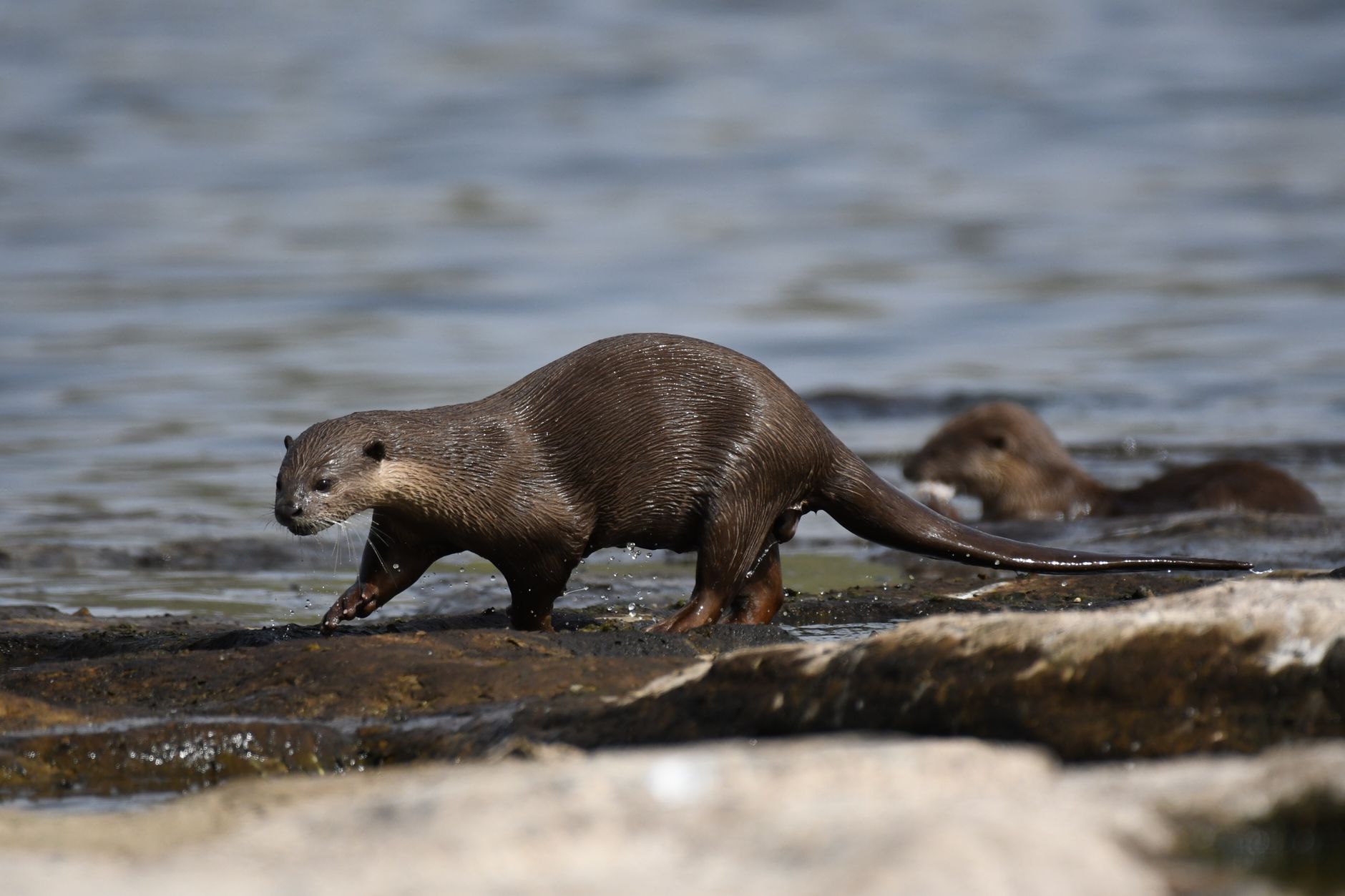
A major new study by scientists from the Wildlife Institute of India (WII) has revealed how little prime habitat remains for the smooth-coated otter across the vast Ganga River Basin—and how disproportionately important Uttarakhand has become for the species.
The first basin-wide assessment of its kind found that only 2,138 sq km, or about 0.26% of the assessed Ganga Basin, qualifies as highly suitable habitat for the smooth-coated otter (Lutrogale perspicillata). Of this, around 1,260 sq km is in Uttarakhand, making the state the most important stronghold identified by the study.
Eight years, 22 rivers and thousands of kilometres surveyed
Published in the peer-reviewed journal PLOS One, the study was conducted between 2016 and 2024. Researchers surveyed approximately 7,680 km of river stretches covering the Ganga and 22 tributaries.
Scientists looked for direct sightings as well as evidence such as tracks, spraints, grooming sites and dens. They compiled 712 presence records and used statistical and machine-learning models to determine where suitable otter habitat persists across the basin.
The research was led by WII scientist Syed Ainul Hussain, with Ashish Kumar Panda, Surya Prasad Sharma, Naureen Shahniaz, Shivani Barthwal, Sk. Zeeshan Ali and Ruchi Badola among the authors. The project was funded by the National Mission for Clean Ganga under the Ministry of Jal Shakti.
Uttarakhand emerges as the stronghold
The state-wise findings underline Uttarakhand’s significance. About 1,260 sq km of its assessed landscape was classified as highly suitable—approximately 2.43%.
Uttar Pradesh ranked second with about 495 sq km, followed by Himachal Pradesh with 178 sq km and Haryana with 145 sq km. Smaller fragments were identified in Rajasthan, Bihar, Madhya Pradesh and Jharkhand, while no highly suitable areas were identified in West Bengal, Chhattisgarh or Delhi under the study’s modelling.
The concentration of suitable habitat in Uttarakhand is particularly significant because smooth-coated otters need healthy, relatively undisturbed river systems with adequate prey and secure riverbanks.
Terai remains crucial for otters
The study identified the Terai landscape of India and Nepal as a major zone of high habitat suitability.
Particularly important areas occur along the Ganga’s left-bank tributaries and around protected landscapes including Rajaji National Park, Corbett Tiger Reserve, Dudhwa Tiger Reserve, Katerniaghat Wildlife Sanctuary and Valmiki Tiger Reserve.
Other potentially important stretches occur around the Chambal and Son river systems, where protected areas such as the National Chambal Sanctuary and Son Gharial Sanctuary help maintain relatively intact riverine habitat.
Researchers believe these landscapes perform well because of a combination of lower human disturbance, intact riverside vegetation, wetlands and relatively continuous riverbanks.
Protected areas make the biggest difference
One of the study’s clearest findings is the importance of protected areas.
Proximity to protected wildlife areas was identified as the single most influential factor affecting habitat suitability, contributing about 20% to the model. Stable daily weather conditions contributed 16%, proximity to rivers 15%, and reliable year-round surface water 14%.
This provides strong evidence that protecting not only rivers themselves but also their adjoining terrestrial and wetland habitats can benefit otters.
Why otters matter to the Ganga
Smooth-coated otters are among India’s three otter species and are currently classified as Vulnerable on the IUCN Red List.
Primarily fish-eaters, they occupy forest rivers, wetlands, reservoirs, lakes and mangroves, although they can also use irrigation canals and rice fields. Their diet can additionally include crustaceans, amphibians, reptiles, birds and small mammals.
As top aquatic predators, otters can also serve as valuable indicators of river health. A river capable of maintaining an otter population generally needs adequate fish populations, water availability and functioning riverbank habitat.
That makes their conservation relevant not only to one charismatic mammal but to the health of the wider freshwater ecosystem.
A worrying 21% lies outside protected areas
Despite the importance of protected areas, the researchers found that approximately 21% of suitable otter habitat lies outside the formal protected-area network.
These stretches may be especially vulnerable to fragmentation and human pressures.
The study warns that suitable habitat across the Ganga Basin is already fragmented and stresses the importance of maintaining river connectivity so otters can disperse between populations and maintain genetic exchange.
Scientists recommend stronger management of threats including sand mining, riverbed agriculture and encroachment along riverbanks, particularly within identified otter hotspots.
Corbett-Rajaji population offers hope
WII researchers have monitored smooth-coated otters in the Corbett-Rajaji landscape since the early 1990s.
Hussain told The Times of India that the persistence of this population indicates relatively secure habitat and an adequate prey base—conditions that will need to be maintained if otters and other predators are to survive there over the long term.
The study also identified some reservoirs and barrages—including Okhla, Banbasa and Farakka—as local refuges because they maintain perennial water and prey resources.
A small fraction of an enormous river system
Perhaps the most striking conclusion is the scale of what remains.
Across one of the world’s great river basins, the researchers classified only 0.26% as highly suitable for smooth-coated otters. Much of the basin was rated least suitable.
The findings therefore make Uttarakhand’s river systems disproportionately valuable.
Protecting these surviving strongholds—and maintaining connections between them—could determine whether smooth-coated otters continue to thrive in the Ganga landscape.
And because otters sit near the top of the freshwater food web, protecting an otter’s river ultimately means protecting the river itself.
Source credit: Based on reporting by Shivani Azad in The Times of India and the original WII-led research published in PLOS One on August 19, 2026.
Leave a Reply