Baran, Rajasthan | August 27, 2026
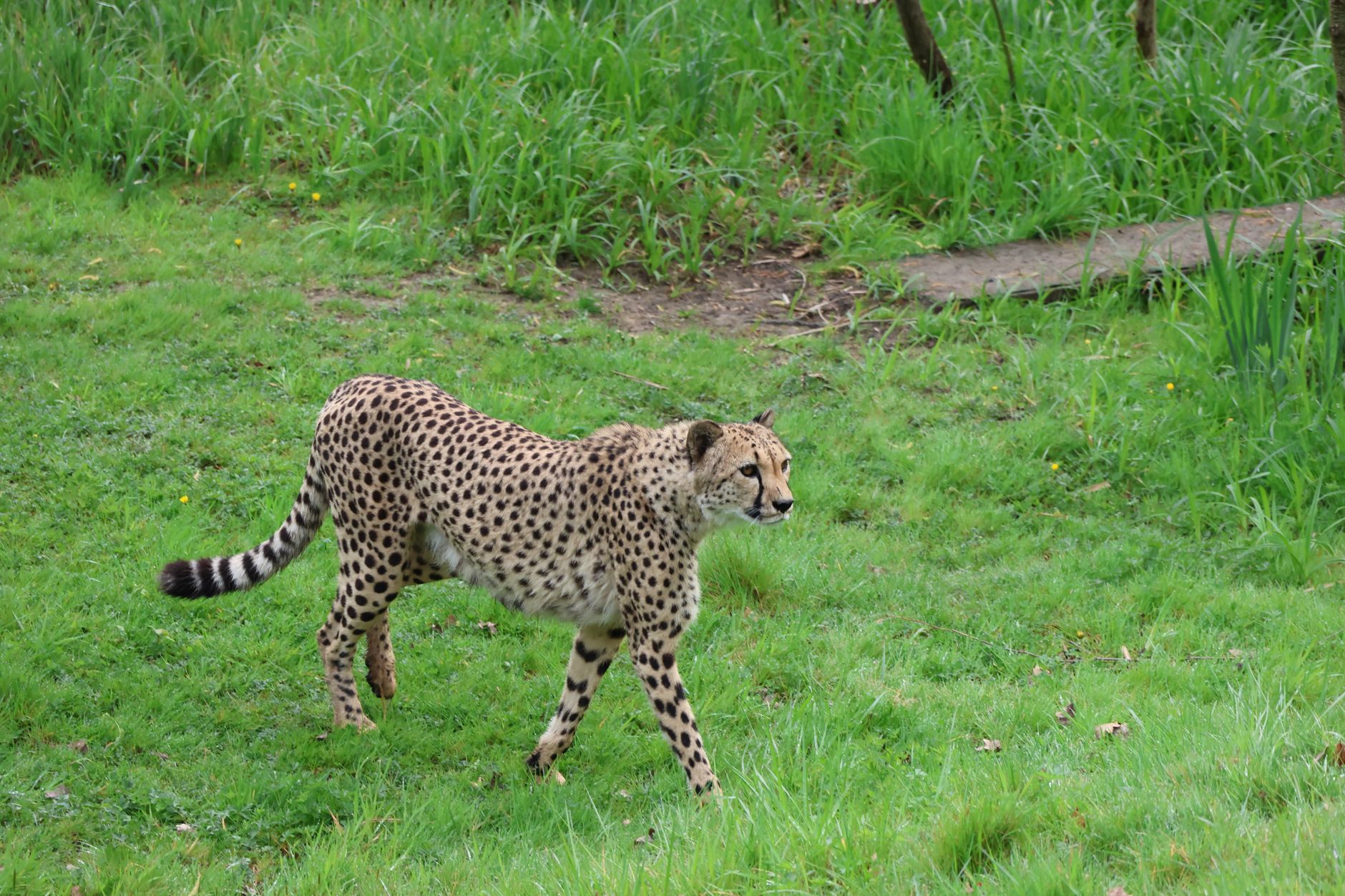
Two young female cheetahs brought to India from Botswana have moved out of Kuno National Park in Madhya Pradesh and entered Rajasthan, reaching the Rajpur-Behta forests in the Shahabad area of Baran district.
The cheetahs, identified as OKAD-1 and OKAD-2, are around two-and-a-half years old. They were among the nine cheetahs brought from Botswana to India on February 28, 2026. After spending time at Kuno, the two have now ventured into the forests of neighbouring Rajasthan.
Forest teams keep a close watch
The movement has prompted the Kuno National Park and Rajasthan Forest Department to intensify surveillance in the Shahabad landscape.
DFO Vivekanand Bade is monitoring the situation, while forest personnel are maintaining continuous vigil over the cheetahs’ movements. Their locations are being tracked to ensure both animal welfare and the safety of people living around the forest.
The latest development comes shortly after another female cheetah, Veera, was also seen in the same forest area. Veera remained in the region for several days before returning to Madhya Pradesh two days before OKAD-1 and OKAD-2 were reported there.
Natural territorial movement
Forest officials have described the cheetahs’ movement from Kuno into Rajasthan as natural territorial behaviour.
A significant part of the landscape used as a potential cheetah corridor extends through Rajasthan, covering areas including Baran, Sawai Madhopur, Kota, Karauli, Jhalawar, Bundi and Chittorgarh.
Officials said the combined forest landscape of Madhya Pradesh and Rajasthan covers approximately 17,000 sq km, with Rajasthan accounting for around 6,500 sq km of forest cover.
The repeated movement of cheetahs into the Shahabad forests is being viewed as an indication that the area could provide suitable habitat for the species in the future.
Rajasthan becomes increasingly important for Project Cheetah
The latest movement is significant because it shows the cheetahs are not necessarily remaining within the boundaries of their designated reintroduction site.
Cheetahs are naturally wide-ranging animals, particularly when young individuals begin looking for territories. Their movement across state boundaries could therefore become increasingly important as India’s cheetah population grows.
The development also strengthens the case for maintaining safe habitat connectivity between Kuno and suitable landscapes in Rajasthan.
Villagers asked to maintain distance
With two cheetahs now moving through the Shahabad forests, authorities have appealed to local residents to maintain a safe distance and avoid gathering crowds around the animals.
People have also been advised to immediately inform forest officials if they spot either cheetah rather than approaching or following them.
The precautions are intended to prevent unnecessary disturbance to the animals and reduce the possibility of an encounter between cheetahs and people.
A promising sign for India’s cheetah programme
India received nine cheetahs from Botswana in February 2026, adding another African source population to Project Cheetah. The animals were initially placed under quarantine and acclimatisation arrangements at Kuno before being gradually integrated into the larger landscape.
The movement of OKAD-1 and OKAD-2 into Rajasthan could therefore be an important development for the programme.
Rather than being viewed simply as animals leaving Kuno, their movement demonstrates the importance of creating a larger connected landscape in which cheetahs can disperse naturally and establish territories.
If Shahabad and adjoining forests continue to attract cheetahs, Rajasthan could eventually play a much larger role in India’s long-term effort to establish a free-ranging and self-sustaining cheetah population.
Source credit: This story is based on reporting by The Times of India, “Botswana cheetahs from Kuno enter Raj, spotted in Baran’s Shahabad forests,” by Ajay Singh Ugras, published on August 27, 2026.
Leave a Reply