
Nagaon, Assam | August 23, 2026
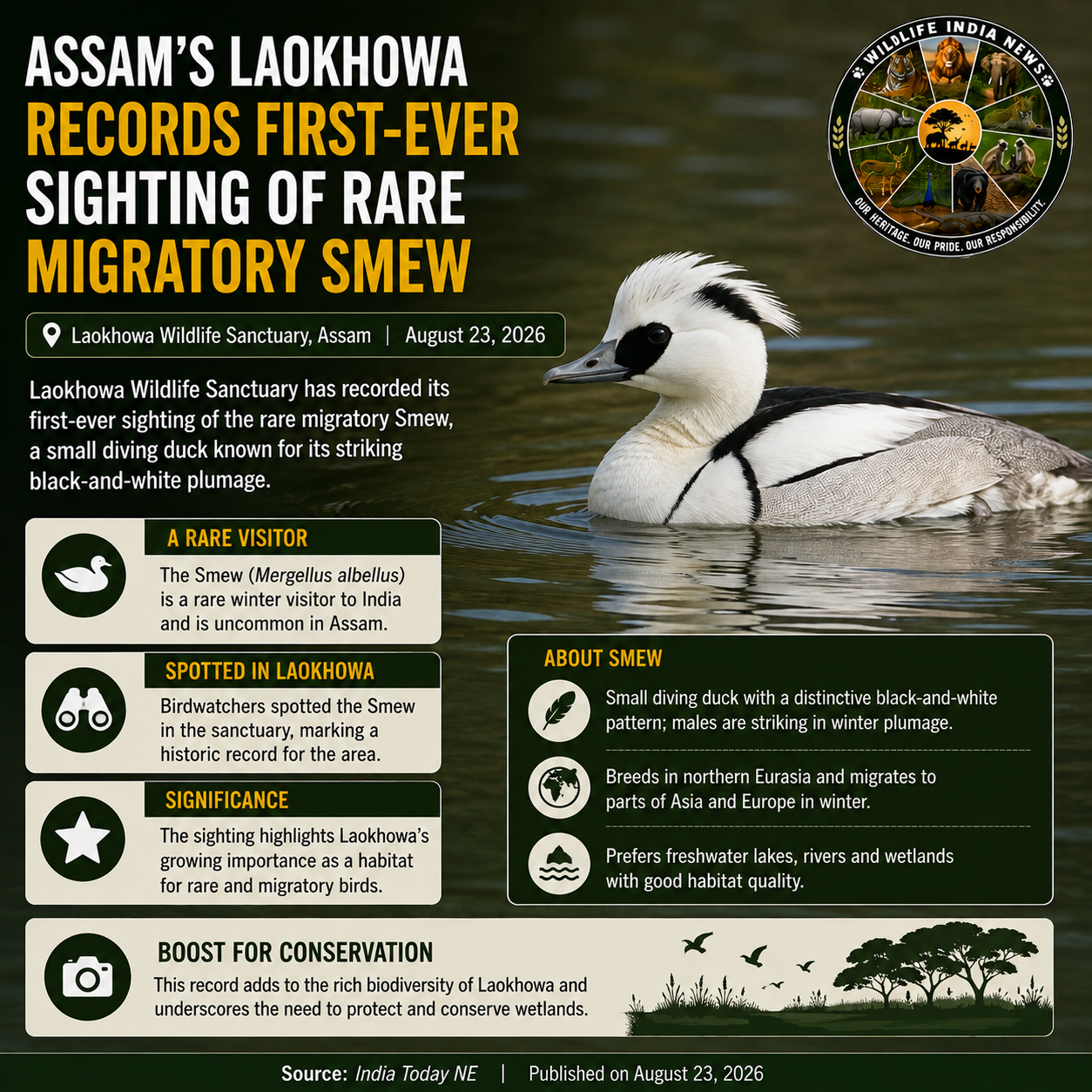
A rare migratory waterbird has made its first-ever recorded appearance at Laokhowa Wildlife Sanctuary in Assam, marking an important addition to the sanctuary’s documented bird diversity.
The bird, identified as the Smew (Mergellus albellus), was recorded during the 7th Kaziranga Waterbird Count 2026, conducted across important wetlands of the Kaziranga landscape.
A rare winter visitor
The Smew is a small diving duck known for its striking appearance. The male has predominantly white plumage with distinctive black markings around the eyes and head.
It is a rare winter migrant to India, travelling from its breeding grounds in northern Eurasia to parts of Europe and Asia during the colder months. Its appearance at Laokhowa is therefore particularly significant because the species had not previously been recorded there.
Wetlands provide important habitat
The sighting took place during surveys of important wetlands including Rowmari, Dondowa and Muamari beels in the Laokhowa area.
The presence of the Smew indicates that these wetlands continue to provide suitable conditions for migratory waterbirds. According to Assam Forest and Climate Change Minister Jayanta Malla Baruah, the discovery is another indicator of the ecological importance of Laokhowa’s wetlands and their role as wintering grounds for migratory birds.
Bengal Florican also recorded
The Smew was not the only significant finding.
Survey teams also recorded the endangered Bengal Florican, adding further conservation importance to the latest bird count. The survey recorded a high number and diversity of bird species across the wetlands.
The combination of rare migratory species and threatened grassland birds highlights the importance of protecting Laokhowa’s wetlands, grasslands and surrounding habitats.
A conservation milestone for Laokhowa
The first Smew record adds another notable species to Laokhowa’s growing list of birds and strengthens the sanctuary’s reputation as an important bird habitat in Assam.
For conservationists and birdwatchers, the sighting is encouraging evidence that the sanctuary’s wetlands continue to support both resident and migratory birdlife.
It also reinforces the need to maintain healthy wetlands and minimise disturbances that could affect migratory birds during their seasonal stay.
Source credit: This story is based on reporting by India Today NE, with information from PTI, published on August 23, 2026.
Assam’s Laokhowa Records First-Ever Sighting of Rare Migratory Smew
Wildlifeindia News Desk
Leave a Reply