Alwar, Rajasthan | August 17, 2026
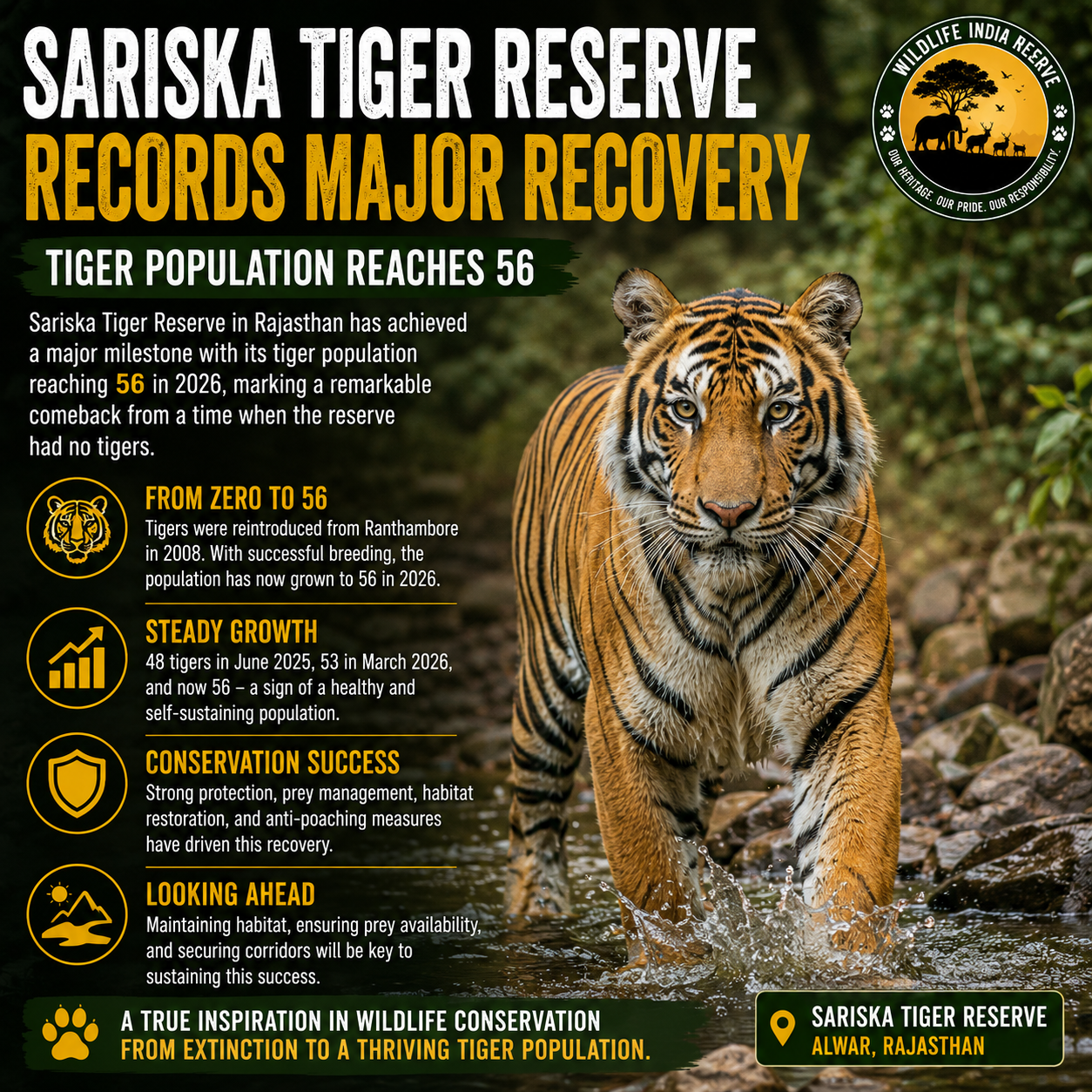
The Sariska Tiger Reserve has recorded another major milestone in its remarkable conservation journey, with its tiger population reaching 56 in 2026, according to a report updated on August 16.
The achievement is particularly significant because Sariska once lost its entire tiger population to poaching. The reserve has since become one of India’s most important examples of successful tiger reintroduction and population recovery.
From zero tigers to 56
Sariska’s crisis became evident in the mid-2000s, when poaching resulted in the disappearance of its wild tigers. A major recovery programme was subsequently launched, with the relocation of tigers from Ranthambore Tiger Reserve beginning in 2008. Further translocations followed in subsequent years.
The programme eventually moved beyond simply bringing tigers back. Reintroduced animals began breeding successfully, establishing a self-sustaining population. The first major breakthrough came in 2012, when tigress ST-2 gave birth to two cubs—the first wild tiger cubs born in Sariska in more than a decade.
By June 2025, Sariska’s population had reached 48 tigers, including 19 cubs. The population subsequently continued to grow, reaching 53 in March 2026 after tigress ST-17 was photographed with three cubs.
A June 2026 report put the reserve’s population at 56 tigers.
Conservation beyond tiger numbers
The recovery has been supported by a combination of habitat protection, prey management, scientific monitoring, anti-poaching measures and community participation. Village relocation has also helped create relatively undisturbed areas important for breeding females and cubs.
The National Tiger Conservation Authority identifies Sariska and Panna as important examples of successful tiger reintroduction in India.
However, the growing population also brings new challenges. As tiger numbers rise, maintaining adequate habitat, prey availability and safe movement corridors becomes increasingly important. Sariska forms part of the wider Northern Aravalli landscape, making connectivity with surrounding forests crucial for the long-term survival of its expanding tiger population.
Sariska’s transformation—from a reserve with no tigers to one supporting 56 individuals—stands as a striking example of how sustained conservation, scientific management and long-term protection can help rebuild a lost wild population.
Leave a Reply