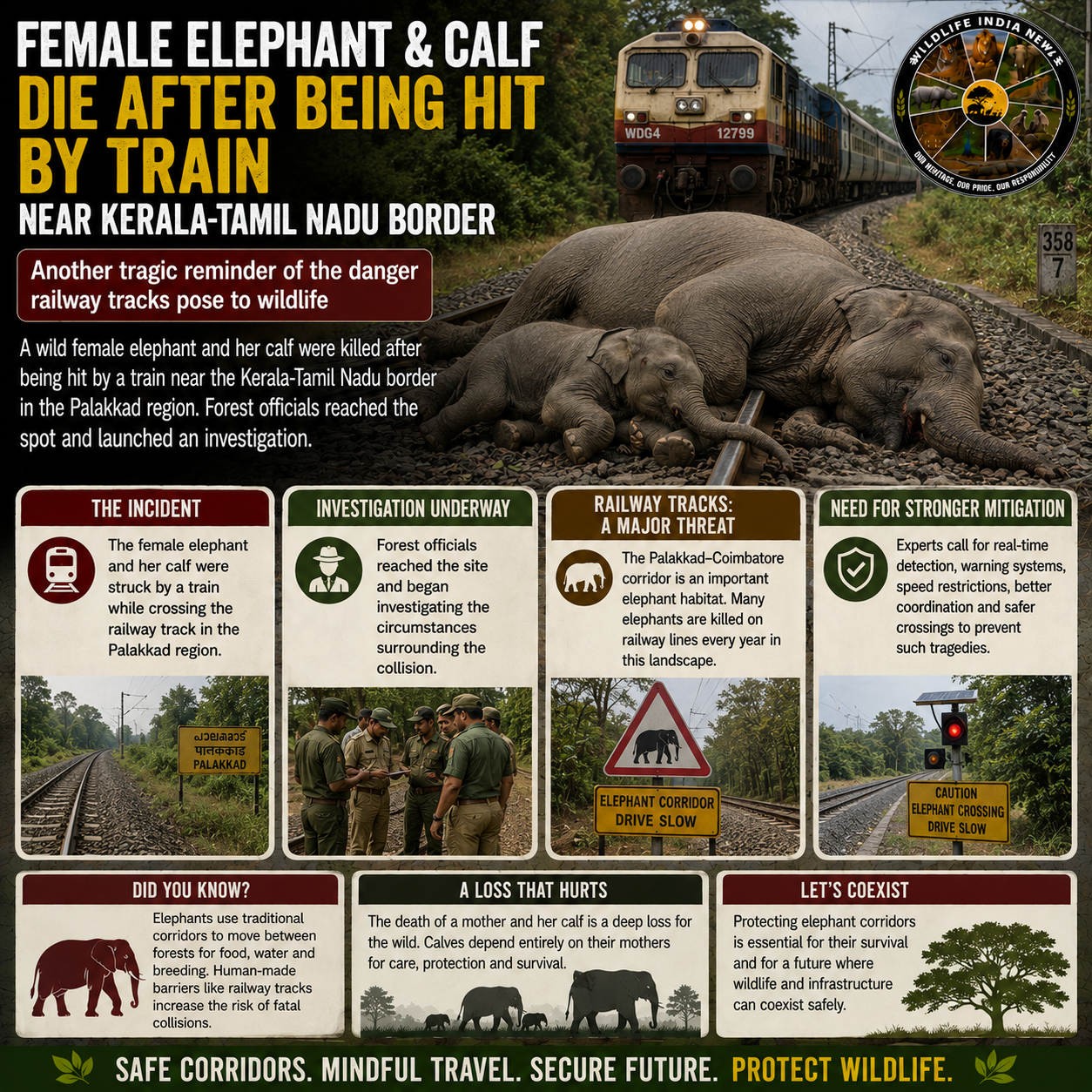
Palakkad, Kerala: A tragic railway collision near the Kerala-Tamil Nadu border has claimed the lives of a wild female elephant and her calf, once again highlighting the dangers posed by railway tracks passing through elephant habitats.
The incident occurred in the Palakkad region, where railway lines run through landscapes used by wild elephants. According to officials, the female elephant and the calf were struck by a train while crossing the railway track. Both animals died in the accident.
Forest officials reached the site following the collision and began investigating the circumstances surrounding the incident. The exact details of the train’s speed, the movement of the elephant herd and the circumstances leading to the collision are being examined.
Railway tracks remain a major threat
The Kerala-Tamil Nadu border around Palakkad and Coimbatore contains important elephant habitats and movement corridors. Railway tracks passing through these landscapes can become particularly dangerous when elephants cross them at night or during the early morning hours.
Official records have documented repeated elephant deaths on railway lines in the Coimbatore–Palakkad corridor. Tamil Nadu Forest Department records, for example, list multiple elephant fatalities caused by train collisions in the region over the years.
The deaths of a mother and calf are especially concerning because elephant calves depend heavily on their mothers and herd for protection and survival.
Need for stronger mitigation
Wildlife conservationists have repeatedly called for stronger measures along railway stretches passing through elephant corridors, including real-time elephant detection, improved warning systems, speed restrictions, better coordination between railway and forest officials, and safer crossings.
The latest deaths underline the need to strengthen such measures so that railway infrastructure and elephant movement can coexist more safely.
The loss of both a mother and her calf is a stark reminder that protecting elephant corridors is essential to reducing fatal train-wildlife collisions.
Leave a Reply