
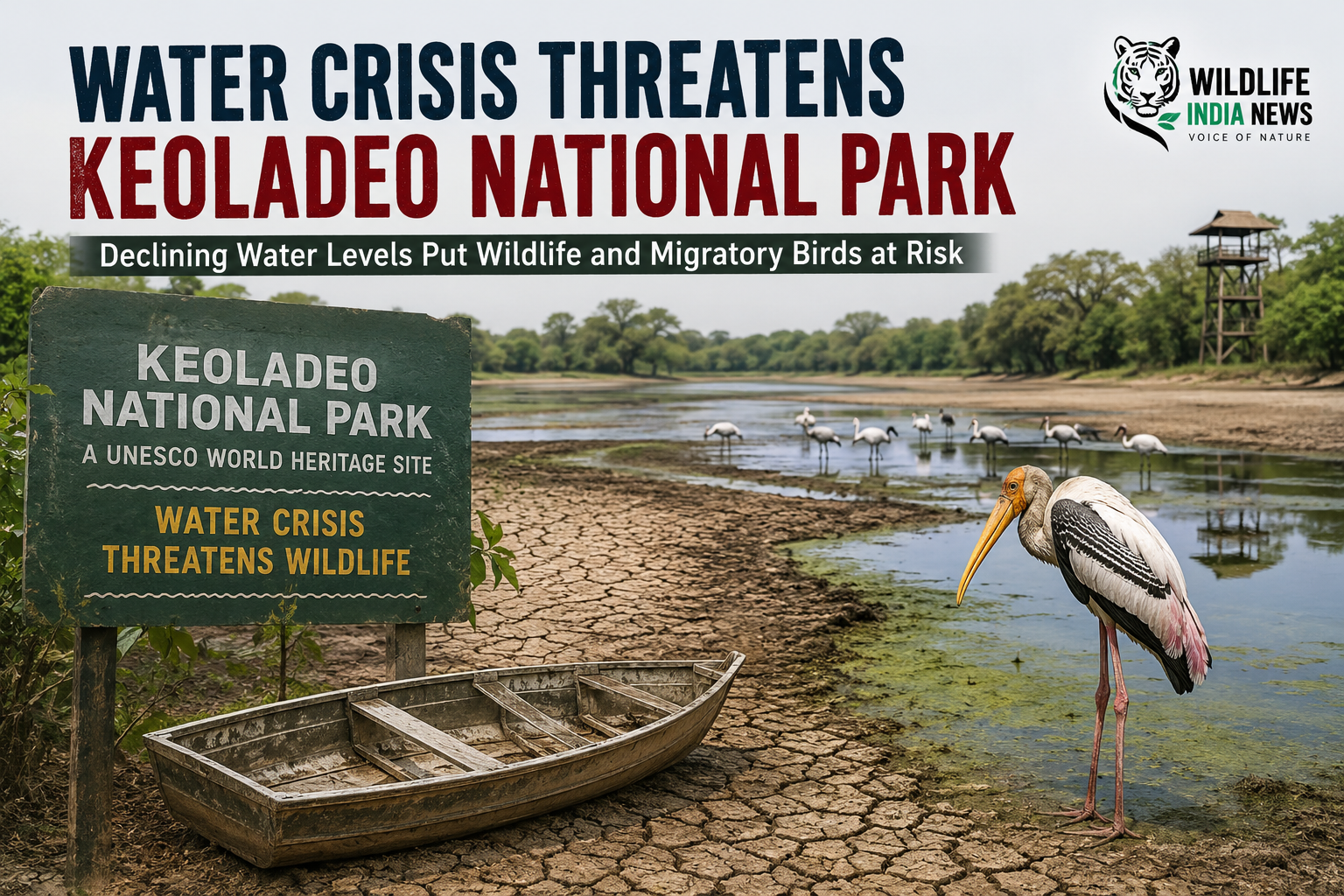
Keoladeo National Park, the world-famous wetland in Rajasthan and a UNESCO World Heritage Site, is facing a severe water crisis, raising concerns over the survival of its rich biodiversity. The shortage of water has begun affecting aquatic habitats, fish populations, and the migratory birds that make the park their seasonal home.
According to park officials, no water has been released from the Panchana Dam this year, while below-normal monsoon rainfall has further worsened the situation. The administration has urged the state water resources department to release water immediately to prevent irreversible ecological damage.
Keoladeo National Park depends heavily on regulated water inflows to maintain its network of wetlands. Adequate water is essential for sustaining aquatic vegetation, fish breeding, and nesting habitats for hundreds of resident and migratory bird species. Without timely replenishment, the wetland ecosystem begins to dry up, threatening wildlife across the food chain.
The park, spread over nearly 29 square kilometres, is internationally renowned for hosting more than 370 bird species, including painted storks, pelicans, cranes, ducks, geese, and numerous migratory waterfowl. Besides birds, it is home to mammals such as nilgai, chital, sambar, wild boar, jackals, fishing cats, and several reptile species.
Conservationists warn that prolonged water shortages could lead to declining bird numbers, increased fish mortality, habitat degradation, and renewed concern from UNESCO over the site’s ecological integrity. Water scarcity has remained one of Keoladeo’s biggest conservation challenges for decades, making timely water management crucial for the park’s long-term survival.
Leave a Reply