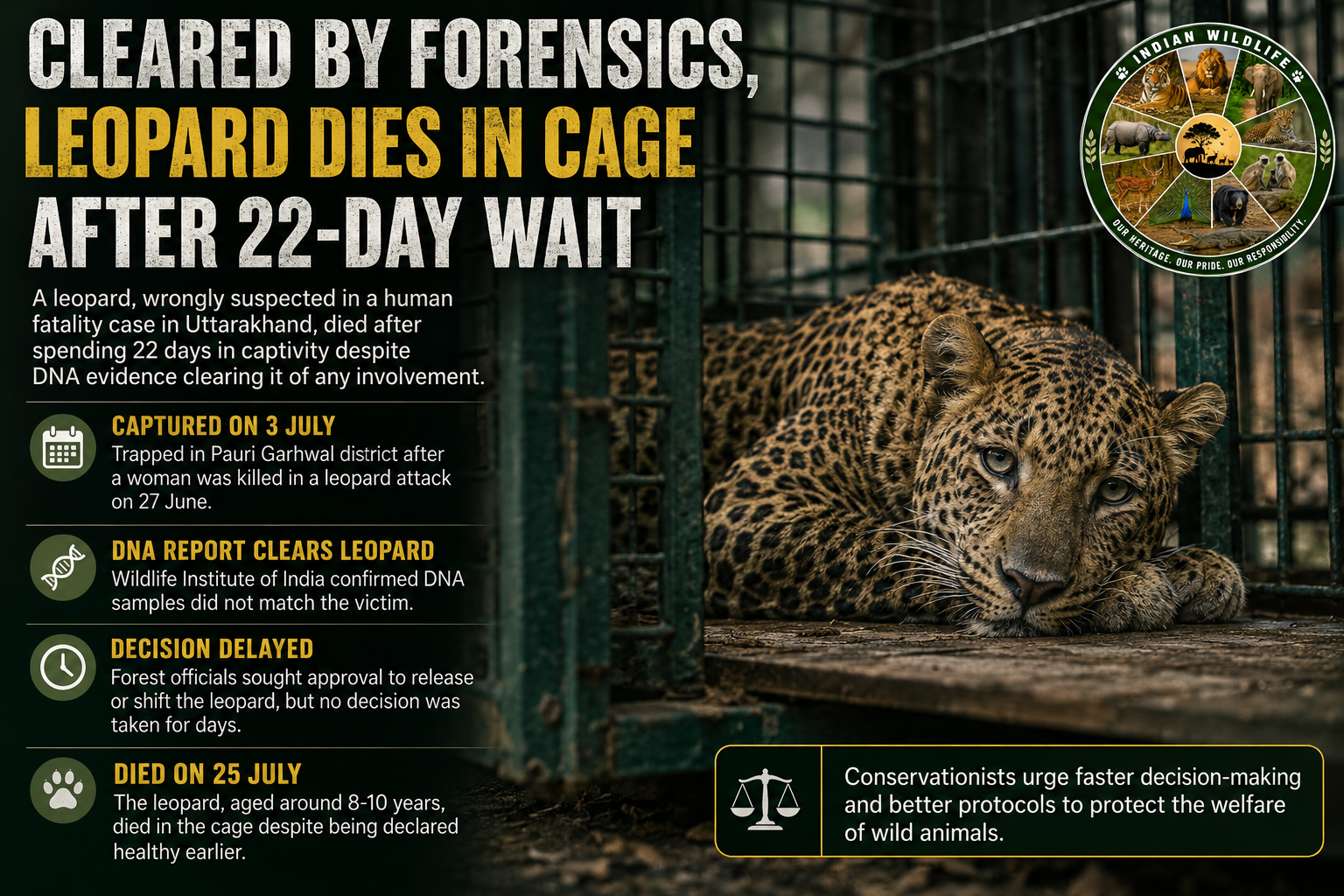
A leopard captured in Uttarakhand’s Pauri Garhwal district on suspicion of killing a woman has died after spending 22 days confined in a cage, despite forensic evidence proving it was not responsible for the fatal attack. The incident has triggered serious concerns over delays in wildlife management decisions and the welfare of captured wild animals.
The leopard was trapped on 3 July near Banasi village in the Sald Mahadev area of Nainidanda, a few days after 65-year-old Sushila Devi was killed in a leopard attack on 27 June. Forest officials collected biological samples from both the victim’s body and the captured leopard and sent them to the Wildlife Institute of India (WII) for forensic analysis.
The WII report later confirmed that the DNA samples did not match, clearing the leopard of any involvement in the woman’s death. Following the report, Garhwal Divisional Forest Officer Mahatim Yadav sought approval from senior authorities to either release the animal back into the wild or transfer it to a rescue centre. However, no decision was taken for several days.
While the file remained pending, the leopard continued to struggle inside the cage, reportedly injuring itself repeatedly. Despite veterinary treatment, it died on 25 July. Ironically, veterinarians had examined the animal on 6 July and declared it healthy, while also warning that it was highly aggressive and should not be kept in prolonged captivity.
A post-mortem was conducted by two veterinarians, with tissue samples preserved for further examination. The carcass was disposed of according to established wildlife protocols. The leopard was estimated to be between eight and ten years old.
The incident has sparked criticism from wildlife conservationists, who argue that bureaucratic delays can have fatal consequences for wild animals. Conservationists have called for quicker decision-making, improved rescue protocols, and greater emphasis on the physical and psychological well-being of animals held in captivity during investigations.
Leave a Reply