
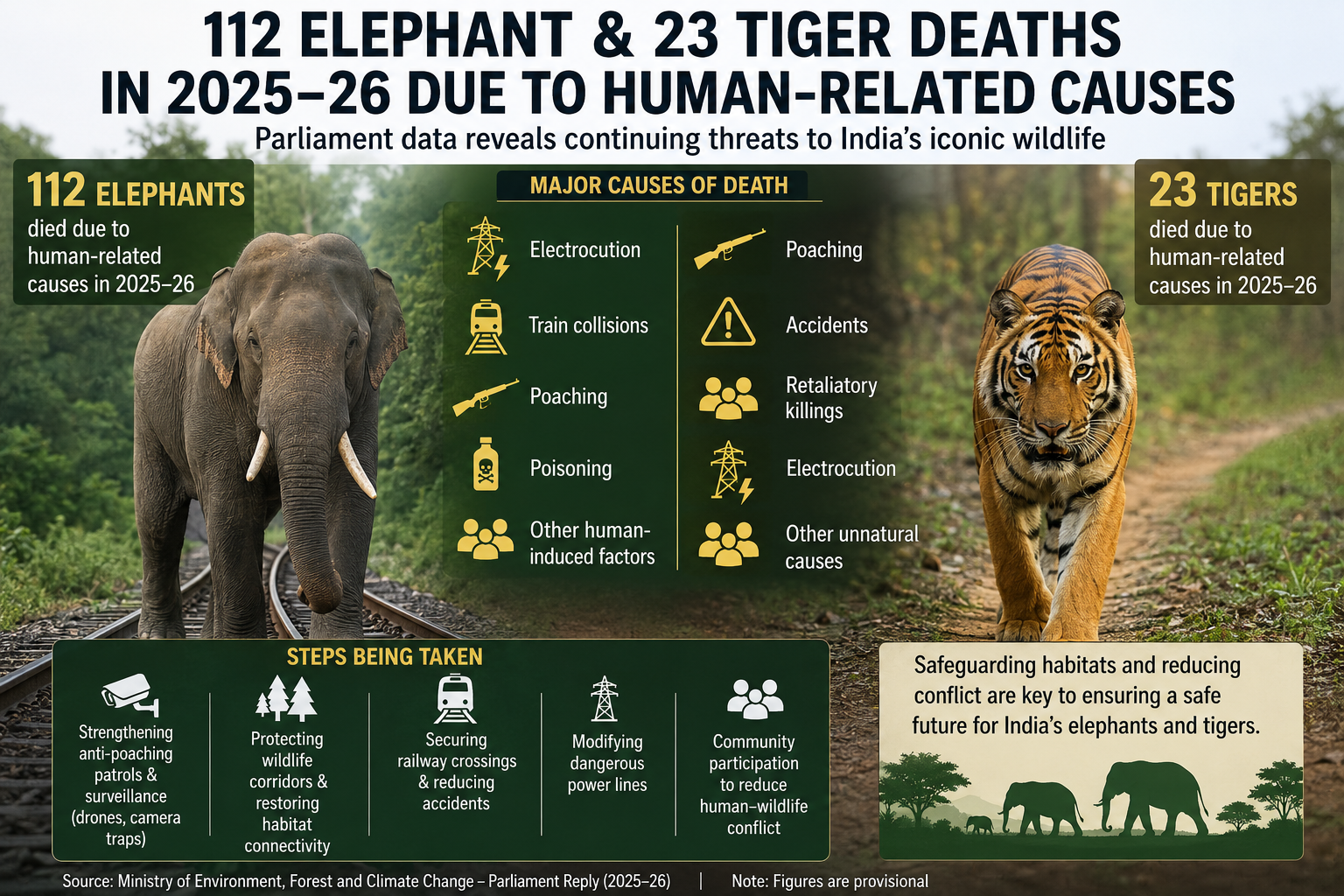
The Union Government has informed Parliament that 112 elephants and 23 tigers died due to human-related causes during the financial year 2025–26, underscoring the continuing threats faced by India’s iconic wildlife despite ongoing conservation efforts. The figures were shared by the Ministry of Environment, Forest and Climate Change in a written reply in Parliament.
According to the data, elephant deaths were caused by incidents such as electrocution, train collisions, poaching, poisoning and other human-induced factors. Tigers also lost their lives due to poaching, accidents, retaliatory killings, electrocution and other unnatural causes, highlighting the growing pressures on wildlife living both inside and outside protected areas.
The government stated that several measures are being implemented to reduce such mortality. These include strengthening anti-poaching patrols, improving intelligence gathering against wildlife crime, deploying modern surveillance technologies such as camera traps and drones, protecting wildlife corridors, and coordinating with railway and power authorities to minimise accidents involving wild animals.
For elephants, mitigation measures include securing railway crossings, insulating or modifying dangerous power lines, restoring habitat connectivity, and implementing programmes to reduce human-elephant conflict in vulnerable landscapes. Tiger conservation efforts continue under the National Tiger Conservation Authority (NTCA), with regular monitoring, habitat management and rapid response teams to address conflict situations.
Conservationists note that while India’s populations of elephants and tigers remain globally significant, increasing infrastructure development, habitat fragmentation and expanding human settlements continue to pose serious challenges. They stress that long-term survival of these species will depend on safeguarding habitats, maintaining wildlife corridors, and reducing conflict between people and wildlife through science-based management and community participation.
Leave a Reply