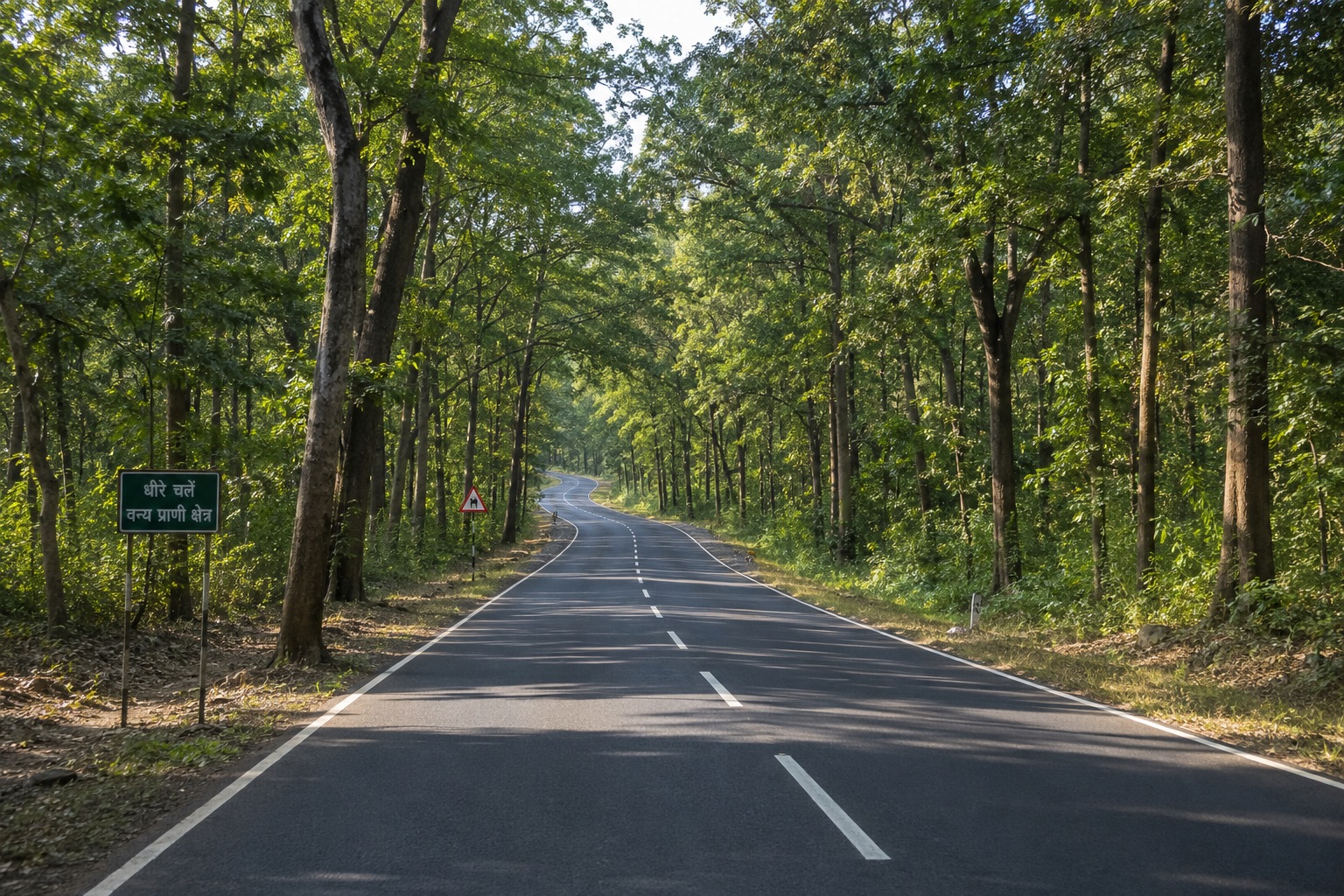
The Wildlife Institute of India (WII) has rejected a proposal to widen a road passing through a crucial wildlife corridor in Uttarakhand, citing serious ecological concerns over its impact on tiger movement and the large-scale felling of trees.
According to reports, the proposed road expansion would require the removal of 3,811 trees and cut through a vital forest corridor that connects habitats used by tigers, elephants, leopards and several other wildlife species. WII concluded that the project, in its present form, could fragment the landscape, disrupt animal movement and increase the risk of human-wildlife conflict.
The institute’s scientific assessment reportedly found that the proposed mitigation measures were insufficient to offset the ecological damage likely to result from the widening project. It recommended that the proposal should not be approved in its current design because of the corridor’s importance for maintaining connectivity between protected forest areas.
The decision comes amid growing scrutiny of infrastructure projects in Uttarakhand’s ecologically sensitive forests. Conservationists have repeatedly warned that expanding highways and roads through tiger and elephant corridors can lead to habitat fragmentation, increased wildlife mortality from vehicle collisions and greater disturbance to breeding and dispersal routes.
The issue also coincides with widespread public opposition to tree felling linked to road expansion projects in the state. Recently, Uttarakhand Chief Minister Pushkar Singh Dhami ordered a halt to the felling of thousands of trees for another highway widening project near Rishikesh following sustained protests by residents and environmental groups.
Wildlife experts have emphasized that maintaining uninterrupted forest connectivity is essential for the long-term survival of tiger populations, allowing animals to disperse between habitats, maintain genetic diversity and reduce territorial conflicts. They argue that infrastructure development in such areas should prioritize alternative alignments or wildlife-friendly engineering solutions wherever feasible.
The WII’s rejection highlights the increasing role of scientific evaluations in balancing development needs with biodiversity conservation, particularly in landscapes that serve as critical corridors for India’s flagship wildlife species.
Leave a Reply