
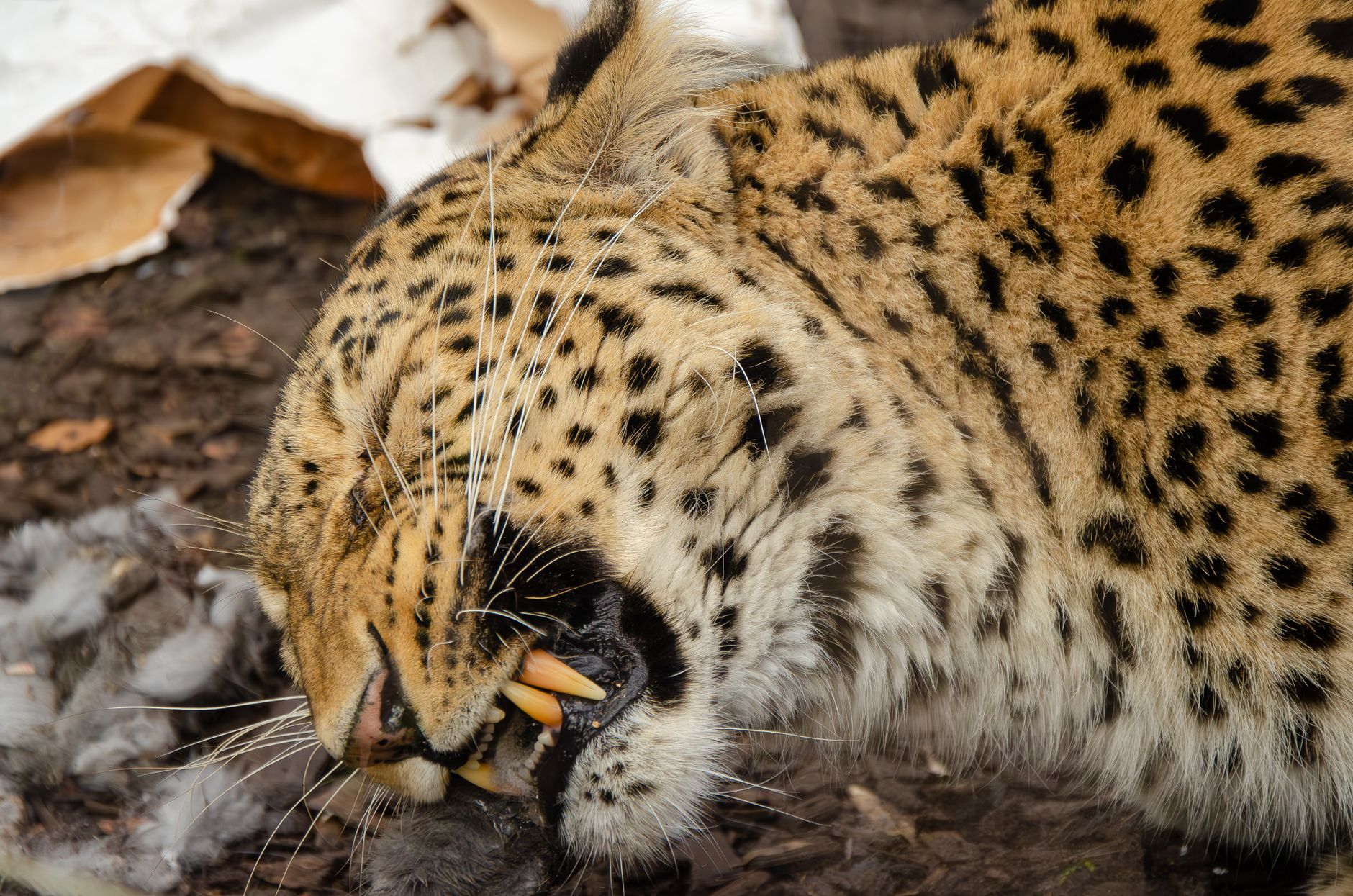
A forest department investigation into the death of a female leopard in the buffer zone of Rajasthan’s Mukundara Hills Tiger Reserve has led to the arrest of a suspect and exposed what officials believe is a wildlife poaching operation.
The leopard, estimated to be 3–4 years old, was found dead on July 18 after becoming trapped in a strong wire snare allegedly laid by poachers in the Borabas Range of the reserve. According to Chief Conservator of Forests (CCF) Suganaram Jat, the snare was made using clutch or galvanized iron (GI) wire and was likely intended to trap wild boar or other herbivores.
Following the investigation, forest officials arrested Vishal Harijan, a resident of Nayagaon, under the Wildlife (Protection) Act, 1972. During a search of his residence, officials recovered around 2 kg of potash, clutch wire, thick wire, two knives, and a mobile phone. The accused has been remanded to the custody of the forest department for further interrogation.
Officials explained that while clutch-wire snares are commonly used to catch wild boar, larger predators such as leopards and tigers are generally targeted using foot traps. The leopard is believed to have been an unintended victim after becoming entangled in the snare.
Investigators also highlighted the recovery of potash, which poachers are known to mix with bait. When consumed by animals, the chemical can cause fatal injuries by exploding in the mouth, making it a particularly cruel method of poaching.
The incident has prompted forest authorities to intensify patrolling in and around the Mukundara Hills Tiger Reserve to prevent further poaching attempts. The case also underscores the continuing threat posed by illegal hunting in Rajasthan, where several wildlife crime cases—including chinkara poaching and the seizure of leopard body parts—have been reported in recent years.
Leave a Reply