
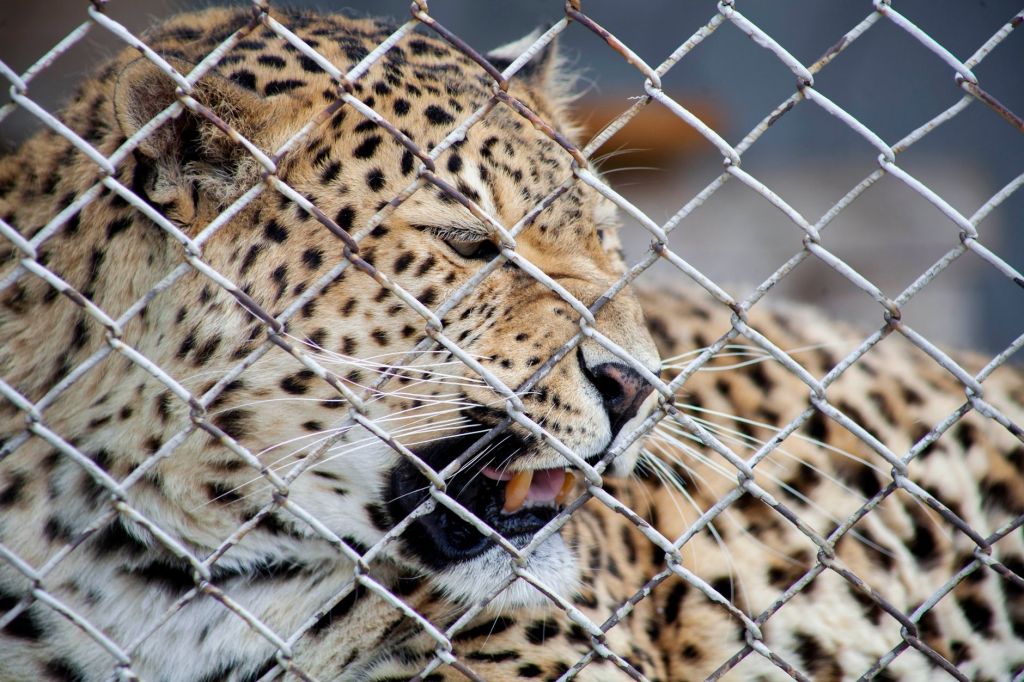
A nearly three-month-long wildlife operation in the Ompora Housing Colony of Budgam district, Jammu & Kashmir, concluded successfully after wildlife officials safely captured two more leopards during the intervening night of July 19–20. With an earlier leopard having been trapped on June 21, the total number of leopards captured from the area has now reached three, bringing relief to residents who had been living under the constant threat of leopard sightings.
The second leopard was captured around 12:15 a.m., while the third was trapped at approximately 5:30 a.m. following continuous overnight surveillance and coordinated trapping efforts by the Department of Wildlife Protection. The animals were captured safely using humane methods to ensure the safety of both the leopards and local residents.
Ompora and surrounding localities had emerged as a persistent hotspot for leopard movement over the past several months. In response, the Wildlife Protection Department established a temporary Man-Animal Conflict (MAC) camp in May. As leopard sightings continued and public concern increased, the camp was upgraded into a 24×7 MAC Control Room, with teams remaining on-site round the clock to monitor leopard activity, respond to emergency calls, and maintain trapping operations.
The operation was led by Range Officer Sajid Farooq, with field operations supervised by Block Officer Bashir Ahmad. The Wildlife Protection Department received crucial support from the Forest Protection Force, the Pir Panjal Forest Division, the Budgam District Police, district administration, and local authorities, whose coordinated efforts ensured public safety throughout the operation.
Wildlife officials described the operation as an example of effective inter-departmental cooperation in addressing human-wildlife conflict. The successful capture of the three leopards has significantly reduced the immediate threat to residents while ensuring the animals were handled humanely and can now be relocated to suitable habitats away from human settlements.
The operation highlights the growing challenge of leopard movement into residential areas in Jammu & Kashmir, underlining the need for continuous monitoring, rapid response teams, public awareness, and habitat conservation to minimize future conflicts between people and wildlife.
 Wildlife India News
Leave a comment