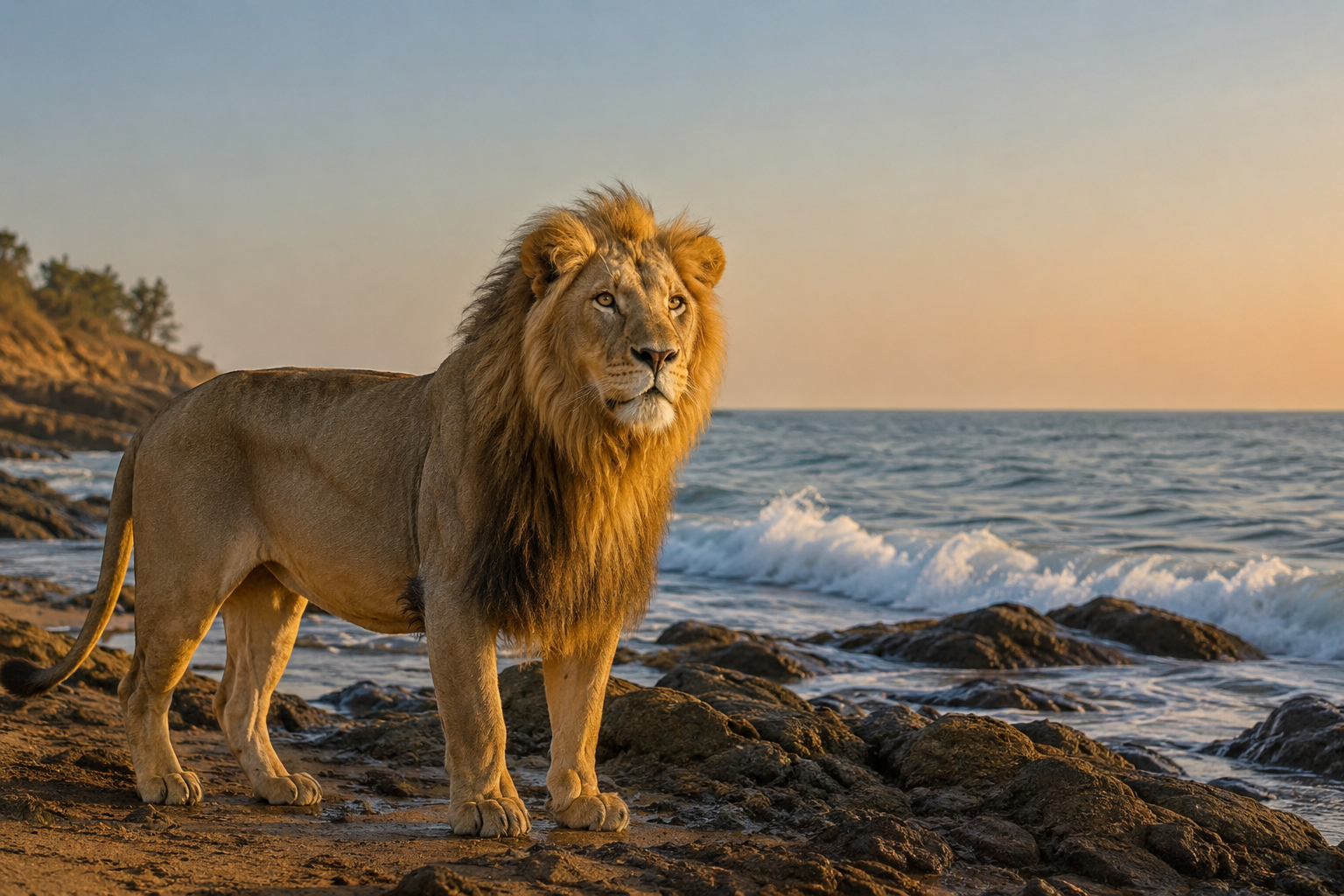
A new scientific study has overturned the long-standing belief that Gujarat’s coastal Asiatic lions depend primarily on livestock for survival. Researchers have found that lions inhabiting the state’s coastal landscapes derive the majority of their diet from wild prey, highlighting the growing ecological health of these habitats beyond the traditional Gir Protected Area.
The study, published in the peer-reviewed journal Conservation, analysed 160 lion scat samples collected during March and April 2024 from the coastal districts of Junagadh, Gir Somnath, Amreli, Bhavnagar and Porbandar. The analysis revealed that wild prey constituted 64% of the lions’ diet, while domestic livestock accounted for 31%. In terms of biomass consumed, wild prey contributed nearly 70%, compared to 30% from livestock.
Among wild prey, nilgai (blue bull) emerged as the most important food source, followed by wild boar and spotted deer. Researchers attribute this preference to the abundance of these ungulates across Gujarat’s coastal ecosystem, enabling lions to thrive without relying heavily on domestic animals.
The findings are significant because they challenge the widely held assumption that the expansion of Asiatic lions into coastal and human-dominated landscapes has been driven mainly by easy access to livestock. Instead, the study suggests that healthy populations of wild herbivores are supporting the species’ continued range expansion.
Gujarat is currently home to 891 Asiatic lions, according to the 2025 population estimation, with many animals now living outside the Gir Protected Area in satellite populations spread across Saurashtra. The new research underscores the importance of conserving wild prey populations and natural habitats across these landscapes to ensure the long-term survival of the endangered Asiatic lion while also helping reduce conflicts with local communities.
Leave a Reply