
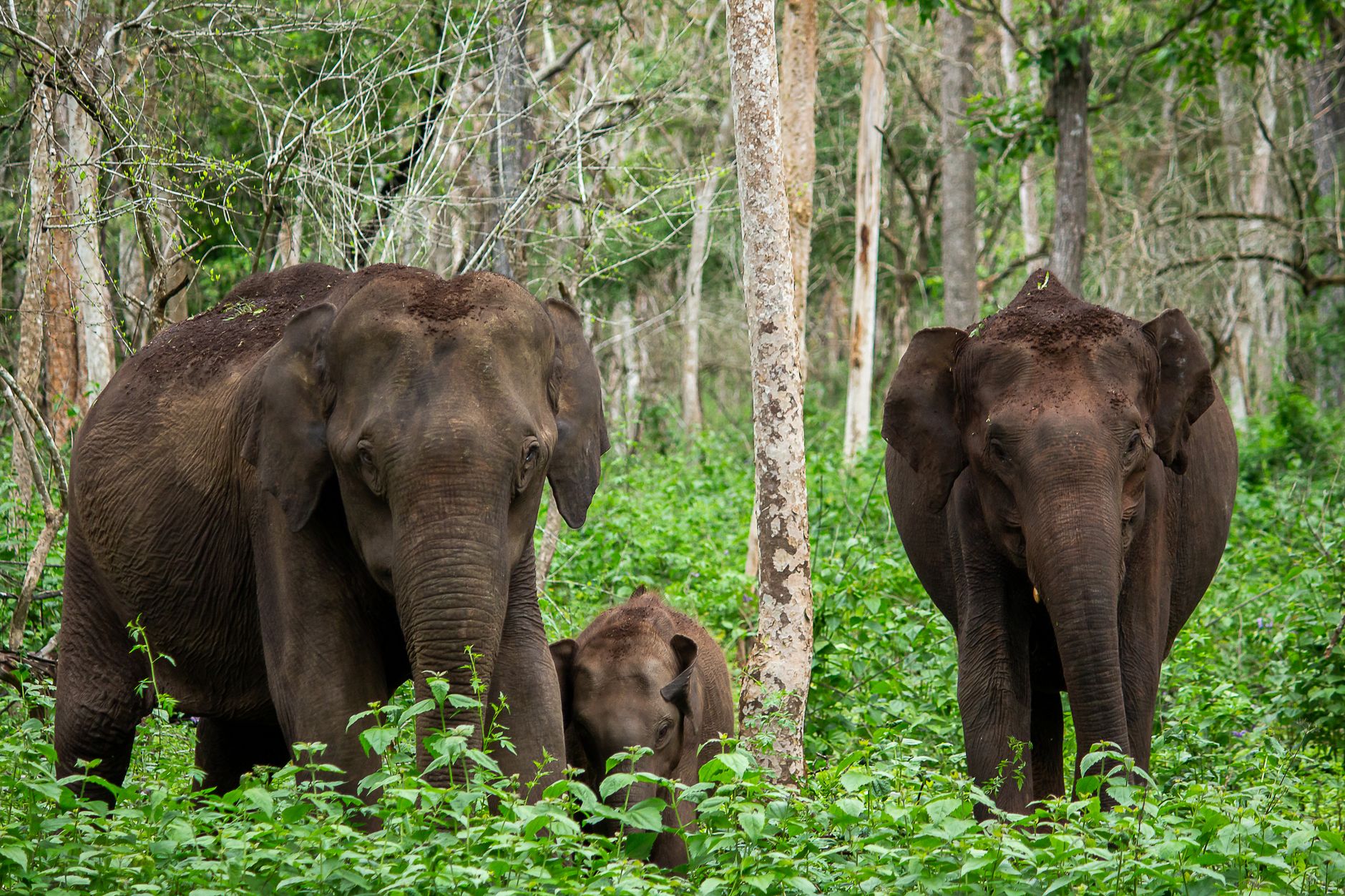
A herd of four to five wild elephants, including a calf, damaged a newly established rubber plantation and adjoining agricultural fields at Azumra Hayi under Lakhuti village in Wokha district, Nagaland, on July 11, causing significant losses to local farmers who depend on agriculture for their livelihoods.
The elephants destroyed a farm hut, uprooted rubber saplings, and damaged adjoining fields belonging to local farmers. Around 13 households are engaged in rubber cultivation at the affected site. Fortunately, no human injuries were reported during the incident.
Villagers said elephant incursions have become increasingly frequent. In May this year, another herd of eight to nine elephants reportedly damaged several agricultural fields in the same area. According to the Wildlife Warden of the Doyang Wildlife Division, nearly 60 human-elephant conflict incidents have been reported in recent months, indicating a rising trend of crop-raiding and property damage in Wokha district.
The Forest Department has initiated a damage assessment through its Human-Elephant Conflict (HEC) Control Room and deployed field teams to survey the affected farms. Officials acknowledged challenges such as poor road connectivity and limited resources but urged villagers to continue reporting elephant incursions so that relief assistance and mitigation measures can be provided.
The incident underscores the growing challenge of human-elephant conflict in Nagaland, where expanding elephant movements and increasing overlap between wildlife habitats and agricultural lands are placing rural livelihoods at greater risk. Strengthening early-warning systems, habitat management, and community-based conflict mitigation will be crucial to reducing future conflicts.
Leave a Reply