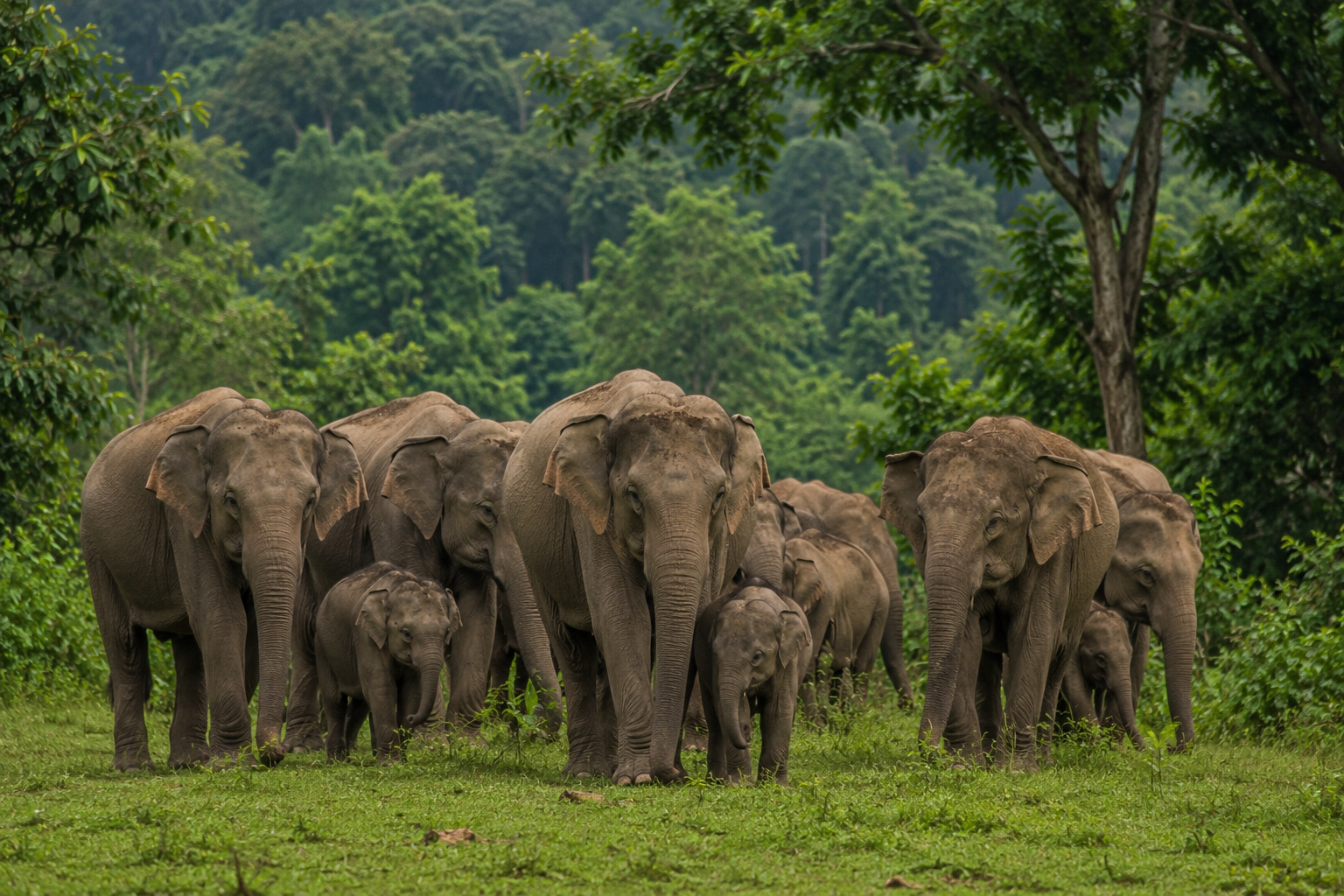
Tamil Nadu’s wild elephant population has remained largely stable at around 3,000 elephants over the past decade, according to Chief Wildlife Warden Rakesh Kumar Dogra. Speaking at the National Workshop on Human-Wildlife Conflict in Coimbatore, Dogra clarified that while some local areas may show an increase in elephant numbers, there is no evidence of a significant rise in the state’s overall elephant population.
Dogra attributed the growing incidence of human-elephant conflict not to an increase in elephant numbers, but to expanding human settlements and agriculture near forest boundaries. He noted that many former buffer zones and revenue lands have been encroached upon, bringing people and wildlife into closer contact. He emphasized that food scarcity inside forests is not the primary issue; instead, elephants are attracted to nearby agricultural fields, particularly crops rich in sugar, which increases the likelihood of conflict.
Tamil Nadu records over 80 human deaths annually due to human-wildlife conflict, with approximately 60 fatalities involving elephants. Most of these incidents, Dogra said, are accidental. Since elephants regularly move across state borders, maintaining and restoring elephant corridors is crucial for reducing conflict.
The state has identified 41 elephant corridors and is in the process of notifying them. However, acquiring land for these corridors remains a major challenge, with an estimated ₹3,000 crore required for land acquisition. Funding shortages and ongoing legal disputes, including those concerning the Sigur Plateau Elephant Corridor—India’s first legally notified elephant corridor—have slowed progress.
Dogra also highlighted a shift in conflict management practices. Tamil Nadu has stopped using firecrackers and high-intensity lights to drive elephants away, acknowledging that such measures provide only temporary relief. He stressed that there is no permanent solution to human-elephant conflict and advocated for innovative approaches that allow local communities to retain land ownership while ensuring safe movement for elephants through dedicated corridors.
The workshop also featured officials from Kerala, Jharkhand, and West Bengal, who discussed collaborative approaches to mitigating human-wildlife conflict across India.
Leave a Reply