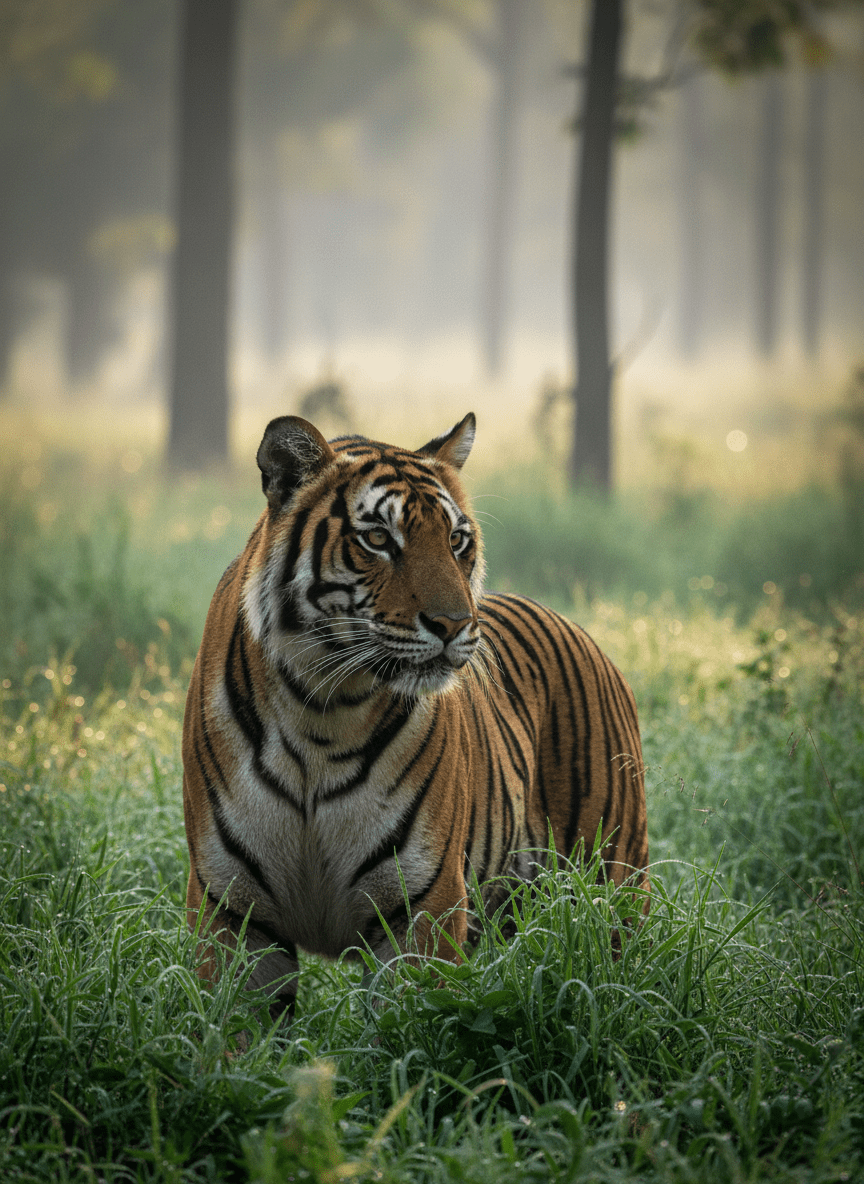
The Nagarjunasagar-Srisailam Tiger Reserve (NSTR), India’s largest tiger reserve, is facing a new conservation challenge due to a shortage of breeding-age tigresses in its core habitat. Wildlife experts warn that the limited number of reproductive females could hinder future growth of the tiger population despite ongoing habitat protection efforts.
To support the breeding season, the Andhra Pradesh Forest Department has closed the reserve’s core areas to tourism, safaris, temple visits and other human activities from July 1 to September 30, ensuring a disturbance-free environment for mating and cub-rearing.
According to officials, the reserve has around 17 breeding-age (“alpha”) tigresses, with only a few occupying the prime breeding zones. While NSTR currently supports about 87 tigers, conservationists stress that population growth depends not only on tiger numbers but also on the availability of healthy breeding females and the survival of cubs. Nearly 50% of tiger cubs do not survive to adulthood because of natural causes, disease, territorial conflicts and accidental deaths.
Forest officials are awaiting the results of the 2026 All India Tiger Estimation, which is expected to provide updated information on tiger numbers, breeding success, cub survival and the overall health of the population, helping shape future conservation strategies.
 Wildlife India News
Leave a comment