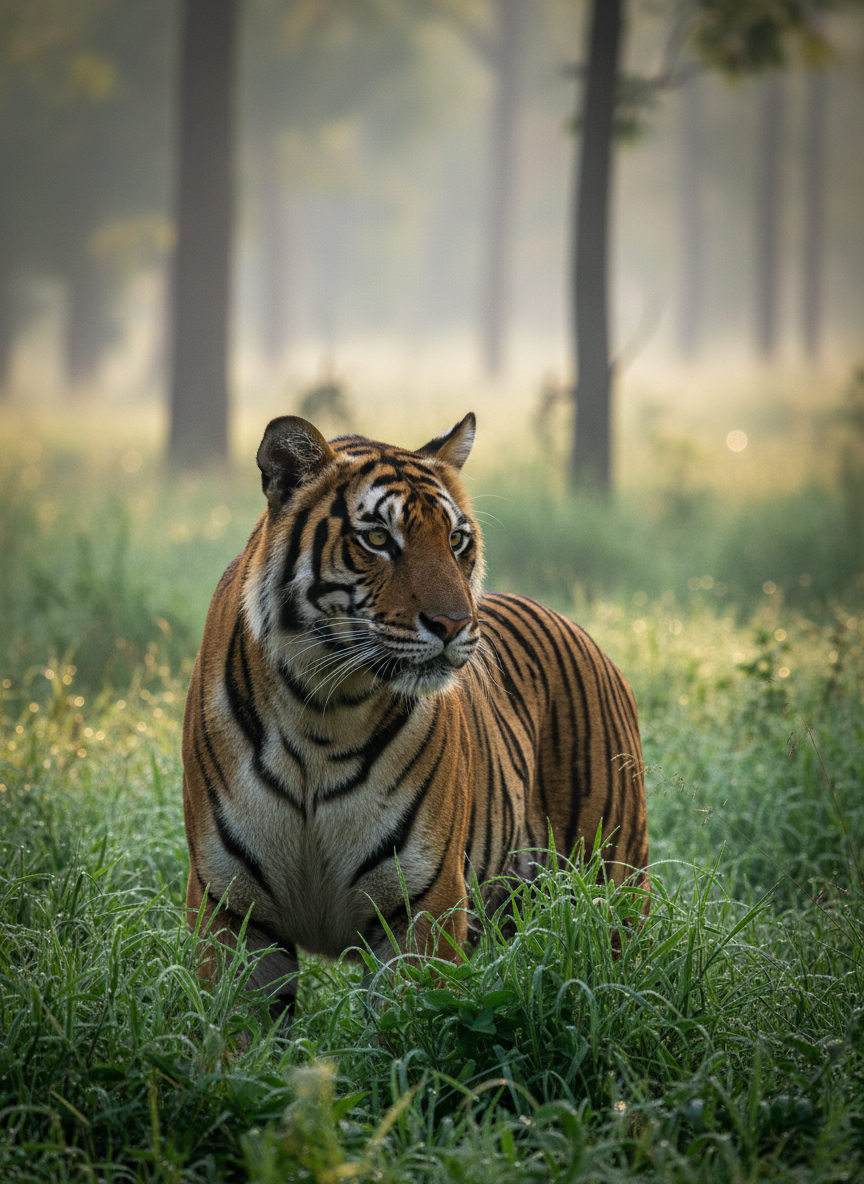
A tiger that dispersed from Karnataka’s Nagarahole Tiger Reserve has completed an extraordinary journey of nearly 350 kilometres, eventually reaching the forests near Ankola in Uttara Kannada district. Wildlife officials believe the animal has successfully navigated a diverse landscape of forests, agricultural fields, roads and human settlements, highlighting the importance of maintaining ecological connectivity between protected habitats.
The tiger was first detected in the forests of Kodagu before moving through parts of Hassan, Chikkamagaluru and Shivamogga districts. It continued its westward movement across the Malnad region before finally entering the forested areas of Ankola. Forest Department teams tracked the animal’s movement using camera traps, field observations and reports from local residents.
Experts say such long-distance dispersal is a natural behaviour, particularly among young male tigers searching for new territories after leaving their natal habitats. The successful movement also indicates that forest corridors linking the Western Ghats continue to support wildlife dispersal despite increasing developmental pressures.
Although the tiger passed through areas close to villages and farmlands, no major incidents of conflict with people were reported during its journey. Forest officials monitored the animal closely and advised local communities to remain alert while avoiding any attempts to approach or disturb it.
Wildlife biologists have described the tiger’s journey as a significant example of the resilience and adaptability of the species. They stress that conserving habitat corridors outside protected areas is essential for maintaining healthy tiger populations and ensuring long-term genetic connectivity across the Western Ghats landscape.
For latest wildlife news of India follow this page
Leave a Reply