
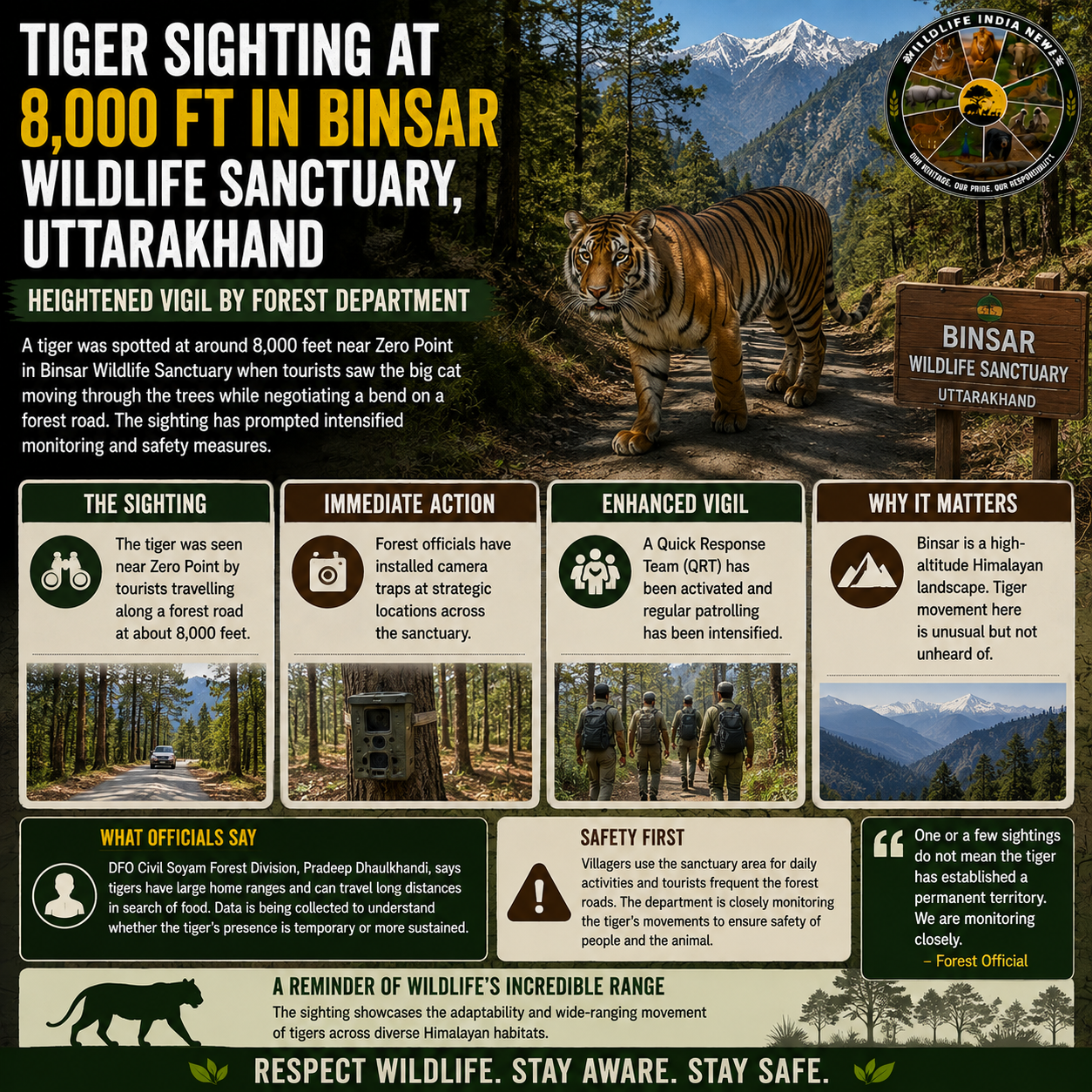
A tiger sighting at around 8,000 feet in Uttarakhand’s Binsar Wildlife Sanctuary has triggered heightened surveillance by the Forest Department and concern among local residents and tourists.
The tiger was reportedly spotted near Zero Point when tourists travelling along a forest road saw the animal moving through the trees while negotiating a bend. A video of the sighting was subsequently widely circulated on social media. The Forest Department has confirmed the presence of a tiger in the sanctuary.
Camera traps deployed
Following the sighting, forest officials installed camera traps at strategic locations across the sanctuary to photograph and record the animal and determine its movements. A Quick Response Team (QRT) has also been activated to deal with any emergency arising from the tiger’s presence.
Forest teams are conducting regular patrols and monitoring camera-trap footage. The objective is to establish whether the tiger remains in the area, identify its movement patterns and ensure the safety of people living in and visiting the sanctuary.
Unusual high-altitude presence
The sighting has attracted particular attention because Binsar is a high-altitude Himalayan forest landscape. However, wildlife experts caution that one or a few sightings do not necessarily mean that the tiger has established a permanent territory there.
According to DFO Civil Soyam Forest Division Pradeep Dhaulkhandi, tigers have large home ranges and can travel considerable distances in search of food. The department is therefore collecting data to understand whether the animal’s presence represents temporary movement or a more sustained use of the landscape.
Safety concerns
Binsar is not an isolated wilderness. Villagers move through the sanctuary for daily activities, while tourists regularly travel along forest roads. This makes careful monitoring particularly important following the sighting.
For now, officials are relying on camera traps, patrols and the QRT to track the tiger while minimising disturbance to the animal.
The sighting offers an intriguing glimpse into the ability of India’s large carnivores to move across diverse Himalayan landscapes, while also underscoring the need for responsible tourism, community awareness and scientific monitoring wherever wildlife and people share the same habitat.
Leave a Reply