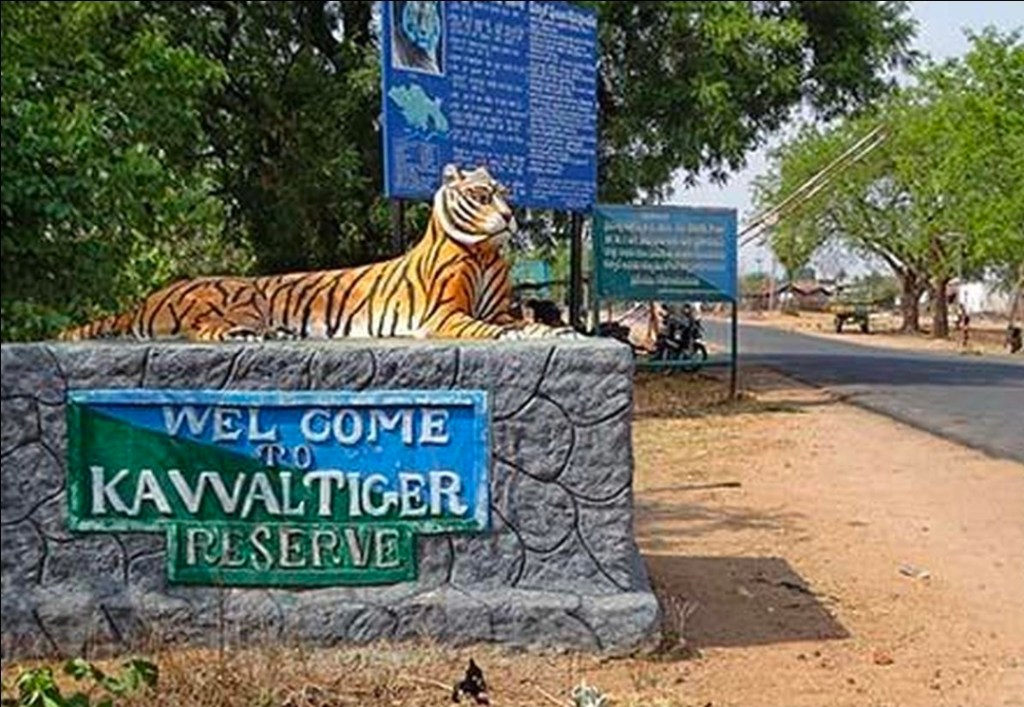
In a major boost to wildlife conservation in Telangana, the National Tiger Conservation Authority (NTCA) has approved a long-awaited plan to reintroduce tigers into the Kawal Tiger Reserve (KTR). The decision marks a significant milestone in India’s efforts to restore tiger populations in landscapes where the big cat has disappeared despite suitable habitat.
Kawal Tiger Reserve, spread across the districts of Adilabad, Mancherial, Nirmal and Komaram Bheem Asifabad, has struggled for years to establish a resident breeding tiger population. Although dispersing tigers from neighbouring forests in Maharashtra and Chhattisgarh have occasionally entered the reserve, none have settled permanently or reproduced there.
Under the approved plan, five tigers are expected to be translocated from Maharashtra, most likely from the Tadoba-Andhari Tiger Reserve landscape. Before the relocation begins, forest authorities will further strengthen habitat quality by improving prey populations, securing wildlife corridors and enhancing anti-poaching protection. The initiative forms part of the Centre’s long-term Vision 2047 strategy to recover tiger populations across suitable habitats in India.
Experts have identified low prey density as the biggest challenge facing Kawal. Current populations of chital, sambar, nilgai, wild boar and gaur are not yet sufficient to support a stable tiger population. As a result, habitat restoration and prey augmentation will continue before and after the release of the tigers to ensure their long-term survival.
Wildlife biologists believe Kawal has the potential to become an important link in the Central Indian tiger landscape. A successful reintroduction would improve genetic connectivity between tiger populations in Maharashtra, Telangana and Chhattisgarh while strengthening ecosystem health across the region.
If implemented successfully, the project could transform Kawal into a thriving tiger habitat once again, demonstrating how science-based conservation, habitat management and interstate cooperation can revive landscapes that have lost their apex predators.
 Wildlife India News
Leave a comment