
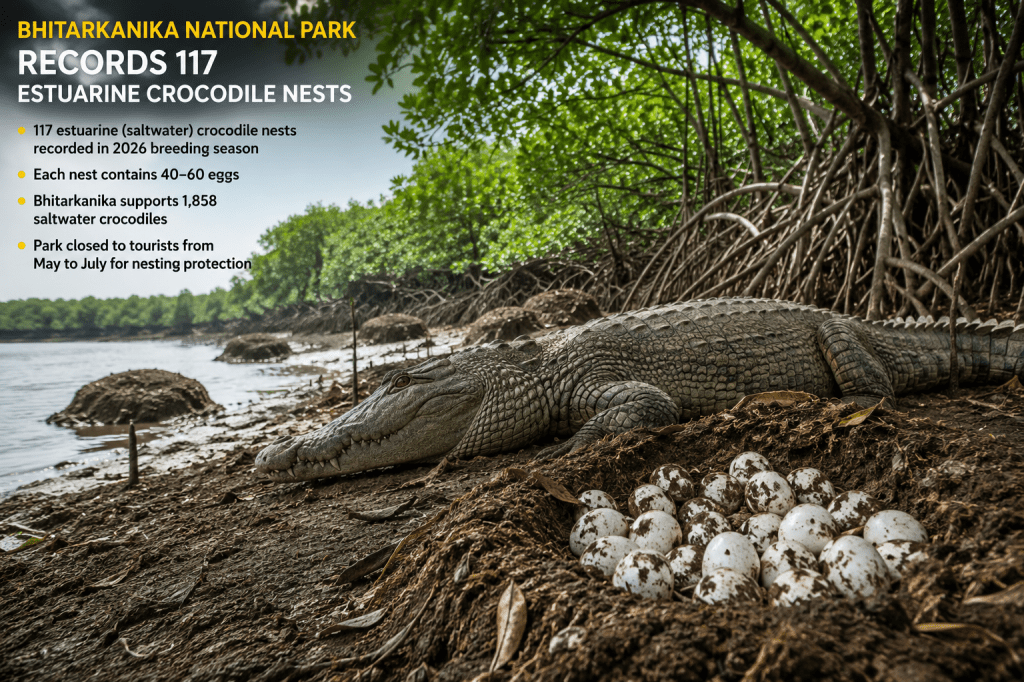
Odisha’s Bhitarkanika National Park has recorded 117 estuarine (saltwater) crocodile nests during the 2026 breeding season, highlighting another successful year for one of the world’s most important habitats for the endangered reptile. The encouraging nesting figures reflect the steady recovery of the saltwater crocodile population, thanks to decades of sustained conservation efforts.
Forest officials carried out extensive monitoring across the park’s mangrove forests, creeks and riverbanks during the nesting season. Female estuarine crocodiles typically build nests using mud, leaves and mangrove vegetation on elevated ground to protect their eggs from tidal flooding. Each nest generally contains 40 to 60 eggs, which hatch after an incubation period of about 70 to 80 days.
Bhitarkanika is regarded as India’s most important stronghold for the estuarine or saltwater crocodile (Crocodylus porosus). The park supports one of the country’s largest breeding populations of the species, with the latest reptile census estimating 1,858 saltwater crocodiles in its rivers and mangrove creeks.
The nesting season is a critical period for crocodile conservation. To minimise human disturbance, the Odisha Forest Department closes Bhitarkanika National Park to tourists every year from May through July, allowing females to incubate and guard their nests undisturbed before the hatchlings emerge.
Wildlife experts say the increasing number of nests is a positive indicator of a healthy breeding population and demonstrates the long-term success of Odisha’s crocodile conservation programme, which began in the 1970s. Continued protection of the park’s mangrove ecosystem and strict anti-disturbance measures remain essential for ensuring the future of this iconic reptile.
 Wildlife India News
Leave a comment