
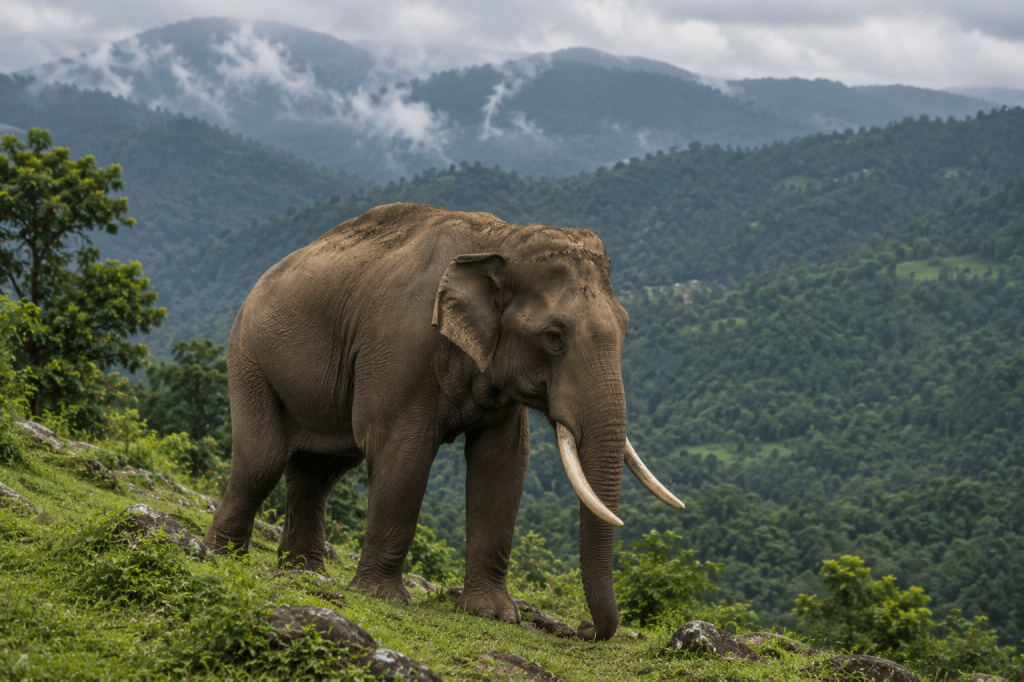
The Kerala government has ordered the capture of KM1, a wild tusker that has repeatedly entered the Aralam Farm area and nearby rehabilitation colonies in Kannur district, posing a serious threat to residents and damaging homes, crops and vehicles. The decision aims to reduce escalating human-elephant conflict while ensuring the animal is managed humanely.
According to Electricity, Environment and Parliamentary Affairs Minister Sunny Joseph, the elephant will be tranquillised, fitted with a GPS-enabled radio collar and released into a suitable forest habitat away from human settlements. The radio collar will allow the Forest Department to monitor KM1’s movements in real time and respond quickly if it approaches populated areas again.
The operation has been approved by the Chief Wildlife Warden under Section 11(1)(a) of the Wildlife (Protection) Act, 1972, and will be carried out in accordance with the guidelines of the Union Ministry of Environment, Forest and Climate Change. A team comprising senior forest officials and veterinary experts from Kannur will supervise the capture, collaring and subsequent monitoring of the tusker.
Forest officials say KM1 has become notorious for repeatedly breaching protective barriers around the forest and entering villages. The tusker has been linked to extensive crop and property damage and is suspected to have been involved in a fatal elephant attack earlier this year, making it one of the most closely monitored conflict elephants in the region.
The decision reflects Kerala’s growing emphasis on using technology to manage human-wildlife conflict. Radio-collaring enables wildlife managers to track elephant movements, issue early warnings to local communities and plan timely interventions, reducing the risk to both people and elephants. Conservation experts note that such measures, when combined with habitat protection and conflict mitigation strategies, can offer a more balanced approach than permanent captivity or translocation alone.
 Wildlife India News
Leave a comment