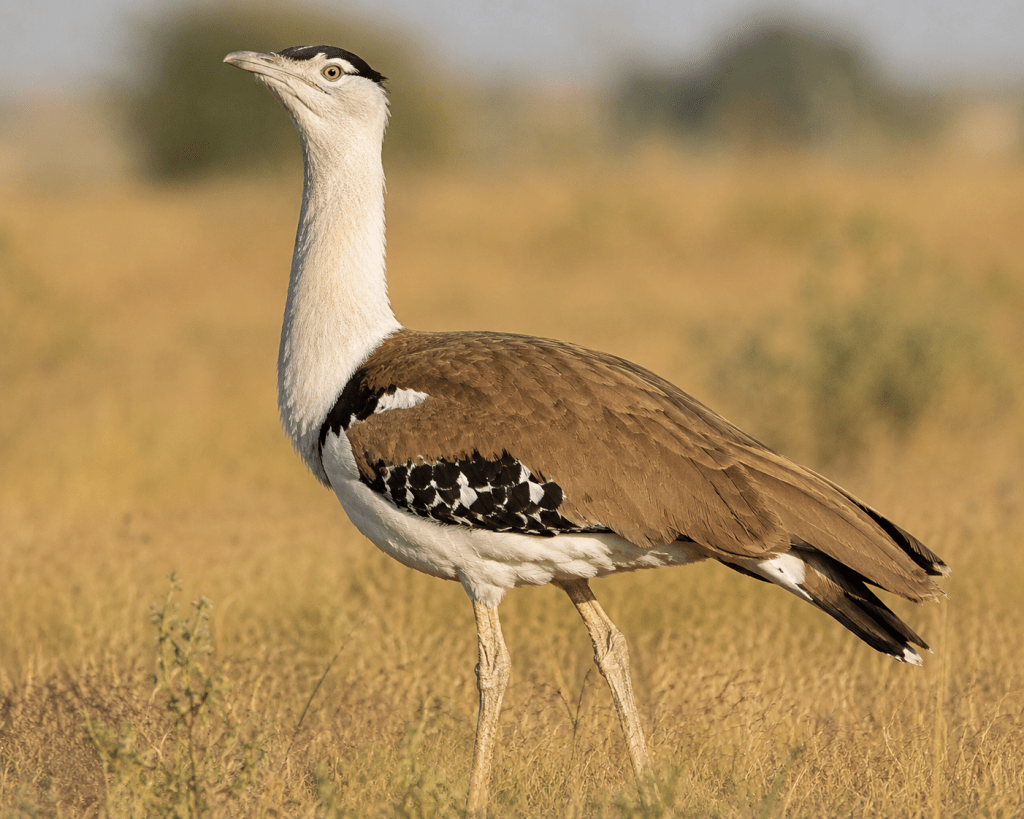
In a landmark moment for wildlife conservation in India, three captive-bred Great Indian Bustard (GIB) chicks have been released into a specially designed rewilding tunnel in Rajasthan’s Jaisalmer district. The event marks the first time that captive-bred GIB chicks have taken this crucial step towards life in the wild, offering renewed hope for one of the world’s most endangered birds.
The Great Indian Bustard, once found across much of India’s grasslands, now survives mainly in the Thar Desert of Rajasthan. With fewer than 200 birds believed to remain, the species faces severe threats from habitat loss, collisions with overhead power lines, and human disturbance. Captive breeding has therefore become a key pillar of India’s conservation strategy.
The three chicks were raised under expert care before being shifted to the rewilding tunnel—a large, protected enclosure designed to help them gradually adapt to natural conditions. Inside this semi-wild environment, the young birds will learn essential survival skills such as foraging, recognising predators, and developing the strength needed for independent life outside captivity. The controlled setting also allows conservationists to closely monitor their health and behaviour while reducing the risks associated with a sudden release.
This milestone represents a significant transition in the conservation programme. Until now, efforts had focused primarily on breeding the birds successfully in captivity. Moving the chicks into a rewilding enclosure demonstrates that the programme has entered its next phase—preparing birds for eventual release into their natural habitat.
Wildlife experts believe that every successful rewilding attempt is vital for rebuilding the fragile population of the Great Indian Bustard. If these birds adapt well and eventually breed in the wild, they could play a crucial role in restoring the species across Rajasthan’s grasslands.
While the road to recovery remains long, the sight of these three young bustards stepping into the rewilding tunnel symbolises a new chapter in India’s conservation journey. It is a testament to years of scientific research, dedicated fieldwork, and the commitment to ensuring that one of India’s most iconic grassland birds does not disappear forever.
 Wildlife India News
Leave a comment