
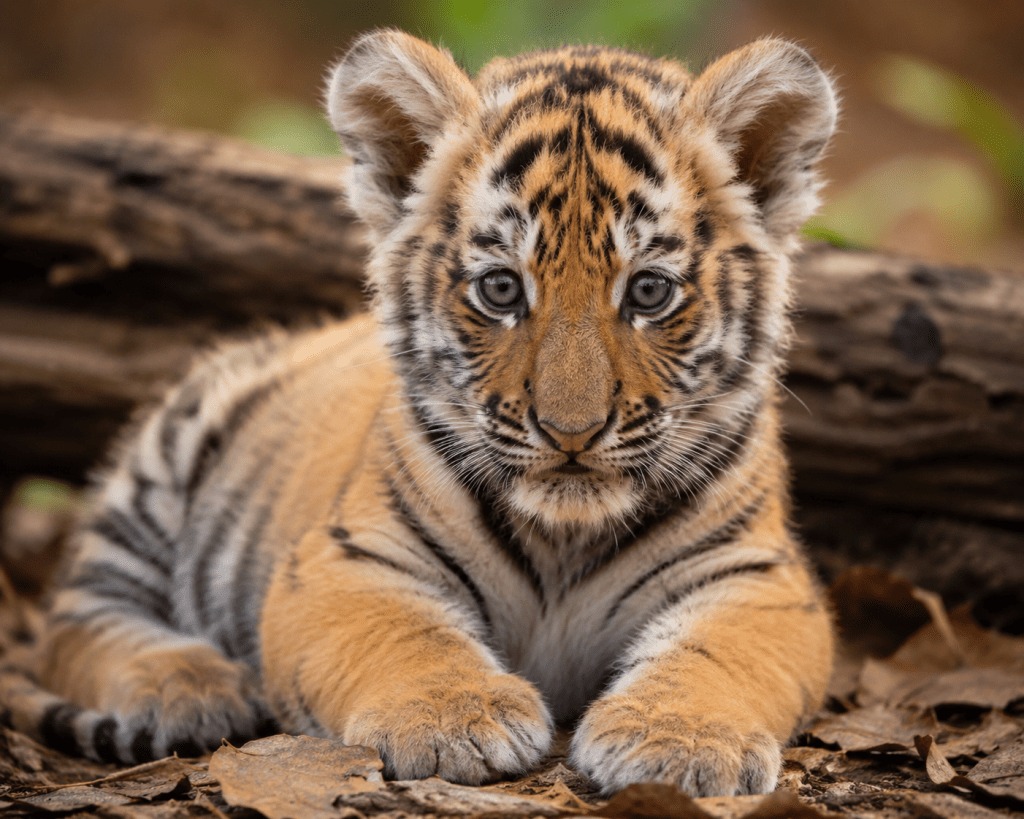
Madhya Pradesh has quietly developed one of India’s most successful tiger rehabilitation programmes, proving that orphaned tiger cubs can be raised without becoming dependent on humans and eventually released to lead independent lives in the wild. The state’s innovative approach has become a model for big cat conservation, with several rehabilitated tigers now successfully holding territories, hunting naturally, and even producing offspring of their own.
A ‘tiger school’ hidden in the forests
Deep inside Madhya Pradesh’s forests, orphaned tiger cubs undergo an intensive “rewilding” programme rather than being raised in captivity.
The guiding principle is simple: the cubs must never associate humans with food, comfort or safety. Forest staff remain hidden behind camouflage screens or monitor the animals remotely through camera traps and binoculars. Human interaction is kept to an absolute minimum to preserve the cubs’ natural instincts.
Learning the art of survival
Unlike zoo animals, the cubs are gradually trained to master every skill needed in the wild.
Their education includes:
Stalking prey without being detected.
Perfecting the timing of an attack.
Chasing and bringing down live prey.
Defending kills from scavengers.
Navigating forests independently.
Avoiding humans and settlements.
Initially, the cubs are provided food in controlled conditions. As they grow, live prey is introduced into large natural enclosures, allowing them to develop genuine hunting abilities without human assistance. Forest officials intervene only if absolutely necessary.
Every hunt is a test
Each successful hunt is treated as an examination.
Forest teams quietly observe from concealed locations, documenting whether a cub:
Chooses the right prey.
Uses proper stalking techniques.
Makes an effective kill.
Consumes its prey naturally.
Returns to the carcass later, as wild tigers do.
Only after repeatedly demonstrating these behaviours are cubs considered ready for life outside the rehabilitation enclosure.
Release into the wild
Once officials are confident in a tiger’s ability to survive independently, the enclosure is opened.
Rather than forcing the animal out, it is allowed to leave at its own pace. After release, the tiger is closely monitored using radio collars, camera traps and field patrols to ensure it adapts successfully while still living as a truly wild animal.
A conservation success
The programme has delivered remarkable results.
Several rehabilitated tigers have:
Established territories in the wild.
Become proficient hunters.
Avoided conflict with humans.
Successfully bred, proving they have fully integrated into the natural tiger population.
Their success demonstrates that orphaned cubs need not spend their lives in zoos or rescue centres if they receive carefully planned scientific rehabilitation.
Why the programme matters
Tiger cubs lose their mothers to poaching, territorial fights, accidents, disease or other natural causes. In the wild, cubs younger than about two years have little chance of survival without maternal care.
Earlier, many orphaned cubs remained in captivity for life. Madhya Pradesh’s rewilding model has shown that, under the right conditions, orphaned cubs can return to the forests where they belong, strengthening wild tiger populations while maintaining their natural behaviour.
A model for India’s tiger conservation
As India continues to expand its tiger conservation efforts, Madhya Pradesh’s “tiger schools” highlight a shift from simply rescuing orphaned cubs to preparing them for a life of independence. By ensuring that rescued tigers grow up fearing humans rather than depending on them, the state has demonstrated that scientific rehabilitation can transform vulnerable orphaned cubs into successful apex predators, helping secure the future of India’s wild tiger population.
 Wildlife India News
Leave a comment