
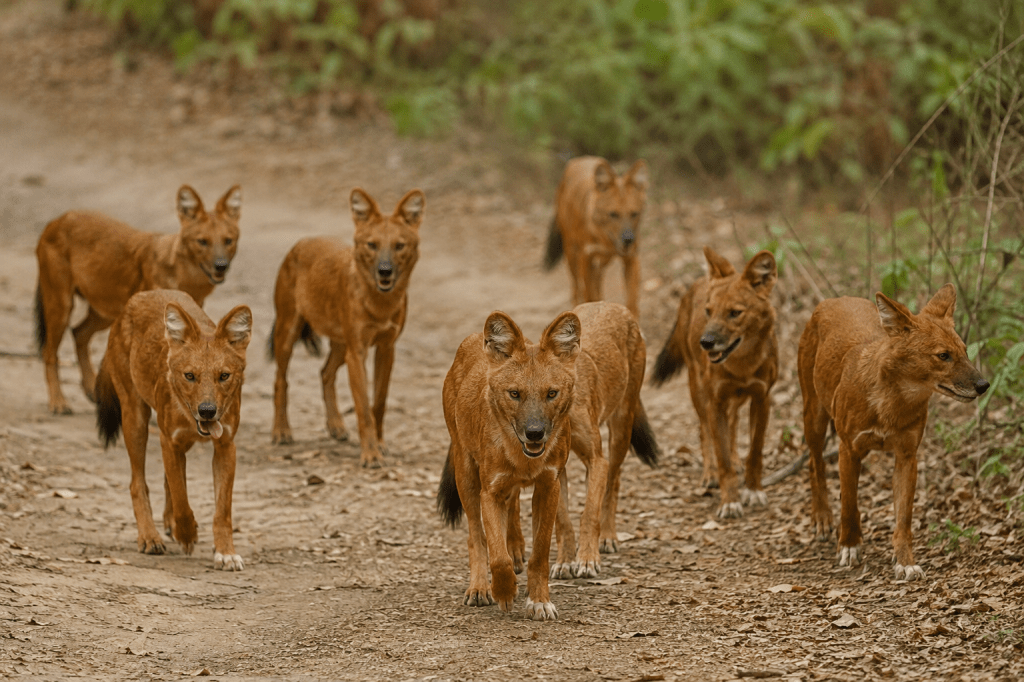
In a significant boost for wildlife conservation in Northeast India, endangered dholes, also known as Asiatic wild dogs (Cuon alpinus), have been documented in Assam’s Barnadi Wildlife Sanctuary, marking a remarkable ecological recovery after years of sustained habitat protection.
The return of this elusive pack-hunting predator is being hailed as a “silent success story of conservation.” The Assam Chief Minister’s Office credited the achievement to the continuous protection efforts of the Bodoland Territorial Council (BTC) Forest Department, which has worked to preserve the sanctuary’s forests and wildlife habitats.
Located along the India-Bhutan border, Barnadi Wildlife Sanctuary forms part of an important biodiversity corridor that supports several threatened species. The presence of dholes—classified as Endangered by the International Union for Conservation of Nature (IUCN)—is considered a strong indicator of a healthy forest ecosystem with an adequate prey base and well-connected habitats.
Dholes are among Asia’s least-studied large carnivores. Living and hunting in highly coordinated packs, they play a vital role in maintaining ecological balance by regulating herbivore populations. However, habitat loss, depletion of prey, disease transmission from domestic dogs, and human conflict have led to steep declines across their range.
The sighting at Barnadi follows other encouraging reports of dhole recovery in Assam, including the Kaziranga–Karbi Anglong landscape, highlighting the positive impact of improved habitat connectivity, forest restoration and strengthened wildlife protection measures across the state.
Conservationists believe the return of this apex predator underscores the importance of sustained habitat protection and offers renewed hope for the long-term recovery of one of India’s most threatened carnivores. Continued monitoring will help determine the size and stability of the population while guiding future conservation strategies.
 Wildlife India News
Leave a comment