
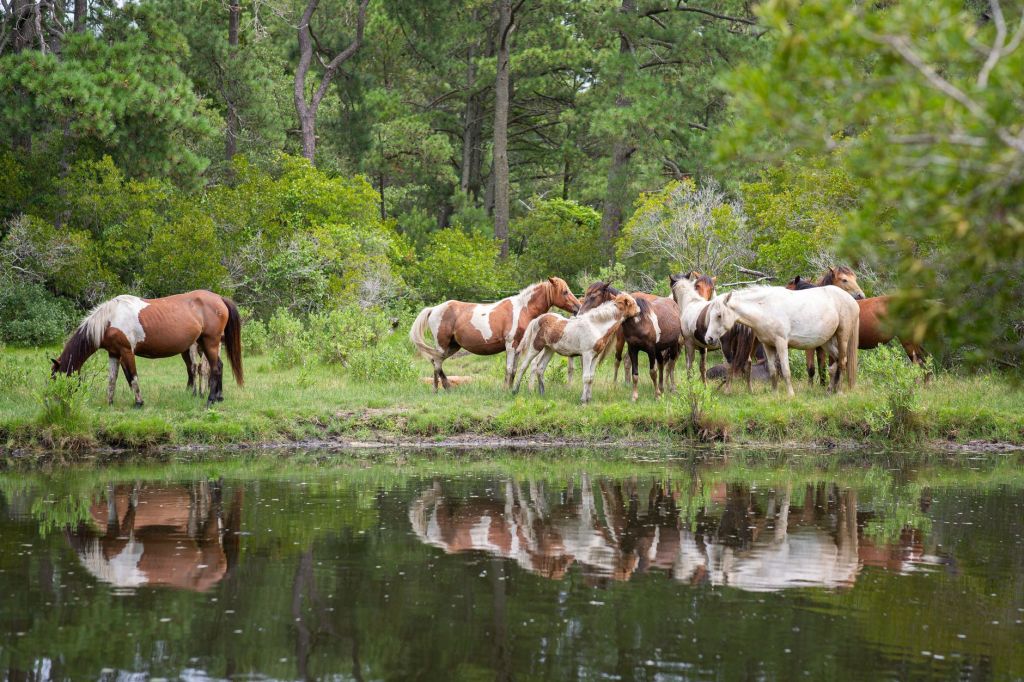
Heavy monsoon floods in Assam have driven a group of feral horses out of their natural habitat, forcing them to wander through the streets of Dibrugarh in search of food and shelter. The unusual sight of the free-roaming horses drew widespread attention and prompted swift intervention by the Assam Forest Department.
The horses are believed to have been displaced after floodwaters submerged their grazing grounds on the sandbars (chaporis) and grasslands associated with the Dibru-Saikhowa landscape. As rising waters inundated these low-lying habitats, the animals ventured into urban areas, creating concerns over road accidents, public safety, and the welfare of the horses themselves.
Following reports from local residents, forest officials launched a rescue operation. After confirming that the animals had no identifiable owners, they safely captured and transported them to Sisu Chapori, a sandbar in the Brahmaputra River considered a more suitable habitat where they can graze away from busy roads and human settlements.
The incident highlights the growing impact of recurring floods on wildlife in Assam. While the Brahmaputra’s annual floods are a natural ecological process, increasingly intense inundation is pushing wild and feral animals out of their habitats more frequently, leading to greater human-wildlife interactions.
Dibrugarh’s feral horses are regarded as unique, with many believed to be descendants of domesticated horses that were left behind by the British soldiers after the end of World War II. Their population has faced mounting pressures from habitat loss, erosion of river islands, floods, and other human-induced disturbances, making their conservation an emerging concern in the Brahmaputra floodplains.
 Wildlife India News
Leave a comment