
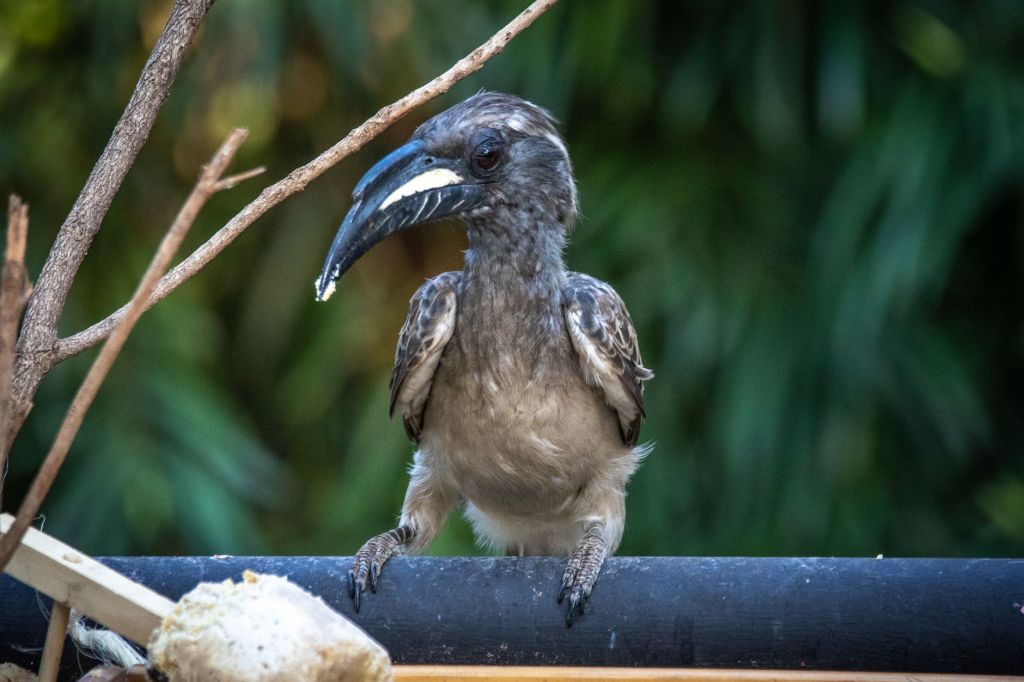
The reintroduction of the Indian Grey Hornbill into Gujarat’s Gir Forest has emerged as a major wildlife conservation success, with the species breeding successfully in the wild for four consecutive years after disappearing from the region more than 60 years ago. A new scientific study confirms that the reintroduced birds have adapted well, established territories, and are now reproducing naturally, marking a significant milestone in species recovery.
The Gujarat Forest Department launched the reintroduction programme in 2021, releasing 40 Indian Grey Hornbills in two phases. A total of 28 birds were released during 2021–22, followed by 12 more in 2023. To monitor their movement, habitat use, and breeding behaviour, 11 male hornbills were fitted with satellite transmitters.
Researchers reported that one pair successfully bred during the first year after release, while three additional breeding pairs nested in the second year, demonstrating that the birds have established a self-sustaining population in Gir. The findings have been published in the peer-reviewed journal Birds under the study titled Reintroduction of Indian Grey Hornbills in Gir, India: Insights into Ranging, Habitat Use, Nesting and Behavioural Patterns.
The hornbills were translocated from healthy populations in Gujarat’s Aravalli forests after detailed habitat assessments confirmed that Gir could support the species. Once widespread in the region, Indian Grey Hornbills disappeared from Gir during the 1950s and 1960s. Their return restores an important ecological role, as hornbills are vital long-distance seed dispersers that help regenerate forests by spreading the seeds of fruit-bearing trees.
The successful reintroduction highlights the growing importance of science-based conservation, habitat restoration, and long-term monitoring in recovering locally extinct species. It also adds another significant achievement to Gujarat’s wildlife conservation efforts, demonstrating that carefully planned species recovery programmes can successfully restore biodiversity and ecosystem functions.
 Wildlife India News
Leave a comment